Papua New Guinea Prepares for Ultimate Rugby League Test Against Formidable Samoa Side at Santos National Football Stadium

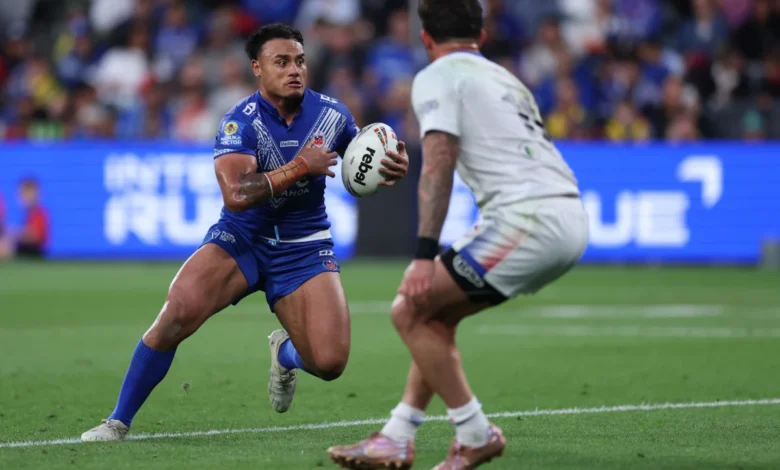
The 2026 Rugby League World Cup reaches an electric boiling point this weekend as tournament co-hosts Papua New Guinea welcome one of the competition’s undisputed heavyweights, Samoa, to the Santos National Football Stadium in Port Moresby. Scheduled for Saturday, 24 October 2026, this high-stakes fixture promises to be a defining moment of the group stage. Both nations enter the contest riding the momentum of commanding opening-weekend victories, yet they find themselves on contrasting trajectories regarding tournament expectations and tactical adjustments.
For the Pacific Island co-hosts, this encounter represents a monumental step up in class. Papua New Guinea opened their tournament campaign with a hard-fought and ultimately comprehensive 42-18 victory over Lebanon in front of a fervent home crowd at Port Moresby. While the final scoreline suggested relative comfort, the physical toll of that opening match was significant, prompting head coach Jason Demetriou to inject fresh legs and experience into his starting lineup.
Conversely, Samoa arrived at this World Cup with a point to prove following their heartbreaking defeat in the 2022 tournament final. Under the guidance of head coach Ben Gardiner, the 2022 runners-up served notice to the rest of the rugby league world with a terrifyingly dominant 78-4 demolition of France in their opening fixture. Displaying lethal attacking combinations and suffocating defense, Samoa instantly re-established themselves as genuine title contenders.
As anticipation builds across the rugby league landscape, fans around the globe are preparing for a tactical masterclass in the heart of Melanesia.
Chronology and Tournament Context
The journey toward this pivotal Pool clash has been years in the making. The 2026 Rugby League World Cup has captured the imagination of global sports fans, with Papua New Guinea sharing co-hosting duties and providing a vibrant, rugby-obsessed backdrop for the tournament. The passionate atmosphere in Port Moresby is expected to reach a deafening crescendo as the local population rallies behind the Kumuls.
In their opening fixture against Lebanon, Papua New Guinea displayed flashes of brilliance combined with periods of defensive vulnerability. Conceding 18 points against a resilient Lebanese outfit highlighted areas that required immediate tightening before facing an elite tier-one opponent. Recognizing the need for tactical evolution, the coaching staff opted for strategic promotions within the squad.
Samoa’s path to this fixture was altogether more clinical. Their 78-4 routing of France was a statement of intent, showcasing the depth and versatility of a squad brimming with National Rugby League (NRL) superstars. Despite the scale of their victory, Gardiner has maintained a remarkably stable roster, making just a single enforced change to his matchday seventeen as Sualauvi Fa’aalogo steps onto the wing to replace the injured Deine Mariner.
Tactical Analysis and Team Selections
The tactical battle lines for Saturday afternoon have been drawn, with both coaching staffs making calculated selections designed to exploit perceived weaknesses while neutralizing opposition strengths.
Papua New Guinea has made three crucial alterations to their starting XIII, promoting halfback Bailey Biondi-Odo, prop Epel Kapinias, and lock Jack de Belin. The inclusion of de Belin adds immense defensive steel and middle-third control, qualities that will be desperately needed against Samoa’s formidable forward pack. Biondi-Odo’s partnership with playmaker Gairo Voro in the halves will dictate how effectively the Kumuls can manage field position against a suffocating Samoan defensive line. Captain Rhyse Martin anchors the second row alongside Nixon Putt, while dynamic hooker Edwin Ipape remains the primary catalyst out of dummy-half, tasked with generating quick play-the-balls to trouble the Samoan defense.
Samoa’s lineup reads like an NRL All-Star team. Co-captains Jarome Luai and Junior Paulo lead the side from the halves and front row respectively. Luai’s tactical kicking game, combined with the electric creativity of fullback Hamiso Tabuai-Fidow and center Stephen Crichton, forms a multi-pronged offensive machine. The outside backs, featuring Brian To’o, Izack Tago, and the incoming Sualauvi Fa’aalogo, possess the tackle-busting ability to turn half-chances into long-range tries. Meanwhile, an intimidating interchange bench containing Spencer Leniu, Jazz Tevaga, and Shawn Blore ensures that Samoa’s defensive intensity will not drop when the starting forwards take a breather.
Confirmed Line-Ups and Match Officials
Papua New Guinea Starting XIII:
- Morea Morea
- Robert Derby
- Zac Laybutt
- Nene Macdonald
- Dudley Dotoi
- Gairo Voro
- Bailey Biondi-Odo
- Epel Kapinias
- Edwin Ipape
- Luca Moretti
- Rhyse Martin (Captain)
- Nixon Putt
- Jack De Belin
Papua New Guinea Interchange:
- Finley Glare
- Liam Horne
- Valentine Richard
- Khaiya Waiembi
- Rodrick Tai
- Josh Feledy
Samoa Starting XIII:
- Hamiso Tabuai-Fidow
- Brian To’o
- Izack Tago
- Stephen Crichton
- Sualauvi Fa’aalogo
- Chanel Harris-Tavita
- Jarome Luai (Co-Captain)
- Francis Molo
- Benaiah Ioelu
- Junior Paulo (Co-Captain)
- Connelly Lemuelu
- Jermaine McEwen
- Francis Manuleleua
Samoa Interchange:
- Jazz Tevaga
- Spencer Leniu
- Shawn Blore
- Ata Mariota
- Clayton Faulalo
- Ronald Volkman
Match Officials:
- Referee: Chris Kendall
- Touch Judges: Kieren Irons, Daniel Luttringer
- Senior Review Official: Liam Kennedy
Broader Impact and Implications
The outcome of Saturday’s match will carry profound implications for the remainder of the 2026 Rugby League World Cup knockout stages. For Samoa, a victory would all but mathematically secure top spot in their pool, validating their status as premiership favorites and affording them a more favorable path through the tournament brackets. For Papua New Guinea, an upset victory in front of a frenzied home support would rank among the greatest achievements in the nation’s sporting history, instantly elevating them into legitimate championship contenders and sending shockwaves through the international rugby league community.
Beyond the immediate tournament standings, this fixture underscores the rapid globalization and competitive strengthening of international rugby league. The Pacific nations, bolstered by tier-one talent choosing to represent their heritage, are driving a new golden era for the sport. As the referee’s whistle sounds on Saturday morning, millions of fans across the globe will bear witness to a clash of cultures, power, and national pride at the Santos National Football Stadium.