WHO and Netherlands Renew Strategic Partnership with €500,000 Funding to Combat Climate Change Health Impacts

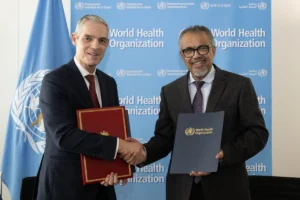
The World Health Organization and the Kingdom of the Netherlands have officially renewed their high-level strategic partnership aimed at mitigating the compounding health crises driven by global climate change. Announced as nations prepare for critical international climate negotiations, the renewal is anchored by a fresh financial contribution of €500,000 from the Dutch government to the WHO for the year 2024. This latest funding influx elevates the total financial commitment extended by the Netherlands to the WHO’s climate and health initiatives to over €1.1 million since the partnership’s formal inception in 2023.
This sustained financial and diplomatic collaboration is designed to fortify global health security by reinforcing the Alliance for Transformative Action on Climate and Health (ATACH) Secretariat and accelerating targeted climate change and health programs worldwide. As extreme weather events, shifting disease vectors, and environmental degradation increasingly threaten vulnerable populations, the renewed alliance underscores an urgent, shared commitment to building climate-resilient and low-carbon healthcare systems.
Main Facts and Scope of the Partnership
At its core, the renewed partnership addresses the complex, multifaceted nexus of environmental degradation and human health. Changing climate patterns have catalyzed a surge in vector-borne diseases, exacerbated respiratory and cardiovascular conditions due to air pollution, and triggered widespread nutritional insecurity and displacement.
The €500,000 allocation for 2024 is strategically earmarked to bolster several critical operational pillars within the WHO:
- Strengthening the ATACH Secretariat to coordinate global member-state commitments and facilitate peer-to-peer learning.
- Expanding climate-informed and integrated health surveillance systems to detect and respond to outbreaks linked to environmental shifts proactively.
- Accelerating the operationalization of early warning systems designed to predict climate-related health risks, such as heatwaves, floods, and droughts.
- Providing technical assistance to developing nations to help them meet and exceed the health commitments established during the 26th UN Climate Change Conference (COP26).
- Empowering low- and middle-income countries to design, finance, and implement sustainable, low-carbon healthcare infrastructure.
By bridging the gap between environmental policy and medical infrastructure, the partnership seeks to ensure that health systems are not only capable of withstanding climate shocks but are also actively reducing their own carbon footprints, which currently account for approximately 4.4% of global net emissions.
Chronology of Collaboration: A Timeline of Action
The formalization of this partnership in 2023 was not an isolated event but the culmination of years of escalating international concern over the health tolls of global warming. A chronological overview highlights the steady progression of the Dutch-WHO collaboration:
- November 2021 (COP26): The WHO, in partnership with the UK government, launched the Alliance for Transformative Action on Climate and Health at COP26 in Glasgow, urging nations to commit to climate-resilient and sustainable health systems. More than 80 countries ultimately endorsed these health sector targets.
- January 2023: The Kingdom of Medicine and Global Health initiatives within the Dutch government converged, leading to the launch of the comprehensive Dutch Global Health Strategy 2023–2030, which explicitly places climate change at the center of international health priorities.
- Throughout 2023: The Netherlands established its foundational funding partnership with the WHO. Initial allocations were deployed to support vulnerable nations across Africa, Asia, and the Eastern Mediterranean, focusing on early warning systems and climate-resilient healthcare readiness.
- May 2024 (World Health Assembly 77): Demonstrating profound global leadership, the Netherlands—alongside Peru—successfully spearheaded the adoption of the landmark World Health Assembly 77 Resolution on Climate Change and Health. This resolution effectively updated and replaced the outdated 2008 framework, mandating a new WHO global action plan.
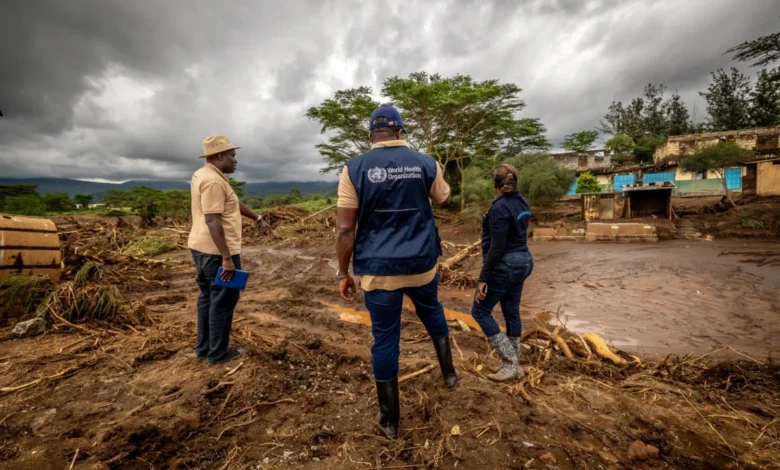
- April–May 2024: Practical applications of WHO-trained rapid response teams were tested on the ground, notably in regions like Kenya’s Mai Mahiu, where severe flash floods claimed lives, triggered disease outbreaks, and devastated local medical infrastructure following torrential seasonal rains.
- Late 2024: The Netherlands announced its additional €500,000 allocation, setting the stage for robust advocacy and technical presentations leading into COP29 in Azerbaijan.
Supporting Data and the Human Cost of Climate Inaction
The urgency driving the WHO-Netherlands partnership is underscored by mounting empirical data detailing the intersection of climate and health. According to recent assessments by the World Health Organization, climate change is expected to cause approximately 250,000 additional deaths per year between 2030 and 2050, driven by malnutrition, malaria, diarrhea, and heat stress.

Furthermore, the economic and structural damages are staggering. Extreme weather events disrupt supply chains for essential pharmaceuticals, damage hospitals and clinics, and overwhelm emergency response services. In regions like East Africa, where atypical weather patterns—such as the severe floods in Kenya during early 2024—have displaced thousands, the collapse of sanitation systems immediately correlates with outbreaks of waterborne diseases like cholera.
Conversely, the WHO’s latest Investment Case outlines a deeply hopeful trajectory for proactive intervention. By integrating climate resilience into the new Fourteenth General Programme of Work (GPW 14), and through sustained collaborative efforts with member states and international partners, the WHO projects that targeted public health measures can save an estimated 7.5 million lives over the next four years. Low-carbon health systems will not only protect populations from immediate environmental hazards but will also yield massive co-benefits by reducing air pollution—a factor responsible for millions of premature deaths annually.
Official Responses and Strategic Alignment
The renewal of the strategic partnership aligns seamlessly with broader national and international policy frameworks.
The Dutch Global Health Strategy 2023–2030 serves as the primary policy driver for the Netherlands’ international engagements. By prioritizing the climate-health nexus, the Dutch government has positioned itself as a progressive middle power capable of bridging environmental diplomacy and humanitarian aid. Co-leading the WHA 77 Resolution with Peru demonstrated a clear willingness to translate domestic priorities into binding global mandates, pushing for the mainstreaming of climate resilience across all WHO operational frameworks.
From the perspective of the WHO leadership, the partnership provides the flexible, catalytic funding necessary to address emergencies while simultaneously building long-term institutional capacity. WHO officials have consistently emphasized that multilateral cooperation is non-negotiable when addressing borderless crises such as climate change. Civil society organizations, Multilateral Development Banks, United Nations agencies, and frontline healthcare professionals are increasingly being integrated into a unified coalition to ensure that health financing flows directly to the communities most at risk.
Broader Impact and Implications for COP29 and Beyond
As the international community converges for the 2029 UN Climate Change Conference (COP29) in Azerbaijan, the WHO-Netherlands partnership serves as a benchmark for how bilateral donors can effectively empower multilateral institutions.
For decades, climate negotiations at forums like the Conference of the Parties (COP) heavily favored energy, agriculture, and heavy industry sectors, frequently sidelining the human toll of ecological degradation. Through sustained diplomatic pressure and financial backing from nations like the Netherlands, health has progressively claimed a central role in climate discussions. The institutionalization of Health Days at recent COPs, alongside dedicated funding pledges for climate-resilient health systems, reflects this paradigm shift.
However, significant challenges remain. Many developing nations face crushing debt burdens and acute resource constraints, making it difficult to allocate domestic budgets toward retrofitting hospitals for solar power, upgrading water and sanitation facilities, or deploying advanced epidemiological surveillance tools. The catalytic funding provided by the Netherlands helps bridge this gap, serving as seed money that can unlock larger investments from international financial institutions and climate funds.
Ultimately, the reinforced alliance between the World Health Organization and the Kingdom of the Netherlands sends a clear signal to the global community: protecting human health in the Anthropocene requires immediate, sustained, and coordinated financial and political mobilization. As extreme weather events increase in frequency and intensity, the success of initiatives like the ATACH Secretariat and the implementation of the WHA 77 Resolution will play a decisive role in safeguarding global public health for generations to come.
Related posts: