Silicon and Drought: How TSMC is Exporting Industrial Water Conservation From Taiwan to the American Southwest

On the surface, a $115,000 municipal grant distributed to two urban public parks in Phoenix, Arizona, appears to be a routine philanthropic gesture, entirely disconnected from the high-stakes theater of international geopolitics and global supply chains. However, the recipients of this funding—Madison Park and Los Olivos Park—occupy a downstream position in a sprawling, highly specialized logistical network that begins thousands of miles away in Taiwan and ultimately delivers advanced semiconductor components to devices utilized on every inhabited continent on Earth. For the donor behind the funds, Taiwan Semiconductor Manufacturing Company (TSMC), this modest financial contribution represents a localized manifestation of a strict water-management doctrine that the multi-billion-dollar enterprise systematically implements across every global jurisdiction where it constructs and operates its capital-intensive fabrication facilities.
The City of Phoenix Parks and Recreation Department officially confirmed the receipt of this targeted water-efficiency grant from TSMC Arizona on July 8, 2026. The capital injection is earmarked for the installation of advanced Calsense smart irrigation controllers and high-precision flow sensors. These technological upgrades are designed to provide park maintenance crews with real-time telemetry, allowing them to automatically pause automated watering cycles during heavy monsoon downpours and rapidly isolate and shut off compromised underground lines before thousands of gallons of potable water are lost to leakage. According to municipal projections provided by Phoenix water authorities, each successfully averted irrigation cycle preserves approximately 81,000 gallons of water. While the monetary value of the grant is relatively minor within the broader context of municipal budgets, the underlying operational pattern reflects a calculated, corporate-wide commitment to resource conservation in water-scarce regions.
The Crucible of Necessity: Forging Water Discipline in Taiwan
TSMC’s rigorous approach to liquid resource management was not born out of abstract corporate altruism; rather, it was forged under extreme environmental pressure and existential business risk in its home market. The company’s sprawling manufacturing complex in Tainan, situated on the southwestern coast of Taiwan, houses the semiconductor industry’s first industrial wastewater reclamation plant dedicated specifically to advanced chip manufacturing. Officially opened in September 2022, this pioneering facility was engineered and constructed on TSMC’s behalf by CTCI, a prominent global engineering and contracting group. The plant utilizes a multi-stage purification process—incorporating advanced biological treatment, ultrafiltration, and reverse osmosis—to transform industrial effluent into ultra-pure water suitable for delicate wafer fabrication processes.
The catalyst for this unprecedented engineering undertaking was severe environmental stress. In 2021, Taiwan suffered through its worst meteorological drought in over half a century, severely threatening the uninterrupted operation of the island’s critical semiconductor foundries. This crisis coincided precisely with the historic declaration by United States authorities of the first-ever official water shortage on the Colorado River, underscoring a synchronized global vulnerability in liquid resource availability. Industry analysts and supply chain reports from that period credited TSMC’s ability to maintain continuous fab operations throughout the prolonged dry spell to its implementation of a meticulously designed, staged water-shortage response plan. This proactive strategy reinforced the corporate philosophy that water scarcity is not merely an environmental externality, but a fundamental operational risk variable that requires continuous mitigation.
At the inauguration of the Tainan reclamation facility, CTCI Chairman John T. Yu emphasized the broader international significance of the project. "Utilizing reclaimed water as a resource is becoming increasingly important in achieving global sustainable development," Yu stated, framing localized industrial recycling as an essential template for heavy manufacturing sectors worldwide. This ethos established a high operational benchmark that TSMC has aggressively sought to replicate as it expands its physical footprint across international borders.
Replicating the Standard in the Sonoran Desert
The sophisticated water-recycling methodologies perfected in the humid environment of southern Taiwan are now being meticulously adapted to the arid climate of the Sonoran Desert. At its massive semiconductor manufacturing campus in north Phoenix, TSMC has already achieved a baseline water recycling rate of approximately 65%. To elevate this performance, the company has committed substantial capital to construct a dedicated Industrial Reclamation Water Plant on-site, with the explicit goal of driving the campus recycling rate toward an ambitious 90%.
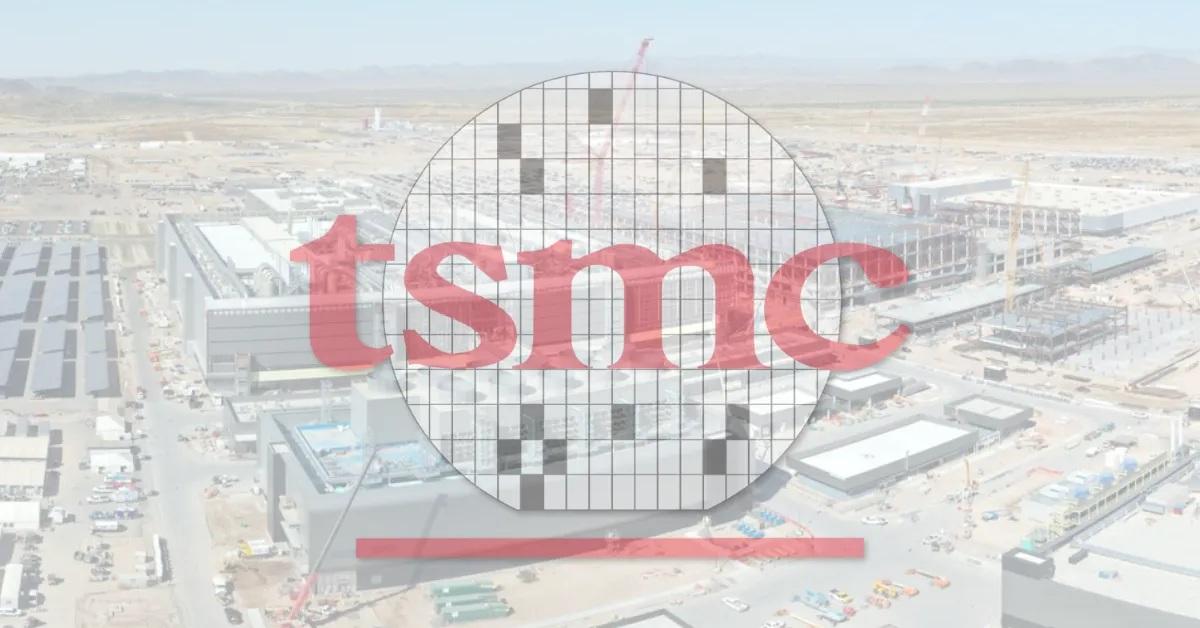
This state-of-the-art facility features a "near-zero" liquid discharge design, capturing, treating, and repurposing the vast majority of the water utilized in the ultra-clean manufacturing processes required to produce advanced sub-micron silicon chips. The recent municipal parks grant functions as an extension of this internal conservation philosophy. By reducing internal consumption through advanced reclamation technology while simultaneously funding municipal infrastructure upgrades that curb public water waste, TSMC is attempting to manage its total hydrological footprint from both sides of the utility meter. This dual-pronged strategy addresses the acute sensitivity surrounding industrial water usage in the arid American Southwest, where population growth and climate volatility continually strain municipal aquifers and federal water allocations.
The Neighbor Test and Community Engagement
In regions characterized by acute resource scarcity, corporate claims of sustainability are subjected to rigorous public scrutiny. True environmental stewardship requires engagement that extends far beyond private property boundaries. Recognizing this imperative, TSMC has deliberately integrated public education and community investment into its conservation frameworks. In Tainan, the pioneering industrial wastewater reclamation plant was intentionally designed to double as a certified environmental education center. The facility regularly hosts free educational courses and guided technical site tours for local schoolchildren, university students, and municipal water-resource professionals, demystifying the complex chemistry of industrial recycling.
In Phoenix, the investment in municipal park infrastructure yields tangible, measurable public benefits: greener public recreational spaces maintained with significantly lower volumes of municipal water. While neither the Tainan educational center nor the Phoenix park grant represents a massive capital expenditure when compared to the multi-billion-dollar price tag of a modern semiconductor fabrication plant, both initiatives effectively address the central question that inevitably follows heavy industry into any community: Will the incoming corporate presence be a net drain on local resources, or will it contribute measurable value to the host municipality?
This fundamental question is acquiring heightened urgency as the global semiconductor manufacturing sector undergoes a massive, geopolitically driven expansion. Semiconductor demand continues to surge, incentivizing governments and chipmakers to construct new fabrication plants in regions where water is a contested and increasingly limited commodity, stretching from the drought-prone American Southwest to the densely populated technology corridors of central Taiwan. Consequently, a manufacturing titan that arrives equipped with a proven wastewater recycling methodology, a tested drought-response playbook, and a consistent track record of financing local efficiency initiatives presents host governments with a significantly more attractive value proposition than a firm that merely taps into local municipal infrastructure without regard for long-term hydrological sustainability.
Industry-Wide Implications and Future Outlook
As the undisputed foundry titan of the global technology sector, TSMC occupies a powerful structural chokepoint. Its operational decisions are closely monitored by downstream corporate customers, regulatory bodies, and competing semiconductor manufacturers who are seeking a definitive standard for corporate responsibility at scale. By being an early adopter of stringent international environmental standards—such as achieving AWS (Alliance for Water Stewardship) certifications, pioneering chip-grade industrial wastewater recycling, and seamlessly exporting these complex engineering protocols across continents—TSMC has secured a distinct strategic advantage. This proactive posture establishes a rigorous benchmark that rival foundries and tech conglomerates are increasingly measured against by institutional investors and ESG-focused regulatory frameworks.
For an industry whose physical output and hydrological footprint continue to expand in tandem, the emergence of these rigorous operational standards may ultimately prove as consequential to long-term business viability as any technological breakthrough in chip architecture. While the newly upgraded irrigation systems at Madison Park and Los Olivos Park will quietly preserve their 81,000 gallons per cycle away from the global spotlight, the broader systemic implication remains clear. The decision by a multinational corporation headquartered an ocean away to invest directly in municipal water conservation is indicative of a mature, globally integrated risk-mitigation strategy—one meticulously constructed, fab by fab, over decades of operational experience.