As the consumer electronics landscape enters the final quarter of 2026, the retail market is experiencing a significant shift in pricing strategies as manufacturers and major e-commerce platforms compete for early holiday market share. Following an analysis of current market trends, this report outlines the most notable price reductions across categories including home theater systems, wearable technology, and smart home automation. These discounts, tracked through automated price-monitoring tools, reflect both inventory clearing cycles and aggressive competitive positioning between premium brands such as Sony, Samsung, and Roborock.

Market Context and Strategic Pricing Trends
The current wave of discounts is not an isolated phenomenon but rather the result of a coordinated push by retailers to front-load consumer spending ahead of the traditional November shopping peak. Historical data from previous fiscal cycles indicates that late October often serves as a "soft launch" for deeper promotional periods. This year, the trend is characterized by significant price drops on high-end hardware that was introduced earlier in the first and second quarters of 2026.
For the average consumer, these price adjustments represent an opportunity to acquire technology that has moved past its initial premium price point. Market analysts suggest that the current price fluctuations—specifically the aggressive discounting on smart televisions and high-fidelity audio equipment—are designed to clear shelf space for upcoming holiday inventory, a standard practice in the high-volume retail sector.

High-Fidelity Audio and Personal Electronics
The audio equipment sector is seeing some of the most dramatic percentage-based discounts this week. Sony’s WH-CH730N headphones, currently listed at $128, represent a notable case study in product lifecycle management. Originally priced at $179.99, this model has reached its lowest recorded price point since its market introduction. The integration of high-end features such as the Sony Connect app compatibility, 10-band equalizer customization, and Bluetooth 6.0 connectivity—previously reserved for the flagship 1000X series—indicates a strategic move to dominate the mid-tier consumer market.
Similarly, the JBL Tour One M3 Smart Tx has seen a substantial price reduction, moving from an MSRP of $449.95 to $199.95. This aggressive $250 discount places the unit in direct competition with entry-level noise-canceling headsets, despite its premium specifications. Industry observers note that the JBL Tour One M3 has gained traction in the travel sector due to its 70-hour battery life and advanced adaptive noise-canceling capabilities, making this current price point a significant value proposition for frequent commuters.

Sennheiser’s Momentum 4 headphones are also participating in this downward price correction. Despite being a 2022 release, their continued relevance is bolstered by the high-quality acoustic engineering that remains competitive even against 2026 iterations. At a 32% discount, these headphones are currently being positioned as a "value-premium" option for consumers who prioritize sound quality over the latest architectural updates found in the newer Momentum 5 series.
Smart Home and Wearable Technology Evolution
The wearable device market has reached a point of saturation that favors the consumer. The CMF by Nothing Watch 3 Pro, now available for $59, represents a significant shift in how artificial intelligence is being integrated into low-cost hardware. By incorporating ChatGPT-powered features, the device attempts to bridge the gap between basic fitness trackers and high-end smartwatches.

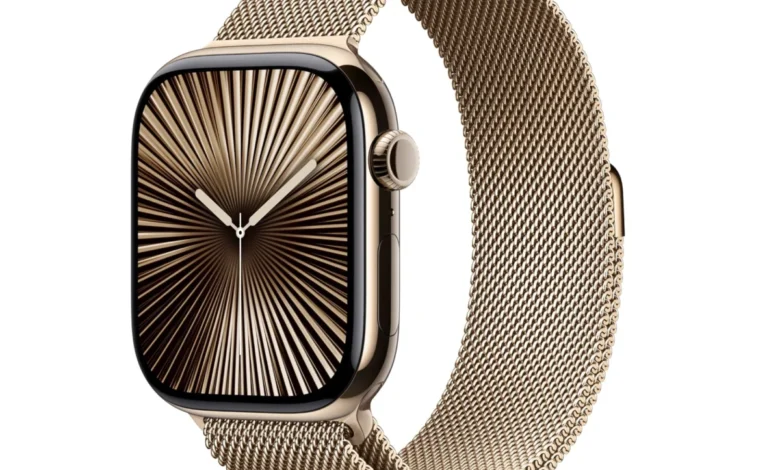
The Apple Watch Series 10, despite being superseded by more recent iterations, remains a highly capable piece of hardware. The current price drop to $679 for the 46mm titanium model with cellular capability is indicative of a broader strategy to maintain volume sales for established designs. The Series 10, praised for its thin profile and expanded always-on display, remains a relevant choice for users integrated into the Apple ecosystem who are looking for a more professional aesthetic than the standard aluminum models provide.
Robotics and Automated Home Solutions
In the home automation category, the Roborock Qrevo CurvX stands out as a clear example of extreme discounting. Priced at $749.99—a 50% reduction from its $1,499.99 MSRP—the unit has reached an unprecedented price floor. The device’s technical specifications, which include specialized anti-tangle mechanisms and advanced floor-type recognition, are aimed at high-end consumers. The decision to cut the price by half suggests that retailers are utilizing this product as a "loss leader" or a high-traffic item to attract serious tech buyers to their platforms.

Television Technology and Display Standards
The television market is currently dominated by a clash of standards: Mini-LED QLED vs. OLED. The 65-inch TCL QM8L, now retailing at $999.99, is a direct challenge to the OLED dominance. With a claim of 6,000 nits peak brightness and 4,000 local dimming zones, the QM8L is designed for bright room environments where OLED panels traditionally struggle. The reduction from $2,499.99 is one of the steepest discounts in the current market, reflecting a clear effort by TCL to capture market share from more expensive brands.
On the other hand, the Samsung 65-inch S90H OLED TV represents the current standard in display technology. Priced at $1,497.99—down from an initial launch price of $2,697.99—this 2026 model utilizes the NQ4 AI Gen3 processor to enhance 4K upscaling. This device caters to the enthusiast market that prioritizes absolute black levels and infinite contrast ratios. The variety of sizes available, from 42 to 83 inches, provides consumers with the flexibility to choose a display that fits their specific spatial requirements while taking advantage of the current promotional pricing.

The Impact of Smart Home Integration
The broader implications of these sales suggest that the smart home ecosystem is becoming more unified. Products like the Samsung HW-Q600F soundbar, now $379.97, are designed to work in concert with these high-end displays. By offering a 3.1.2 channel setup with Dolby Atmos, Samsung is pushing for a more immersive home theater experience that is accessible to a wider demographic. The use of wireless subwoofers and graphic equalizer presets via remote control indicates a trend toward simplifying complex home audio setups, making them more user-friendly for the average homeowner.
Summary of Market Observations
The current pricing environment is a boon for consumers who have been waiting for hardware to reach a specific price-to-performance threshold. However, potential buyers should remain aware that these prices are subject to change based on inventory velocity. The presence of newer models in the audio and TV categories has naturally pushed the previous generation and early 2026 models into this discount tier.

From a journalistic perspective, the data shows that the most effective way for consumers to navigate these sales is to focus on products that offer long-term support and feature sets that remain relevant for several years. Whether it is the advanced noise cancellation of the JBL headphones or the high-brightness capabilities of the TCL Mini-LED display, the current deals reflect a high level of competition that ultimately serves to benefit the end user. As we move closer to the end of the year, it is expected that these prices will either stabilize or lead to further, albeit more limited, seasonal promotions. Consumers are advised to verify compatibility and warranty status, as some of these deep discounts may apply to specific regional inventory or limited model variants.
Related posts: