The Mechanism of Bacterial Self-Sacrifice
Bacteria are engaged in an eternal, microscopic arms race against phages—viruses that specialize in hijacking bacterial cellular machinery to replicate. To survive, bacteria have evolved a vast arsenal of immune strategies. Among the most sophisticated are retrons, genetic elements that act as sentinels. Historically, the scientific consensus on retrons was straightforward: they maintain a dormant, toxic protein within the cell, held in check by a "safety" mechanism involving single-stranded DNA (ssDNA).
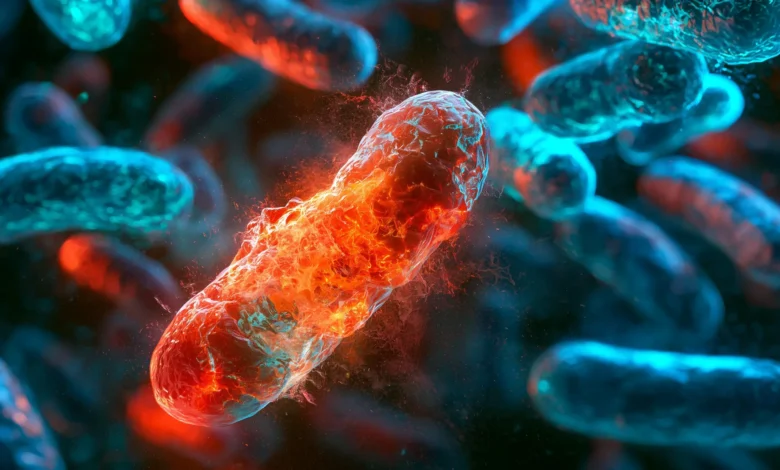
Under the traditional model, if a phage infects the bacterium, the viral activity disrupts the protective ssDNA, releasing the toxin and causing the bacterium to die. While this sacrifice is fatal to the individual cell, it serves as a critical defense for the wider colony, preventing the virus from using the host to produce more progeny. However, the type VI retrons investigated by the team at the Gladstone Institutes operate in reverse. In these systems, the bacterium remains in a low-activity state until a threat is detected. The arrival of a phage acts as an ignition switch, triggering a rapid burst of DNA production that interacts with RNA to remove translational repression, thereby enabling the production of a lethal toxin that compromises the bacterial cell membrane.
Chronology of a Scientific Odyssey
The discovery of the type VI retron was not the result of a linear investigation, but rather a challenging multi-year project that pushed the limits of existing laboratory methodologies. The journey began when PhD student Karen Zhang and her colleagues noticed that type VI retrons appeared to lack the telltale signatures of traditional retron systems.
"The way we typically detect retrons inside uninfected cells is by looking for this single-stranded DNA," Zhang explained. "But type VI retrons caught our attention because they didn’t appear to have this signature. It was very odd, and we wondered if they might be broken."
Initial experiments repeatedly failed, as the standard detection assays relied on the presence of high levels of ssDNA—a component notably absent in the resting state of type VI systems. This failure led the team to re-evaluate their entire approach. The turning point occurred when the researchers deployed "Spacer-seq," a specialized technique developed in the lab of Gladstone Investigator Seth Shipman. By utilizing the molecular recording capabilities of the CRISPR-Cas system, the team was finally able to detect trace, low-level DNA production in uninfected cells. This allowed them to confirm that the system was not broken, but rather dormant, waiting for a specific environmental trigger to initiate its defensive cascade.
Data-Driven Analysis of the Defense Cascade
The complexity of the type VI retron, described by Dr. Shipman as having "Rube Goldberg-level" architecture, involves a highly specific sequence of molecular events:
- The Quiescent Phase: In healthy, uninfected cells, the retron system remains largely inactive, producing minimal amounts of ssDNA and effectively silencing the expression of a potent, small-protein toxin via an RNA-based repression mechanism.
- The Detection Phase: Upon phage infection, the cell recognizes the viral intrusion. This triggers a surge in retron-mediated DNA synthesis.
- The Activation Phase: The newly synthesized ssDNA molecules bind to the repressive RNA, physically preventing it from inhibiting the toxin’s translation.
- The Lethal Response: The toxin is translated in rapid succession. Because the toxin is a small, hydrophobic protein, it rapidly inserts itself into the bacterial cell membrane, causing catastrophic structural failure, lysis, and the termination of the viral replication cycle.
This discovery highlights a significant evolutionary divergence in how prokaryotes manage internal toxins. While traditional retrons function as "fail-safe" systems (active inhibition), type VI retrons function as "fire-alarm" systems (active activation).
Implications for Biotechnology and Medicine
The ability to control gene expression with such high precision—switching from dormancy to activation based on specific molecular triggers—is of profound interest to the biotechnology sector. Dr. Shipman’s laboratory is currently investigating how these natural "switches" can be re-engineered for use in human cells.
One of the most promising applications is the development of synthetic molecular sensors. If researchers can harness the type VI retron’s ability to "read" an intracellular state and respond with a protein output, they could create a new class of diagnostic or therapeutic tools. These could potentially be designed to detect the presence of specific disease markers or harmful genetic mutations within a patient’s cells and trigger a therapeutic response only when those markers are present.
Furthermore, the discovery of these highly efficient, membrane-disrupting toxins offers a new pathway for antibiotic research. As global concern over antimicrobial resistance (AMR) continues to grow, the identification of natural peptides capable of effectively killing bacteria via membrane destabilization provides a potential scaffold for the next generation of antimicrobial treatments. By bypassing the traditional pathways that bacteria have already evolved to resist, these retron-derived toxins could offer a way to neutralize dangerous pathogens.
Future Perspectives and Scholarly Context
The research, titled "Reverse transcribed ssDNA derepresses translation of a retron antiviral protein," represents a collaborative international effort. Beyond the Gladstone Institutes, the project involved experts from the University of Copenhagen and the University of California, San Francisco (UCSF). The diverse team—including specialists in structural biology, CRISPR systems, and molecular genetics—provided the necessary breadth to characterize the retron’s function from the genetic level to the structural membrane level.
This study underscores a growing trend in modern biology: the return to "nature as the architect." By studying the extreme evolutionary pressures placed on bacteria, scientists are finding tools that are far more elegant and efficient than those that could be created through purely synthetic design.
As the field of synthetic biology continues to evolve, the distinction between "natural" and "engineered" systems is likely to blur. The type VI retron serves as a perfect example of this synthesis. It is a biological machine that has existed for eons, yet it possesses the modularity required to be adapted into a modern tool for gene editing or cellular sensing. Looking forward, the research team aims to determine where these retrons fall in the evolutionary timeline. Understanding whether they represent an ancient, ancestral form of immunity or a specialized adaptation could provide vital clues about the origins of bacterial defense and the co-evolution of viruses and their hosts.
The findings, published on October 13, 2026, have been met with significant interest from the scientific community, particularly among those focused on CRISPR-Cas technologies and precision medicine. As the lab continues to refine the use of Spacer-seq and other high-fidelity detection methods, the focus will likely shift from fundamental discovery to the practical engineering of these components for clinical and research applications. With support from major scientific foundations, including the National Science Foundation and the Novo Nordisk Foundation, the work provides a robust foundation for what promises to be a transformative era in molecular biotechnology.