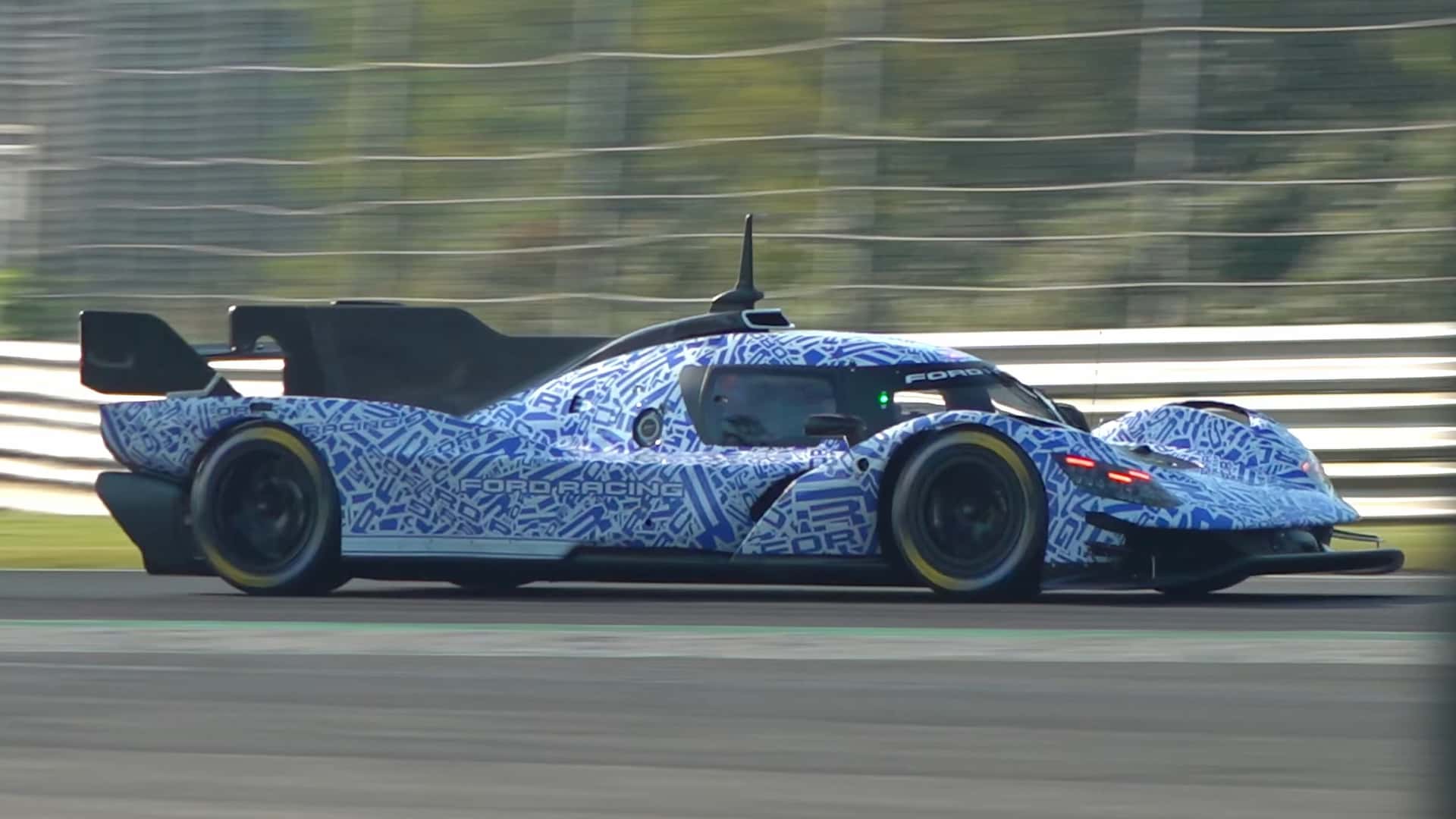
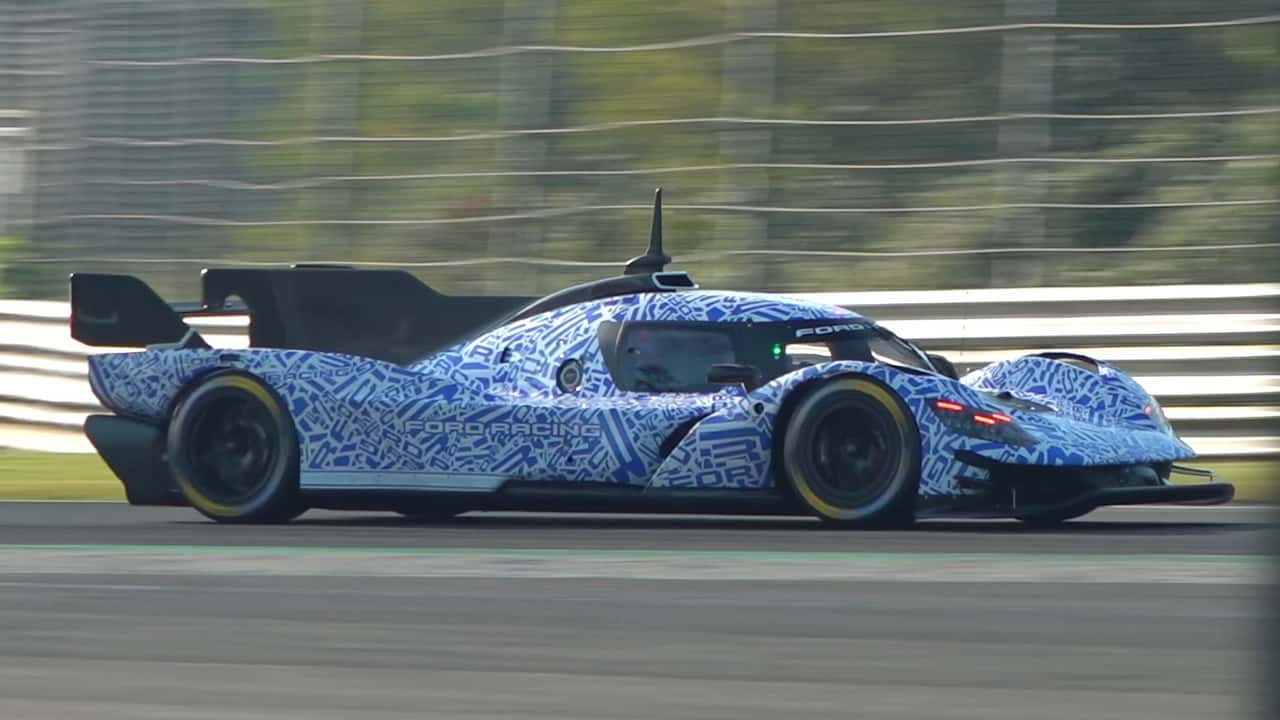
Ford’s new LMDh prototype packs a hybrid V8 based on the Coyote engine, and fresh footage captures it roaring around Monza.


The sound of internal combustion remains a cornerstone of motorsport culture, and nowhere is this more evident than in the latest testing footage from the Autodromo Nazionale Monza. As Ford continues the rigorous development of its Le Mans Daytona hybrid (LMDh) prototype, recent track sessions have provided enthusiasts and engineers alike with a rare, unfiltered look at the mechanical heart of the Blue Oval’s next great racing machine. Captured by the YouTube channel NM2255, the footage showcases the vehicle’s distinct, aggressive exhaust note, confirming that Ford’s decision to integrate a modified Coyote-based V8 into a hybrid architecture is yielding a visceral performance profile.
The Technical Foundation: A Modernized Icon
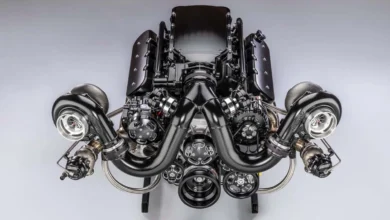
At the core of the prototype lies a 5.4-liter V8 engine, a displacement choice that signals a sophisticated evolution of the modular Coyote engine family found in Ford’s street-legal icons, including the Mustang. However, the requirements of the LMDh class—which governs the top-tier of endurance racing alongside the Le Mans Hypercar (LMH) category—necessitate a departure from mass-production specifications.
The powertrain is a complex hybrid system. Under current World Endurance Championship (WEC) and IMSA regulations, the combined power output of the internal combustion engine and the standardized electric motor-generator unit (MGU) is strictly capped at 670 horsepower. This limitation is not a restriction on engineering capability, but rather a tool for Balance of Performance (BoP) parity, ensuring that diverse powertrain architectures can compete on an even playing field. By choosing a V8 platform, Ford Racing is leveraging decades of high-revving reliability and torque characteristics, while the electric component provides the necessary boost to meet the stringent power-to-weight mandates of the class.
Chronology of the Return
The path to this moment has been paved with significant milestones. Ford’s commitment to the LMDh platform was formally announced as part of a strategic push to reclaim dominance on the world stage. Since the announcement, the manufacturer has moved through a series of developmental phases:
- Initial Concept and Design: Following the conclusion of the Ford GT program, the manufacturer signaled interest in the new hybrid-era regulations.
- Engine Bench Testing: Early in 2024, engineers began putting the Coyote-based hybrid unit through its paces on the dyno, focusing on thermal efficiency and the seamless integration of the hybrid deployment.
- Track Debut: The prototype transitioned to full-scale testing at various European circuits, including the high-speed sections of Monza, to stress-test the chassis, aerodynamics, and the complex regenerative braking systems required by hybrid endurance vehicles.
- The Upcoming Reveal: The full, unmasked livery and technical specifications are slated for an official unveiling on November 26, coinciding with the American Thanksgiving holiday.
- Competitive Debut: The vehicle will begin its official campaign in the 2027 WEC season, with the opener scheduled for Qatar in March.
The Weight of History: Le Mans 1966 to the Present
Ford’s history with the 24 Hours of Le Mans is among the most storied in automotive history. The 1966 victory, where the GT40 Mk II famously swept the podium in a one-two-three finish, redefined Ford’s global image. That era, characterized by an unrelenting pursuit of Ferrari, established the Blue Oval as a legitimate force in international sports car racing.
Returning to the Circuit de la Sarthe is not merely a marketing exercise; it is an institutional mandate. After the 1966-1969 four-year winning streak, the brand took a long hiatus from the top class, returning in 2016 with the Ford GT. While that victory in the LMGTE Pro class was significant, it lacked the prestige of an overall win. The new LMDh project is explicitly aimed at the overall podium, a feat that requires both mechanical reliability and a high degree of aerodynamic efficiency to navigate the Mulsanne Straight and the varying weather conditions synonymous with endurance racing.
Implications of the LMDh Hybrid Shift
The transition to a hybrid powertrain for the LMDh category is reflective of a broader industry shift toward electrification. For manufacturers like Ford, the challenge lies in maintaining brand identity through sound and performance while meeting the energy-recovery requirements of modern regulations.
The use of a Coyote-derived engine is a strategic choice for brand continuity. By maintaining a V8 architecture, Ford ensures that the racing prototype remains conceptually linked to the V8 Mustangs sold in showrooms. This "race on Sunday, sell on Monday" philosophy remains vital for the brand’s identity. Furthermore, the data gathered from the regenerative braking systems and energy management strategies used in the LMDh car are expected to influence the development of future high-performance production vehicles.
Official Perspective and Engineering Challenges
While Ford has remained relatively guarded regarding specific technical outputs—such as torque curves and battery chemistry—the consensus among motorsport analysts is that the car is performing within expected parameters. The testing sessions at Monza are designed specifically to evaluate how the car handles heavy braking zones and high-speed cornering under the added weight of the hybrid battery pack.
The integration of the MGU, supplied by a spec-series vendor to keep costs contained, has been the primary hurdle for all LMDh manufacturers. The software integration—ensuring that the handoff between the electric motor’s instant torque and the V8’s combustion cycle is seamless—is where the race is often won or lost. Ford’s decision to use a V8, which naturally produces significant torque in the mid-to-high RPM range, provides a complementary power delivery that makes the car easier for drivers to manage over long stints.
Broader Impact on the WEC and IMSA
The arrival of another major manufacturer to the LMDh grid is a major boon for the health of endurance racing. The class has seen a surge in popularity, with major manufacturers such as Porsche, Cadillac, BMW, and Alpine competing. This crowded field means that the margin for error is razor-thin. Every millisecond gained in the pits and every tenth of a second saved through efficient energy regeneration will be critical during the 24-hour events.
As the industry looks toward the 2027 season, the focus remains on the reliability of these complex machines. Endurance racing is, by definition, an exercise in mitigating failure. The prototype’s performance at Monza—completing long-distance runs without cooling issues or electrical failure—suggests that the team is on track for its 2027 debut.
Looking Toward the Horizon
The upcoming reveal on November 26 will be a critical juncture. It will be the first time the public sees the finalized aerodynamic package, which is likely to feature aggressive wing profiles and optimized air channels to maximize downforce while minimizing drag. This design will be the result of thousands of hours in computational fluid dynamics (CFD) simulations and wind tunnel testing.
As the WEC landscape prepares for the 2027 season, the narrative around Ford’s participation is clear: the company is leveraging its deep-rooted heritage to build a future-proof racing machine. By combining the soul of the Coyote V8 with the efficiency of modern hybrid technology, Ford is not just competing in a race; it is attempting to bridge the gap between its legacy of mechanical excellence and the electrified future of the automotive industry. With the countdown to the Qatar season opener in March 2027 now well underway, the focus has shifted from testing and development to the final optimization of a car that carries the hopes of an entire brand on its chassis.