Behind the Scenes and Beyond the Screen: How Collaboration Drives Modern Cinema from Dune: Part Three to the SCAD Savannah Film Festival

The evolution of modern filmmaking relies less on solitary creative visions and more on intricate, cross-departmental collaboration, a reality underscored during the recent SCAD Savannah Film Festival. As Hollywood continues to grapple with shifting audience expectations, rising production costs, and technological advancements, the mechanisms behind blockbuster franchises and independent cinema alike are undergoing a profound transformation. At the center of this cinematic shift is the synergy between directors, production designers, sound editors, and visual effects artists who must align their technical execution with tight budgetary constraints and grand narrative scopes.
Recent insights from top industry artisans—highlighted during Variety’s Creative Impact Awards and the 10 Artisans to Watch panel—provide a rare glimpse into the logistical hurdles of high-end production. From the ambitious, water-logged battle sequences of the upcoming sci-fi epic Dune: Part Three to the historically grounded costume choices of period dramas, contemporary filmmakers are leaning into unorthodox methodologies to achieve unprecedented levels of realism and spectacle.
The Spectacle of Dune: Part Three and Production Design Innovation
Set to premiere on December 18, Dune: Part Three promises to deliver an unprecedented cinematic climax. Based on Frank Herbert’s seminal 1969 novel Dune Messiah, the final installment of director Denis Villeneuve’s trilogy picks up 17 years after the events of Part Two. The narrative chronicles the complex and often tyrannical fallout of Paul Atreides’s ascent to the imperial throne, with Timothée Chalamet reprising his role as the complex leader.
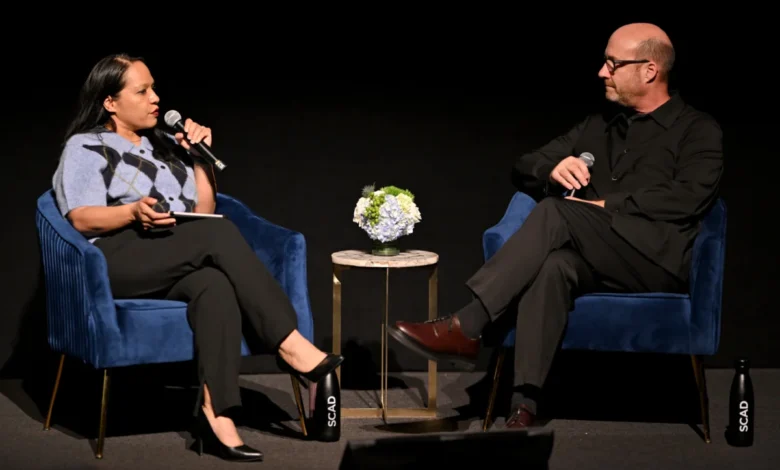
Patrice Vermette, the celebrated production designer whose work on the franchise earned him widespread critical acclaim, received Variety’s Creative Impact Award at this year’s SCAD Savannah Film Festival. During an extensive conversation with Variety’s Senior Artisans editor Jazz Tangcay, Vermette offered a tantalizing preview of what audiences can expect, comparing the film’s climactic visual delivery to a grand finale of a massive fireworks display.
Under Villeneuve’s strict directive to never repeat sets despite remaining within the same universe, Vermette and his team pushed logistical boundaries, particularly for the film’s opening sequence. Conceptualized as an expansive dark terrain featuring a massive 55-ton spaceship half-buried in black sand, the sequence required intricate engineering. The production built a fully functional 360-degree ship interior and exterior, utilizing heavy cranes every 48 hours and a complex subterranean pump system to manage continuous artificial rain and water accumulation for a sprawling battle sequence.
This meticulous attention to detail has been a hallmark of Vermette and Villeneuve’s partnership, which began with the 2013 psychological thriller Enemy. Reflecting on their collaborative ethos, Vermette noted that every physical object and set piece must remain grounded in a realistic narrative function, echoing the industrial septic tank inspirations behind the brutalist architecture of Giedi Prime in the earlier films.
The Synergy of Artisans: Highlights from the 10 Artisans to Watch Panel
Complementing the discussions on blockbuster world-building, the SCAD Savannah Film Festival’s 10 Artisans to Watch panel brought together a diverse group of behind-the-scenes professionals whose work has shaped the cinematic landscape over the past year. Introduced by Kathleen Radomski, Chair of Production Design at SCAD, the panel emphasized that modern filmmaking is fundamentally a communal endeavor connecting global departments under a singular artistic vision.
The 2025 honorees represented a wide spectrum of cinematic disciplines, including:
- Anne Jimkes, Supervising Sound Editor (The Mosquito Bowl)
- Aulo Licinio, Animation Supervisor (Project Hail Mary)
- Landon Lott, Art Director and Concept Illustrator (Pluribus)
- Blair McClendon, Editor (Clarissa)
- Adam Newport-Berra, Cinematographer (The Invite, Club Kid)
- Raúl Refree, Composer (La Bola Negra)
- Jessica Ronane, Casting Director (Elsinore)
- Allie Shehorn, Make-Up and Hair / Special Effects Department Head (Obsession)
- Grace Snell, Costume Designer (Sense and Sensibility)
- Danny Vermette, Production Designer (Backrooms)
These creators discussed how early involvement in pre-production directly impacts the quality of the final product. For instance, editor Blair McClendon advocated for joining projects before filming commences, noting that early dialogues with directors Arie and Chuko Esiri on Clarissa allowed him to curate precise editorial material that seamlessly fit the narrative rhythm. Similarly, composer Raúl Refree was brought onto La Bola Negra during the screenwriting phase, allowing directors Javier Calvo and Javier Ambrossi to draw direct creative inspiration from the musical score as they finalized their script.
Navigating Logistical Hurdles and Budgetary Constraints
Despite the grandeur of their respective projects, the panelists candidly addressed the universal challenge of operating within strict financial limitations. Art director Landon Lott detailed the collaborative effort required to construct an ice hotel for Pluribus, which drew inspiration from authentic Norwegian architecture while scaling down grand conceptual ideas to meet budgetary boundaries.
Practicality dictated high-stakes creative solutions in other departments as well. Allie Shehorn, handling special makeup and gore effects for Obsession, recounted executing complex physical effects that left the production team with only two viable takes to capture the scene accurately, requiring intense cross-departmental coordination between camera operators, actors, and the makeup crew.
In the case of the indie psychological horror Backrooms, production designer Danny Vermette faced material shortages when constructing expansive spatial environments. Rather than halting production, Vermette and director Kane Parsons embraced a slight tonal variation in a second imported rug, transforming a logistical limitation into a symbolic narrative transition within the film.
Costume designer Grace Snell faced a different kind of barrier in Sense and Sensibility, where historical garments often carry an intimidating sense of distance for modern viewers. By introducing contemporary styling elements—such as intentionally undone or mismatched garments—Snell bridged the chronological gap, allowing contemporary audiences to project themselves more easily into the lives of the characters on screen.
The Broader Implications for the Film Industry
The collective insights shared at the Savannah Film Festival offer a clear roadmap for the future of entertainment production. As studios increasingly scrutinize return on investment amid fluctuating box office returns, the ability of department heads to communicate fluently across technical and financial boundaries becomes an invaluable asset.
Industry veterans and emerging creators alike converged on a singular piece of advice for the next generation of filmmakers: versatility and continuous practical execution are paramount. Sound editor Anne Jimkes urged aspiring professionals to think like comprehensive filmmakers by understanding the language of producers, directors, and technical crew members alike. Echoing this sentiment, Patrice Vermette encouraged creators to bypass passive waiting and actively engage in hands-on production with peers.
As Dune: Part Three prepares to cap off one of the defining science fiction trilogies of the modern era, and as independent artisans continue to redefine aesthetic boundaries across television and film, the overarching message remains clear. The future of cinema will continue to be forged not by isolated auteurs, but by resilient, highly collaborative communities of artisans dedicated to pushing the medium into uncharted territory.