Ferrari intra-team friction at the Mexico City Grand Prix leaves championship implications in flux

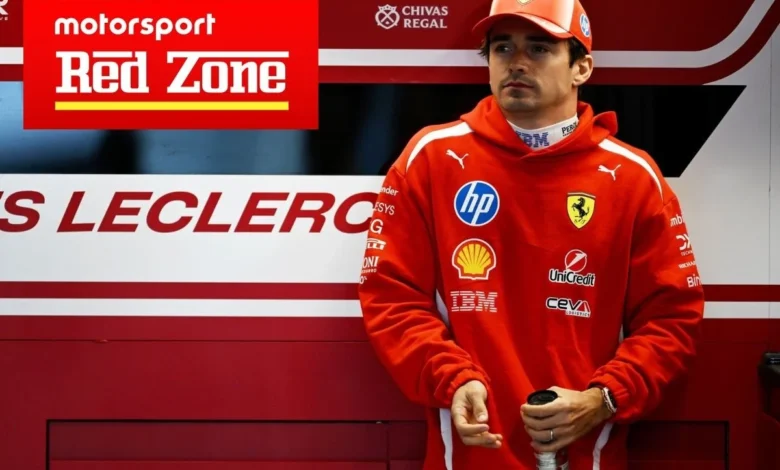
The Mexico City Grand Prix witnessed a dramatic exhibition of high-stakes internal competition as Ferrari teammates Charles Leclerc and Lewis Hamilton engaged in a series of aggressive wheel-to-wheel maneuvers during the opening lap. The incident, which occurred amidst the thin air of the Autódromo Hermanos Rodríguez, underscored the mounting pressure within the Maranello camp as both drivers look to maximize their standing in the closing stages of the Formula 1 season. What began as a strategic battle for the lead quickly devolved into a contentious affair that drew the attention of race stewards, resulted in a time penalty, and ultimately shifted the competitive landscape in favor of rival teams.
Chronology of the Opening Lap Chaos
The tension was palpable from the moment the starting lights extinguished. With both Ferraris locking out the front rows of the grid, the initial expectation was a controlled start. However, the sequence of events through the first four corners proved anything but routine.
At the exit of Turn 1, Lewis Hamilton utilized his experience to force Charles Leclerc wide, effectively challenging the Monegasque driver’s lead. The battle intensified immediately thereafter as the two scarlet cars navigated the complex toward Turn 4. Both drivers pushed their machinery beyond the threshold of grip, resulting in both cars missing the apex entirely. In the ensuing scramble to rejoin the racing surface, Leclerc opted to maintain his position rather than yielding to the seven-time world champion.
The decision to retain the lead off-track triggered an immediate review by the race stewards. While Leclerc queried his pitwall regarding the necessary corrective action, the delay allowed Red Bull’s Max Verstappen to capitalize on the hesitation, slipping past Hamilton and disrupting the Ferrari formation. By the time the dust settled on the opening sector, the race had transitioned from a controlled Ferrari procession to a tactical struggle involving the championship protagonists.
Regulatory Sanctions and Tactical Trade-offs
The stewards ultimately levied a time penalty against Leclerc for leaving the track and gaining a lasting advantage. Speaking during his post-race media availability, the 29-year-old acknowledged the legitimacy of the penalty but defended his split-second decision-making.
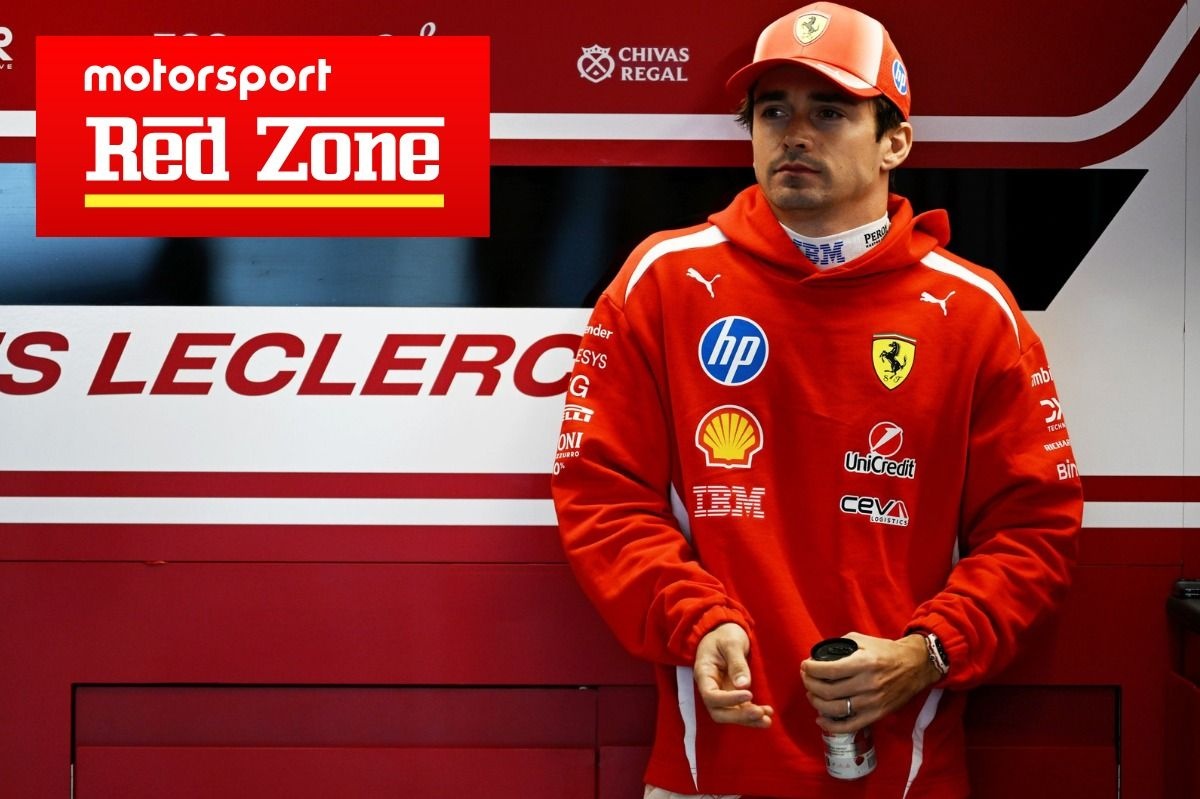
"The penalty was deserved in a way," Leclerc noted. "The situation was confusing because we both missed the Turn 4 apex. I stayed ahead, and in that moment, my priority was ensuring we did not lose unnecessary ground to the Red Bull behind us. I felt it was worth taking the hit to ensure we held the track position, even knowing a sanction was likely."
This admission highlights a calculated, albeit risky, approach to race management. By forcing the stewards’ hand, Leclerc accepted a sporting sanction in exchange for the tactical benefit of keeping his car ahead of his teammate, thereby attempting to dictate the pace of the race in the early stages.
The Impact of the Lap 45 Red Flag
The race dynamics underwent a total reset following the Lap 45 red flag, which halted the session and necessitated a standing restart. This interruption proved to be the undoing of Leclerc’s podium ambitions. Because the grid was reformed based on the standing order, Leclerc was forced to line up on the "dirty" side of the track—an area of the asphalt that had not been rubbered in by the racing line throughout the weekend.
The lack of grip at the restart allowed Mercedes rookie Kimi Antonelli to execute a clinical maneuver on the Ferrari driver. Antonelli, demonstrating composure beyond his years, navigated the traction-limited sector with precision, relegating Leclerc to fourth place.
"The pace was really good on the first stint, but the restart was brutal," Leclerc explained. "Lining up on the dirty side of the track made it impossible to defend effectively. The track surface wasn’t clean, and that lack of grip essentially decided the outcome for that restart. It is a frustrating reality of racing here."
Tensions and Team Dynamics
The aftermath of the race saw a palpable frustration from Lewis Hamilton, who was vocal over the team radio regarding the Turn 4 incident. The veteran driver demanded clarity from the pitwall, questioning why the internal battle had been allowed to escalate to the point of compromising both cars’ overall race position.

When pressed on whether he intended to smooth over the relationship with his teammate, Leclerc remained firm. He characterized the incident not as a personal slight, but as the inevitable byproduct of high-stakes racing between two world-class drivers fighting for a win.
"I will speak with Lewis, of course," said Leclerc. "However, I could just as easily be unhappy with how much he pushed me off the track at Turn 1. This is the nature of the sport at this level. When you are fighting for the top step of the podium, you expect aggressive racing. That is the way it should be."
Broader Implications for the Constructors’ Championship
The friction between the two Ferrari drivers arrives at a critical juncture in the 2024 season. With the Constructors’ Championship remaining a primary objective for Maranello, the recurring incidents of intra-team contact present a logistical and psychological challenge for team principal management.
Statistically, the loss of points resulting from the penalty and the subsequent drop behind the Mercedes at the restart has hindered Ferrari’s ability to pull away from their rivals. The incident at the Mexico City Grand Prix serves as a case study in the risks of allowing drivers the freedom to race without stringent "team orders" during the early stages of a Grand Prix.
Furthermore, the involvement of Max Verstappen—who successfully navigated the chaos to maintain his competitive edge—demonstrates how internal Ferrari disputes directly assist their rivals. By failing to prioritize a cohesive team strategy, Ferrari provided an opening for the Red Bull driver to remain in the hunt for points that might otherwise have been sequestered by the Scuderia.
Conclusion
The events at the Mexico City Grand Prix reflect the evolving dynamics of a team with two highly competitive, high-profile drivers. While the racing was undeniably thrilling for spectators, the implications for the championship suggest that Ferrari will need to refine its communication and on-track protocols. As the season approaches its finale, the ability to balance individual ambition with collective team success will likely determine whether the scarlet cars can secure the ultimate prize. For now, both drivers remain focused on the next round, though the "do-or-die" attitude displayed on the opening lap in Mexico suggests that the battle between the teammates is far from resolved.