BYD Great Han EV Shatters Records with 4,000 Sales in First 19 Days as Next-Generation Tech Reshapes the Global EV Market

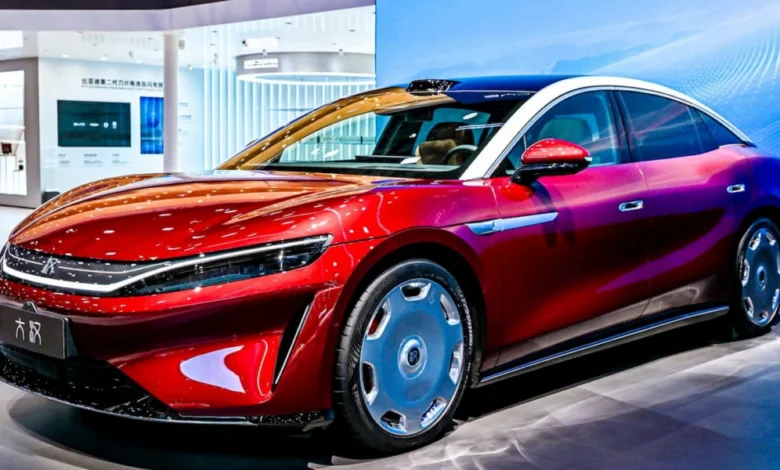
The electric vehicle landscape is undergoing a tectonic shift, and Chinese automotive giant BYD is firmly at the helm. Demonstrating an unprecedented acceleration in market penetration, BYD has announced that sales of its newly launched flagship electric sedan, the Great Han—known domestically as the "Da Han"—have reached 4,000 units in a mere 19 days following its official market debut on October 13. This extraordinary start underscores not only the brand’s growing dominance in the mid-to-high-end segment but also consumer readiness to embrace next-generation battery and charging innovations on a mass scale.
The arrival of the Great Han coincides with a period of staggering overall commercial momentum for BYD. Last month, the automaker reported sales exceeding 300,000 pure electric vehicles globally, a figure that highlights a staggering market reality: BYD sold more battery-electric vehicles in a single month than the entire United States automotive market managed across the entirety of the third quarter. Through October, BYD’s cumulative sales volume reached 1,953,700 vehicles, representing a 6% year-over-year growth rate compared to the same period in 2025. This persistent upward trajectory is widely attributed to the rapid commercial deployment of BYD’s proprietary technological breakthroughs, chief among them being the second-generation Blade Battery and ultra-fast flash charging infrastructure.
The Chronology of a Flagship Launch
The commercial rollout of the Great Han represents the culmination of a multi-year product lifecycle strategy within BYD’s prestigious Dynasty lineup. The timeline of this milestone reflects a calculated and swift execution from research and development to showroom floors:
- March: BYD initiates the integration of its second-generation Blade Batteries and Flash Charging technology across select new vehicle platforms, setting the technical foundation for its upcoming flagship releases.
- October 5: BYD’s companion flagship vehicle, the Great Tang SUV, solidifies its market standing by posting its fourth consecutive month of sales exceeding 10,000 units, ultimately reaching 14,000 units for October.
- October 13: BYD officially launches the Great Han (Da Han) in China, marking the brand’s first fully electric D-segment flagship sedan designed to challenge established luxury benchmarks.
- November (19 days post-launch): BYD confirms that retail sales for the Great Han have hit the 4,000-unit milestone, putting the vehicle on a trajectory to easily surpass 10,000 sales in its first full calendar month.
Pricing, Trims, and Powertrain Architecture
Positioned strategically in the mid-to-high-end sedan tier, the Great Han targets price points exceeding 250,000 yuan (approximately $37,500). Market analysts have frequently characterized the vehicle as offering "class-beating high value," undercutting legacy luxury alternatives while delivering specifications that rival vehicles costing twice as much.
The Great Han is offered in three distinct variants, with a starting price of 235,900 yuan (roughly $35,000). Consumers can choose between single-motor rear-wheel-drive (RWD) configurations and dual-motor all-wheel-drive (AWD) setups.

At the mechanical heart of every Great Han variant is BYD’s newly engineered 102.326 kWh Blade Battery 2.0 pack. The RWD Premium trim utilizes a single rear motor delivering 370 kW (496 horsepower), which yields an impressive CLTC-rated driving range of up to 1,008 kilometers (626 miles). For drivers prioritizing traction and high-performance dynamics, the AWD Flagship variant integrates an additional 200 kW (268 horsepower) front motor, pushing the combined output to a formidable 570 kW (764 horsepower) while still delivering an exceptional CLTC range of up to 880 kilometers (546 miles).
Dimensions and Luxury-Class Proportions
In terms of physical footprint, the Great Han defies traditional mid-size categorizations, offering dimensions that place it comfortably within the executive luxury class. Measuring 5,256 mm in length, 1,999 mm in width, and 1,510 mm in height, with a substantial wheelbase of 3,130 mm, the sedan is physically larger than established western flagships such as the Tesla Model S and the Lucid Air. In terms of sheer scale and road presence, it approaches the dimensions of the long-wheelbase Mercedes-Benz S-Class, providing rear-seat passengers with limousine-like accommodations.
To match its executive proportions, the vehicle comes heavily equipped with standard luxury and comfort amenities. All variants feature BYD’s advanced DiSus-A dual-chamber air suspension system, rear-wheel steering for enhanced maneuverability at low speeds and stability at high speeds, and ergonomically designed zero-gravity front seats tailored for long-distance driving comfort.
Breakthrough Charging Speeds Redefine the Ownership Experience
Perhaps the most significant technical talking point surrounding the Great Han is its integration of BYD’s next-generation Flash Charging architecture. Range anxiety and long charging times have historically served as the primary psychological barriers to mass EV adoption. BYD’s second-generation Blade Battery and flash-charging infrastructure aim to eliminate these hurdles entirely.
According to official performance metrics released by the manufacturer, the Great Han’s battery system is capable of replenishing its state of charge from 10% to 70% in a mere 5 minutes when connected to a compatible high-power charging stall. Furthermore, completing a near-full recharge from 10% to 97% takes just 9 minutes. This performance brings refueling times for a pure electric vehicle exceptionally close to the practical reality of refueling an internal combustion engine vehicle, a development that industry experts believe will fundamentally alter consumer expectations.
Advanced Driver Assistance Systems (ADAS) and Intelligent Driving
In line with industry trends toward software-defined vehicles, the Great Han incorporates a sophisticated suite of intelligent driving technologies. A prominent roof-mounted LiDAR sensor anchors the hardware suite, feeding data into BYD’s "God’s Eye B" system—an advanced iteration of the company’s proprietary intelligent driving architecture.

The Advanced Driver Assistance System (ADAS) offers a comprehensive array of active safety and autonomous convenience features. These include Navigate on Autopilot (NOA) capabilities designed to function seamlessly across both high-speed highways and complex urban environments. Additionally, the system supports remote autonomous parking, allowing operators to maneuver the vehicle into tight spaces via smartphone integration or remote commands.
Broader Market Implications and Industry Analysis
The rapid commercial takeoff of the Great Han holds significant implications for the global automotive sector. By combining luxury-tier dimensions, ultra-long driving ranges, high-performance powertrain options, and groundbreaking 9-minute charging capabilities at a price point hovering around $35,000 to $37,500, BYD is exerting intense downward pressure on legacy original equipment manufacturers (OEMs).
Industry analysts note that traditional automakers in Europe, North America, and Japan are facing a widening competitive gap. While legacy brands have struggled to scale profitable electric vehicle architectures while maintaining competitive cost structures, vertically integrated giants like BYD are leveraging in-house battery production, advanced software development, and massive domestic manufacturing scale to outpace international rivals.
The success of the Great Han—following closely on the heels of the Great Tang SUV’s sustained high sales volumes—demonstrates that BYD’s brand equity is successfully shifting upward into more lucrative market segments. As the company continues to expand its footprint internationally, the technological benchmarks established by vehicles like the Great Han suggest that the competitive dynamics of the global automotive industry will continue to be heavily influenced by rapid Chinese innovation and industrial efficiency throughout the remainder of the decade.