Alex Gibney Challenges Tech Hegemony and Algorithmic Control at DOC NYC Visionaries Tribute

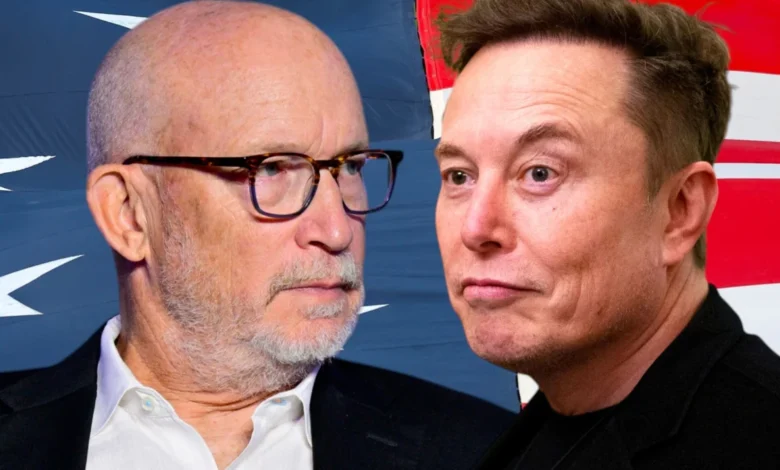
The annual Visionaries Tribute luncheon, held at the historic Gotham Hall in midtown Manhattan, served as the formal opening of the DOC NYC festival this week. The event, which brings together the world’s most influential documentary filmmakers, was marked by a sobering keynote address from Oscar-winning director Alex Gibney. Having just received the festival’s Lifetime Achievement Award, Gibney used the platform to issue a stark warning regarding the intersection of modern political influence and the algorithmic control exerted by major technology conglomerates.
A Call to Action in a Post-Election Climate
Gibney’s remarks arrived just one week after the conclusion of a high-stakes national election. Addressing a crowded room of industry peers, he struck a balance between acknowledging the immediate political environment and looking toward the long-term challenges facing creative expression. "It’s a glorious moment now, just a week after the elections in that magnificent blue wave," Gibney noted. "But, honestly, the hard work for us has just begun."
The director, whose prolific career includes critical examinations of corporate power and political corruption, pointedly addressed the influence of wealth in contemporary American politics. "The money behind MAGA has not gone away," he asserted. His critique expanded to include the role of Silicon Valley, specifically targeting figures like Elon Musk. Gibney argued that the current information ecosystem is increasingly defined by tech giants who prioritize data harvesting and algorithmic obedience over artistic provocation.
"They’ve stolen our data and sold it back to us as algorithms we’re supposed to obey," Gibney stated. He warned that filmmakers are under subtle, persistent pressure to conform to commercial imperatives, noting that creators are often cautioned against being "adventurous" or "provocative" for fear that their work will be suppressed by the automated systems that govern content discovery.
The Anatomy of the Documentary: Musk and Beyond
The timing of Gibney’s address is particularly relevant given the release of his most recent project, Musk. The four-hour documentary, which premiered earlier this year at the Venice Film Festival before its theatrical release on October 9, represents an exhaustive attempt to decode the influence of the world’s wealthiest individual. The film examines the vast business empire of the Tesla and SpaceX founder, providing a deep dive into how his political and commercial activities have shifted global norms.
Gibney’s career is defined by his willingness to tackle complex, often controversial subjects. His filmography serves as a chronology of American power structures over the last two decades. From his Academy Award-winning Taxi to the Dark Side (2007) to the exposé of institutional corruption in Enron: The Smartest Guys in the Room (2005), and his investigative deep dives in Going Clear: Scientology & the Prison of Belief (2015) and Mea Maxima Culpa: Silence in the House of God (2012), Gibney has consistently positioned the documentary format as a tool for public accountability.
Earlier this year, Gibney also brought Knife: The Attempted Murder of Salman Rushdie to the screen at Sundance. Based on Rushdie’s 2024 memoir, the film explores themes of free speech and resilience in the face of violent suppression. During the Visionaries Tribute, Gibney took a moment to honor both Salman Rushdie and his wife, Rachel Eliza Griffiths—who served as a cinematographer and producer on the project—both of whom were present in the audience.
Industry Recognition and the Future of Non-Fiction
The DOC NYC Visionaries Tribute not only honored Gibney but also highlighted the work of other vital contributors to the field of non-fiction storytelling. The festival, which has grown to become the largest documentary festival in the United States, uses the luncheon to set the tone for the industry’s trajectory.
Among the honorees, filmmaker and sound recordist JT Takagi received a Lifetime Achievement Award for her contributions to the craft. Stephen Maing, an Emmy Award-winning director, was the recipient of the Robert and Anne Drew Award for Documentary Excellence. Additionally, the festival recognized the high-stakes work of Raney Aronson-Rath, the editor-in-chief and executive producer of Frontline on PBS, who was honored with the Leading Light Award for her leadership on projects such as the visceral 20 Days in Mariupol.

In his acceptance speech, Gibney emphasized the collaborative nature of filmmaking, specifically elevating the role of the editor. "I started out as an editor, and I particularly want to elevate the editors of documentaries," he remarked. "Luckily for me, I have those editors to fall back on, and my original three-hour and 45-minute speech has been cut down considerably," he joked, referencing the significant runtime of his latest project on Elon Musk.
The Algorithmic Dilemma: Implications for Independent Media
The core of Gibney’s critique centers on the existential threat that algorithmic distribution poses to independent documentary filmmaking. In a landscape where platform giants control the discoverability of content, the pressure to optimize for "engagement" often comes at the expense of nuance, complexity, and dissent.
Analysis of current media consumption habits shows a growing reliance on platform-specific recommendations. When algorithms are trained to maximize time-on-site or advertising revenue, content that challenges established narratives or requires a significant cognitive investment—the hallmark of the long-form documentary—may be deprioritized.
Gibney proposed that the solution lies in collective action. "We can and should say, ‘f-k the algorithms,’" he told the audience, receiving a wave of applause. "But, in their place, we need to work together to create a new ecosystem that allows us to protect individual expression and free speech, even as we find a way to deliver and promote our films to the audiences who want to see them."
Looking Ahead: Establishing New Ecosystems
As the DOC NYC festival commences, the industry is grappling with the practicalities of Gibney’s vision. The "new ecosystem" he describes involves moving beyond reliance on the standard distribution models dominated by major tech players. This involves exploring decentralized distribution, community-funded models, and independent streaming platforms that do not utilize opaque algorithms to dictate cultural relevance.
The broader implications for the documentary field are significant. If independent filmmakers lose the ability to reach audiences without the "blessing" of a major tech-controlled algorithm, the diversity of political and social discourse in the United States could face a period of contraction. Gibney’s call to action is a challenge to the documentary community to reclaim their agency.
His final comments at the tribute were forward-looking, noting that there is already "interesting experimentation" occurring within the documentary world. He encouraged his peers to coalesce around these new methods to ensure that vital, challenging stories continue to reach the public.
As the festival continues, the discussions sparked by Gibney’s address are expected to resonate through the panel sessions and screenings. The event served as a stark reminder that in an era of rapid technological change, the survival of investigative and artistic journalism requires not just the courage to film, but the collective will to build a sustainable infrastructure that protects the integrity of the work from the encroachment of commercialized automation.
The DOC NYC festival, by bringing these issues to the forefront during its opening day, has signaled that the coming year will likely be defined by a shift toward more intentional, artist-controlled distribution strategies, as creators seek to bypass the gatekeepers of the digital age.
Related posts: