Max Verstappen to lead the field to the green light for the Las Vegas Grand Prix after a turbulent qualifying session.

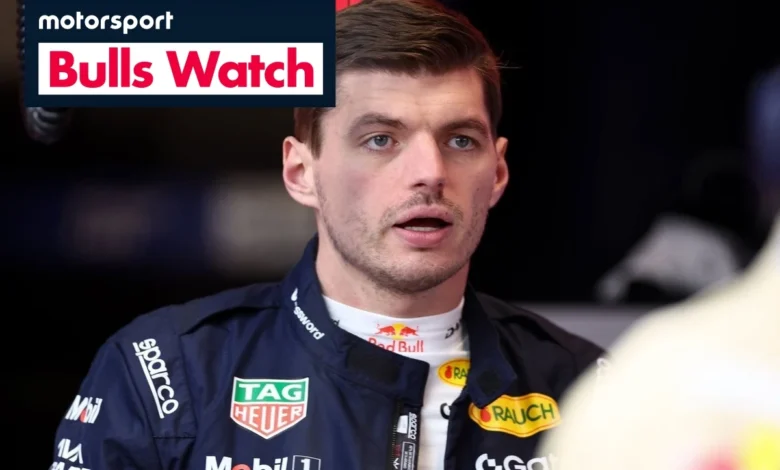
The neon-lit streets of Las Vegas have once again provided the backdrop for a dramatic Formula 1 qualifying session, one that saw four-time world champion Max Verstappen emerge on pole position despite enduring a weekend defined by technical volatility and internal frustration. While the Red Bull Racing driver secured the premier starting spot for Saturday night’s race, the journey to the front of the grid was far from a straightforward display of dominance. Instead, it was a test of resilience as Verstappen battled a persistent, ill-defined mechanical issue that has haunted his RB22 since the Brazilian Grand Prix.
The Path to Pole Position
Verstappen’s path to the front of the pack was bolstered by a tactical shift in the rival garage. The newly crowned world champion, Kimi Antonelli, set the pace during the Q3 session with a blistering 1m33.893s lap, a time that underscored the Mercedes driver’s current form. However, the Italian’s efforts were rendered moot for the starting order when Mercedes elected to install a sixth internal combustion engine in his car. This change triggered a grid penalty, dropping Antonelli to sixth and effectively handing the top spot to Verstappen, who had clocked a 1m34.151s.
For Verstappen, the pole position serves as a vital reprieve after what he described as a "rocky build-up" to the Las Vegas weekend. The Dutchman has been vocal about his dissatisfaction with the car’s handling, noting that the "weird issues" he encountered in Brazil have persisted throughout his time in Nevada. During the post-qualifying press conference, Verstappen offered a candid assessment of the situation: "It’s probably the best one of the weekend, because really since Brazil I have some weird issues basically in the car, and that continued also this weekend. I’m just trying to get my head around how to deal with that basically for the remainder of the weekend. And that didn’t make it easy in FP3, but in qualifying we managed to make it work."
A Fragmented Build-up: Friday’s Trials
The friction between driver and machine was palpable throughout Friday’s track time. During the final practice session (FP3), Verstappen struggled for consistency, ending the session in sixth place. His radio transmissions painted a picture of a car that was fundamentally unsettled, with the Dutchman complaining that the RB22 felt "super sharp on the straights" and behaved in a "weird" manner that hindered his ability to commit to corner entry.
Beyond the technical grievances, the stewards’ office took an interest in Verstappen’s on-track conduct. The Red Bull driver found himself under scrutiny for two separate incidents. The first, a weaving maneuver ahead of Alpine’s Franco Colapinto, resulted in no further action after a review by the race officials. However, a second clash in Turn 14 with Mercedes’ George Russell—in which Verstappen was found to have changed direction under braking—led to a formal warning. These moments highlighted the heightened intensity and potential for error on the high-speed, low-grip surface of the Las Vegas circuit.

The Q2 Lifeline: Mastering the Slipstream
The qualifying session itself nearly ended in disaster during the second segment (Q2). The nature of the Las Vegas street circuit, characterized by its long straights and cold temperatures, places a massive premium on the aerodynamic "tow" or slipstream. Verstappen admitted that he came dangerously close to an early exit before a late-session adjustment to his approach allowed him to leapfrog the competition.
"The tow around here is crazy because I was actually close to getting knocked out in Q2," Verstappen explained. "So then I went out on my final lap, and I was like four seconds behind the car or four and a half, and I gained like seven or eight tenths on the lap while not actually gaining that much." This strategic use of the slipstream—an art form on the Strip—allowed him to finish ahead of Pierre Gasly, while both Ferrari drivers were unexpectedly eliminated, marking a significant shift in the competitive landscape for the race.
Strategic Implications and Team Dynamics
As the grid prepares for the race, the focus shifts toward Red Bull’s broader objectives. With Verstappen aiming for a third consecutive Las Vegas victory—having won both the 2023 and 2025 editions from the second row—his team-mate Isack Hadjar has provided crucial support by qualifying in fourth. This placement is strategically significant as Red Bull attempts to solidify its 17-point lead over McLaren in the Constructors’ Championship.
When questioned on how he intends to defend the lead against George Russell, who starts alongside him, Verstappen remained characteristically pragmatic. "It also just depends a bit on the base pace, if we can actually be in that fight like that, and then how the tyres hold up," he stated. "The rest will all sort itself out, to be honest—the potential racing or drafting or whatever."
The tire management component mentioned by Verstappen is critical for Saturday. The low temperatures in Las Vegas often lead to graining, and the ability to keep the rubber in the optimal operating window will likely determine the winner as much as raw speed. With long straights allowing for easy overtaking via DRS, the leader is often vulnerable to being "drafted" past before the braking zones.
Broader Impact: The 2025 Landscape
The 2025 season has been defined by evolving hierarchies. Kimi Antonelli’s meteoric rise to the world championship has shifted the spotlight away from the established order, and Mercedes’ willingness to take engine penalties indicates they are prioritizing performance over individual race results for their star driver. For Red Bull, the focus remains on the marginal gains required to keep their title defense intact.
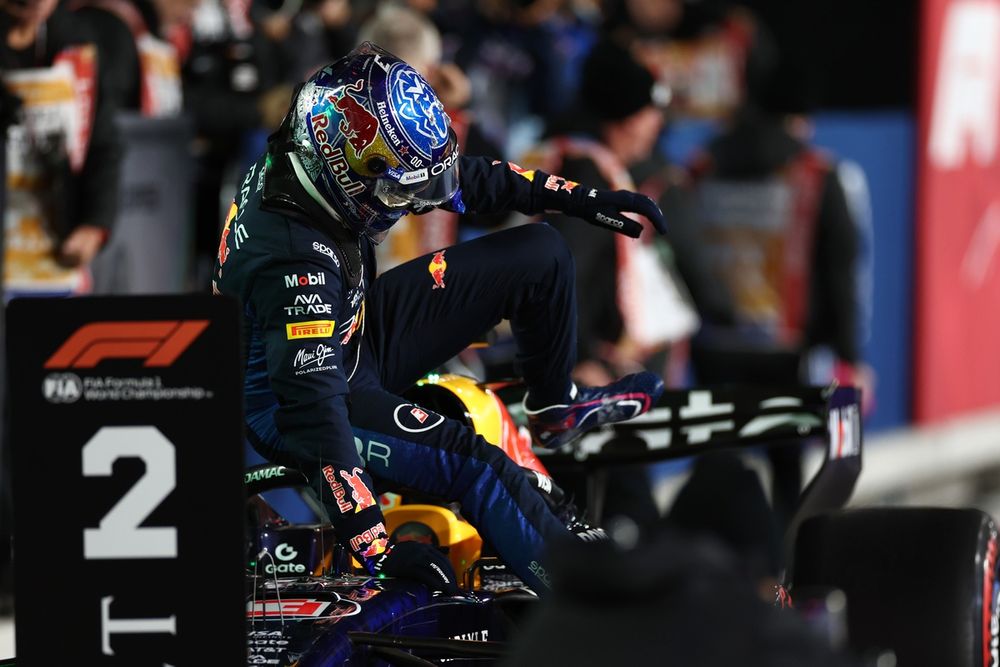
The fact that Verstappen managed to secure pole despite what he classifies as a sub-optimal car highlights the unique skill set that has defined his career. However, the presence of these "gremlins" in the car suggests that Red Bull’s engineering team will have a long night of analysis ahead of them. If the underlying issue—be it a steering-rack concern or a deeper suspension geometry problem—is not resolved before the lights go out, Verstappen will face an uphill battle to keep the field at bay.
Looking Ahead to the Grand Prix
The atmosphere in Las Vegas is expected to reach a fever pitch as the race begins. The circuit, which winds past some of the most iconic landmarks in the world, presents a unique challenge to the drivers: the lack of grip, the high speeds, and the unpredictable nature of the night air. With the Constructors’ Championship race tightening and the pride of the individual drivers on the line, the tactical battle for the slipstream will likely dictate the first several laps.
As the grid forms up, the narrative is clear: Verstappen starts with the advantage of track position, but his championship-winning resolve will be tested by a technical hurdle that has yet to be fully tamed. With Mercedes looking to reclaim ground and McLaren lurking, the Las Vegas Grand Prix is set to be one of the most unpredictable rounds of the latter half of the season.
Whether Verstappen can overcome his car’s instability to secure a third win in this city remains the defining question of the weekend. For now, the Dutchman holds the cards, but in the high-stakes environment of Las Vegas, the lead is often just a temporary state. The championship points on offer are vital, but the psychological battle between the top teams will be the true story of the night. The race will begin under the floodlights, with the entire field ready to exploit any weakness in the leader’s armor. All eyes will be on the first corner to see if the pole-sitter can navigate the chaos of the opening lap with his car—and his title defense—intact.