Mahershala Ali Reveals Why Two Academy Awards Do Not Guarantee Casting Success in Hollywood

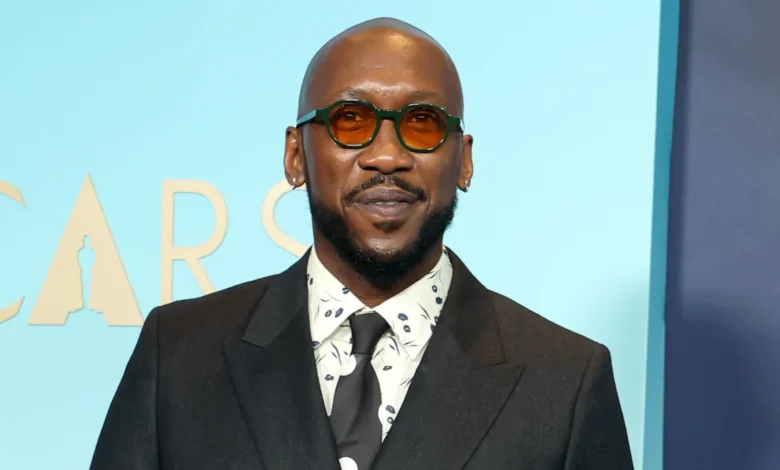
The landscape of professional acting is often perceived by the public as a meritocratic hierarchy where prestigious accolades serve as permanent keys to the most coveted roles in cinema. However, Mahershala Ali, a two-time Academy Award winner, has offered a sobering reality check regarding the nature of the industry. In a candid appearance on the 7pm in Brooklyn podcast, Ali articulated that despite his decorated career—which includes historic wins for Moonlight (2017) and Green Book (2019)—the presence of Oscar statuettes does not provide a buffer against the fundamental challenges of the audition and casting process. For Ali, the industry is defined not by past honors, but by a chronic scarcity of quality material and the systemic hurdles that continue to dictate who receives professional opportunities.
The Reality of the Casting Room Floor
Ali’s commentary centers on the disconnect between industry awards and the day-to-day mechanics of film production. He suggests that while an Academy Award signifies peer recognition for a specific performance, it carries little weight when casting directors and studios are assessing the suitability of an actor for a specific, often narrowly defined, role.
"It’s a natural way for people to think," Ali explained during his podcast conversation. "But on some level, what does an Oscar mean? It’s an award where you’re being recognized, hopefully for doing good work. But there’s a lot of great actors that don’t have Oscars, who are also looking for good material. So, it doesn’t really mean anything."
This perspective highlights a broader frustration shared by many high-caliber performers: the realization that the sheer volume of talented actors significantly outpaces the volume of well-written, greenlit projects. In the current Hollywood climate, being a "name" or a "winner" is secondary to the specific vision of the writer and director. If a project is not explicitly conceived with an actor of Ali’s profile in mind, his past achievements offer no guarantee of an invitation to the table.
A Chronology of Accolades and Challenges
Mahershala Ali’s career trajectory serves as a primary case study for the evolution of an actor navigating systemic shifts in Hollywood. His rise to prominence was marked by steady, deliberate work in television and independent film before his breakout roles in the mid-2010s.
- 2017: Ali makes history at the 89th Academy Awards, becoming the first Muslim actor to win an Oscar, taking home the trophy for Best Supporting Actor for his portrayal of Juan in Barry Jenkins’ Moonlight.
- 2019: He cements his status as a cinematic powerhouse, winning his second Best Supporting Actor Oscar for his performance as Dr. Don Shirley in Green Book.
- 2020-2023: Ali engages in a variety of high-profile projects, including voice work and long-gestating roles, while simultaneously navigating the shifting landscape of streaming-led content and post-pandemic theatrical releases.
- 2024: Ali draws critical acclaim for his performance in Bassam Tariq’s Your Mother Your Mother Your Mother, renewing conversations about his status as one of the most selective and respected actors in the industry.
Despite this timeline of success, Ali’s testimony confirms that the search for the "right" role remains as competitive for him today as it was at the beginning of his career. The assumption that an actor of his caliber is bombarded with endless, bespoke opportunities is, according to Ali, a misconception.
Data and Industry Trends: The Scarcity of Opportunity
The core of Ali’s argument touches upon the economic and creative bottleneck in modern filmmaking. According to data from the Writers Guild of America (WGA) and the Screen Actors Guild (SAG-AFTRA), the number of working actors has grown significantly over the last decade, yet the number of high-budget, narrative-driven feature films has faced contraction or shifted toward massive franchise intellectual property (IP).
When projects do reach the greenlight stage, they are often curated by a relatively small group of decision-makers. Ali points out that these decision-makers frequently "center" the perspectives they are most familiar with. If the individuals in power—executives, producers, and showrunners—do not reflect the diversity of the world at large, the material they approve is statistically less likely to feature diverse leads or nuanced, non-stereotypical roles for actors of color.
The Impact of DEI Rollbacks
A critical component of Ali’s critique involves the recent decline in corporate Diversity, Equity, and Inclusion (DEI) initiatives across major Hollywood studios. In the wake of shifting political and economic pressures, many studios have scaled back or entirely dismantled the programs designed to foster inclusive storytelling and hiring practices.
Ali suggests that these rollbacks have tangible, negative consequences for the industry’s output. By removing the pressure to be reflective of the contemporary world, companies revert to a status quo that prioritizes insular, homogenous decision-making. "If certain companies are allowed to not feel a pressure to be reflective of the world we live in, they’ll just keep centering who they see in their offices," Ali noted. This feedback loop ensures that the scripts being developed are inherently limited in their scope, regardless of how many talented actors are available to perform them.
Beyond the "Diversity Project" Label
Perhaps the most poignant aspect of Ali’s sentiment is his desire to be evaluated solely on the merits of his craft, rather than through the lens of identity-based casting. There is a palpable exhaustion in his tone when discussing the pressure to participate in what he calls "diversity projects."
The industry often categorizes roles into "general" parts and "diversity" parts. For an actor of Ali’s stature, this categorization is reductive. He argues that Black actors, like their counterparts, are not looking to be treated as an "exotic other" or a checkbox. They are looking for human stories that allow for depth, complexity, and artistic fulfillment. "You just want to do great material as a Black person," Ali emphasized. "You’re not thinking of yourself as this exotic other, per se. You just are living your life. You wake up. You put your pants on like everybody else."
This rejection of the "diversity" label is an assertion of agency. It is a demand for a version of Hollywood where a performer’s background is not the defining characteristic of their professional identity, but rather one facet of a broader, universal creative offering.
Implications for the Future of Filmmaking
The implications of Ali’s statements are significant for both the industry and the audience. If even an actor with two Academy Awards finds that he is essentially "waiting, looking, and searching" for the right script, the implications for mid-career and emerging actors are stark.
- Systemic Homogeneity: The reliance on insular decision-making processes risks stagnating cinematic creativity. When scripts are written only for a specific, narrow demographic, the industry loses the potential for broader cultural resonance.
- The Talent-Material Gap: The industry faces a crisis of distribution rather than a crisis of talent. There is an abundance of world-class performers, yet the structures for producing the material that justifies their skills are becoming increasingly rigid.
- The Shift in Power: Ali’s commentary suggests that until the power dynamics in executive offices are fundamentally altered to be more inclusive, the output of the entertainment industry will remain constrained by the limited life experiences of those in charge.
Conclusion
Mahershala Ali’s recent comments serve as a necessary disruption to the idealized view of Hollywood success. By stripping away the prestige associated with his Oscars, he has revealed a professional reality defined by persistence, the struggle for artistic integrity, and a fight against a system that often prefers convenience over authentic representation. His call for a more inclusive and imaginative approach to greenlighting material is not merely a request for more roles for actors of color; it is a challenge to the industry to expand the very definition of what constitutes a "good" story.
As the industry moves forward, the pressure to maintain DEI efforts will likely remain a flashpoint in labor and creative negotiations. For actors like Ali, the path forward involves continuing to advocate for work that reflects the complexity of the human experience—regardless of the awards that may or may not follow. In the end, as Ali succinctly stated, "This is my offering. This is my story. This is my work." The measure of that work, he suggests, is found not in a gold statue, but in the truth and resonance of the performance itself.