The landscape of American midterm elections has historically been defined by economic indicators, presidential approval ratings, and localized legislative battles. However, the political environment leading into the 2026 midterms has increasingly pivoted away from traditional policy debates toward explicit appeals to identity politics, racial animus, and cultural grievance. Facing a challenging electoral map complicated by persistent inflation, global conflicts, and domestic housing shortages, the Republican Party and the broader MAGA movement have increasingly relied on polarizing rhetoric centered on race, religion, and national origin.
This strategic reliance on cultural division is not entirely unprecedented in modern American politics. Yet, the intensity and explicit nature of the messaging observed in the current election cycle mark a notable escalation from previous decades. Observers, political analysts, and campaign strategists are closely examining how this rhetoric influences voter turnout, reshapes party coalitions, and impacts the broader trajectory of American democracy.
Historical Roots of Racialized Political Strategy
To understand the rhetoric defining the 2026 midterms, it is necessary to examine the evolution of political messaging over the past several decades. Political scientists have long documented how campaigns utilize racial dog-whistles and cultural flashpoints to mobilize specific voter segments.
In the late 20th century, campaigns frequently utilized coded language to address economic anxieties while subtly invoking racial stereotypes. Landmark political strategies, such as the deployment of the "welfare queen" narrative during the Reagan administration, utilized targeted archetypes to frame government assistance programs as culturally and economically damaging. Subsequent election cycles saw variations of this strategy, ranging from debates over affirmative action to heightened focus on border security and immigration enforcement.
The emergence of the Tea Party movement in the 2010 midterm elections represented a significant inflection point. Capitalizing on the economic fallout of the 2005-2008 global financial crisis and ongoing military engagements overseas, the movement propelled the GOP to a historic pickup of 63 congressional seats. While officially framed around fiscal conservatism, limited government, and constitutional originalism, academic research later underscored how racial anxieties—specifically galvanized by the election of the nation’s first Black president—played a foundational role in mobilizing the movement’s base.
In the years following, political campaigns led by Donald Trump integrated direct attacks on marginalized communities, immigrants, and political opponents directly into mainstream political discourse. Birtherism conspiracy theories, broad characterizations of Latin American immigrants, and public criticisms of foreign nations laid the groundwork for the messaging strategies observed in contemporary politics.
The 2026 Electoral Map and the Shift Away From Policy
As the United States approaches the 2026 midterm elections, the political opposition faces significant hurdles. Economic challenges, including high costs of living, a burgeoning national housing crisis, and inflationary pressures, alongside international tensions such as a volatile conflict involving Iran, typically present vulnerabilities for the party in power.
However, rather than focusing exclusively on economic critiques or legislative alternatives, key figures within the Republican leadership and high-profile surrogates have frequently pivoted campaign messaging toward cultural and identity-based grievances. Analysts note that this shift reflects a calculation that polarizing identity politics can effectively energize a core base of voters, even when traditional economic indicators present a complex landscape for the party out of power.
The Michigan Senate Race and Focal Points of Controversy
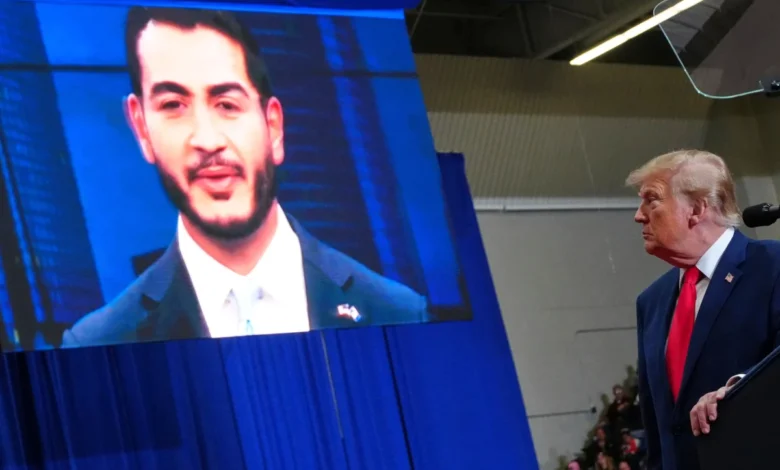
A primary illustration of this rhetorical strategy has unfolded in Michigan, where high-stakes Senate contests have drawn national attention. Democratic candidate Abdul El-Sayed has emerged as a central target for attacks from the political right. El-Sayed, a progressive Muslim-American politician, has faced intense scrutiny and rhetoric from federal officials, campaign surrogates, and national figures.
At a rally in Port Huron, former President Donald Trump leveled sharp accusations against El-Sayed, suggesting that his victory would lead to increased security risks and invoking unsubstantiated claims regarding the candidate’s background. Trump and other campaign surrogates repeatedly utilized derogatory variations of El-Sayed’s name and questioned his fitness for public office based on his religious and ethnic identity.
The rhetoric has extended across the upper echelons of the administration. During a campaign stop in Michigan, Vice President JD Vance accused El-Sayed of engaging in "anti-white" racism, a framing increasingly utilized by far-right figures to mobilize economically disadvantaged white demographics by casting minority political candidates as hostile to their interests.
Simultaneously, statements from other high-ranking officials have contributed to the broader cultural discourse. Health and Human Services Secretary Robert F. Kennedy Jr. drew sharp criticism following public remarks questioning the scientific and cultural contributions of Arab nations, comments that civil rights organizations and political opponents identified as a thinly veiled extension of the anti-Arab and anti-Muslim rhetoric dominating the current campaign cycle.
Broader Institutional and Legislative Impacts
The rhetorical strategies observed on the campaign trail are mirrored in policy initiatives and executive actions taken by the administration. Over recent years, immigration enforcement actions have intensified, notably involving the stripping of Temporary Protected Status (TPS) from Haitian nationals and aggressive Immigration and Customs Enforcement (ICE) operations across various domestic regions.
Furthermore, legislative oversight and investigations have increasingly targeted prominent minority lawmakers. Reports of federal investigations targeting sitting members of Congress, such as Somali-American Representative Ilhan Omar—including inquiries exploring avenues to challenge citizenship status—have underscored an escalation in the intersection of partisan politics and national origin disputes. Civil liberties advocates argue these actions establish a concerning precedent regarding the treatment of elected officials from immigrant backgrounds.
Ecosystem of Extremism: Down-Ballot Races and Influential Donors
The normalization of explicit identity-based attacks has cascaded down the ballot, emboldening fringe candidates in state and local races. In Texas, for example, state-level candidates have faced public backlash after posting remarks highlighting demographic shifts at university athletic events, focusing specifically on the presence of South Asian-American students.
The phenomenon is further amplified by influential financial backers and media figures. High-profile donors, including technology executive Elon Musk, have utilized social media platforms to repeatedly post content centered on demographic changes, racial tropes, and cultural grievances, while directing substantial financial resources into political action committees and attack advertisements across multiple battleground states. These interventions highlight the central role that digital media ecosystems play in circulating and validating polarizing narratives among the electorate.
Analysis of Implications for American Democracy
Political scientists and constitutional scholars have raised concerns regarding the long-term implications of normalizing explicitly nativist and identity-based rhetoric in mainstream elections. While electoral strategies focused on cultural division have historically yielded short-term mobilization benefits, experts warn that the erosion of norms surrounding pluralism and civic inclusion can deepen societal polarization.
Furthermore, focusing campaigns on identity rather than substantive governance challenges public institutions’ ability to address complex structural issues, such as housing affordability, economic mobility, and healthcare access. As the 2026 midterms progress, the outcome of these races will likely serve as a critical indicator for the future trajectory of American political campaigns, determining whether identity-based grievance politics remains a dominant framework for electoral success or faces a democratic correction from an electorate increasingly fatigued by polarization.