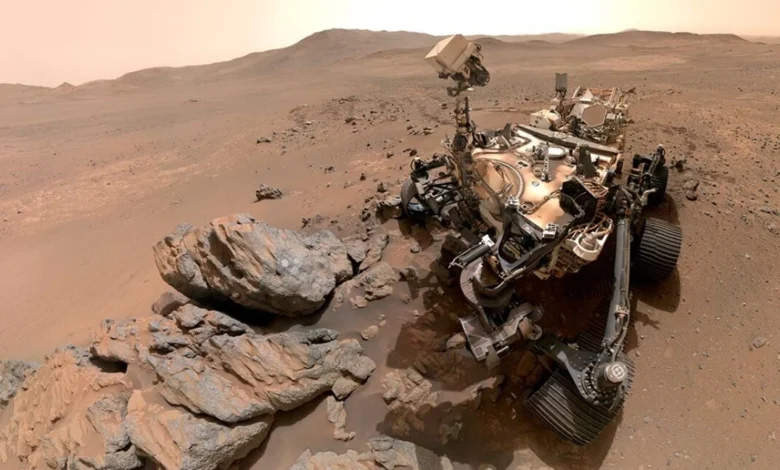
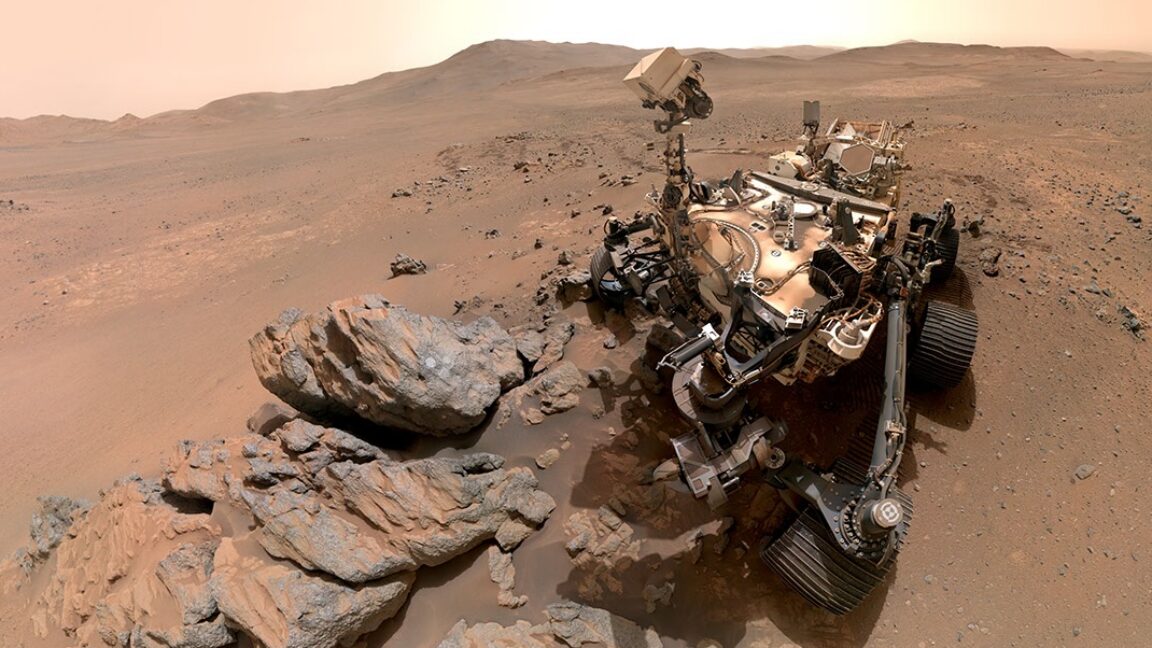
Two of NASA’s four primary missions currently operating on or around Mars have suspended science operations following a series of critical technical malfunctions that have emerged in recent weeks. The Perseverance rover and the Odyssey orbiter—both of which have long exceeded their original operational design lifetimes—are currently the subject of intensive troubleshooting by engineering teams at the Jet Propulsion Laboratory (JPL) in Southern California. These twin outages highlight the inherent risks associated with maintaining aging robotic infrastructure in the harsh, high-radiation environment of the Martian surface and orbit, even as the agency looks toward future replenishment of its planetary fleet.
The Perseverance Communications Crisis
The Perseverance rover, currently in its sixth year of exploration, encountered a significant hurdle on October 30 when its primary Ultra-High Frequency (UHF) radio became unresponsive during a scheduled power-up sequence. This radio system is vital for the rover’s operations, as it facilitates high-rate data transmission to a network of orbiting satellites, which then relay that information back to Earth via the Deep Space Network.
Upon detecting the primary radio failure, the rover’s onboard systems initiated an automatic fail-safe, switching to a backup UHF radio and entering "safe mode." However, ground controllers soon discovered that the backup unit was only performing at approximately 50 percent of its expected power output. Out of an abundance of caution, mission managers made the decision to cease all science operations, including the collection and caching of rock samples, to focus entirely on diagnostics.
Perseverance is currently capable of transmitting data directly to Earth using its X-band radio system. While this provides a reliable emergency link, it operates at a significantly lower data rate, making it insufficient for the heavy data loads required by the rover’s sophisticated suite of cameras and geological instruments. NASA officials have stated that the engineering team is prioritizing the stabilization of the backup UHF system, with hopes that normal science operations could resume by the end of November, pending a full assessment of the hardware’s health.
Odyssey: A Race Against Time and Fuel
While the issues with Perseverance are concerning, the situation regarding the 2001 Mars Odyssey orbiter is arguably more critical. As the longest-lived Mars mission in human history, Odyssey has been a workhorse for over two decades. However, its longevity is now being tested by mechanical wear.
In early November, one of the orbiter’s four reaction wheels—the internal spinning devices used to precisely point the spacecraft—ceased functioning. This is not the first such failure; the orbiter lost its first wheel in 2013. Spacecraft of this design typically require a minimum of three operational reaction wheels to maintain stable orientation. Without the necessary tri-axis control, the orbiter is forced to rely on its hydrazine thrusters to correct its attitude.
The depletion of fuel reserves adds a layer of urgency to the situation. Prior to the failure, project scientists had calculated that, with extremely conservative fuel usage, Odyssey could remain operational through at least the end of 2028. That projection, however, relied on the assumption of a fully functional attitude-control system. With only two working reaction wheels, the orbiter’s fuel consumption has spiked significantly. Current estimates suggest the spacecraft may only have one to two months of fuel remaining if the third wheel cannot be coaxed back into operation. Ground teams are currently attempting to troubleshoot the recalcitrant wheel, though the success of these efforts remains uncertain.
A Legacy of Exploration and Aging Infrastructure
The current difficulties faced by Perseverance and Odyssey are emblematic of the broader challenges NASA faces in maintaining a continuous presence on the Red Planet. The agency’s Mars program relies on a delicate relay network to return data from the surface to Earth. This network includes the Mars Reconnaissance Orbiter (MRO), which has been in service since 2006, as well as two European Space Agency (ESA) orbiters: the ExoMars Trace Gas Orbiter and the venerable Mars Express, the latter of which has been operational for 23 years.
The accumulation of technical failures has become more frequent as the hardware reaches the limits of its durability. Last December, NASA suffered a major blow when it lost contact with the MAVEN (Mars Atmosphere and Volatile EvolutioN) orbiter after 11 years of service. An investigation determined that the spacecraft had experienced a sudden, uncontrolled spin following a flight computer reboot, likely triggered by a radiation-induced "single event upset" or a complex software error. The failure of the inertial measurement unit meant the spacecraft could not accurately track its own orientation, leading it to exhaust its fuel while attempting to stabilize.
Looking Toward the Future: Replenishment Plans
NASA is not idle in the face of these challenges. Recognizing that the current fleet is aging, the agency has initiated a transition toward a more robust communications infrastructure. In September, NASA awarded a $700 million contract to Blue Origin for the development of the Mars Telecommunications Network (MTN). This initiative aims to launch a dedicated, high-bandwidth orbiter that would provide a significant upgrade to the data relay capabilities currently supported by the aging fleet.
The MTN project has, however, hit a bureaucratic snag. Rocket Lab, a competitor for the contract, filed a formal protest with the Government Accountability Office (GAO) shortly after the announcement. This protest has effectively put the project on hold, with a ruling expected by the end of the year. Should the GAO uphold the contract, Blue Origin plans to have the orbiter operational by 2030.

Additionally, NASA continues to look toward innovative, smaller-scale missions to maintain scientific momentum. The proposed "SkyFall" mission, currently slated for a potential 2028 launch, aims to deploy a trio of helicopter drones to conduct aerial geological surveys. This mission would follow in the footsteps of the Ingenuity helicopter, which proved that sustained flight is possible in the thin Martian atmosphere.
The Long-Term Implications for Mars Exploration
The suspension of science on Perseverance, in particular, carries weight for the long-term goal of the Mars Sample Return mission. Perseverance has been meticulously collecting and caching samples that scientists hope to bring back to Earth for high-precision laboratory analysis. Any delay in the rover’s mobility or data transmission capabilities impacts the timeline for site selection and potential sample recovery missions.
Furthermore, the aging Mars Reconnaissance Orbiter remains the primary tool for identifying safe landing zones for future robotic and human explorers. Because the MRO’s high-resolution camera system is unique and lacks a modern equivalent currently in orbit, its eventual retirement—or failure—creates a significant gap in NASA’s reconnaissance capabilities. While NASA is in the preliminary stages of conceptualizing a successor for MRO’s imaging suite, no formal budget or timeline has been established.
As the agency navigates these technical hurdles, the focus remains on risk management. The "abundance of caution" that led to the grounding of Perseverance is a testament to the high stakes of interplanetary exploration. Each rover and orbiter represents hundreds of millions of dollars in investment and decades of scientific planning. Protecting these assets by pausing operations to diagnose root causes is a standard procedure intended to prevent total mission loss, even if it delays the acquisition of critical data.
The coming weeks will be pivotal for both the Perseverance and Odyssey missions. Whether engineers can recover the radio signal on the surface or restore the reaction wheel in orbit will determine the next chapter for these two historic explorers. In the meantime, the global scientific community remains in a state of watchful waiting, as NASA balances the limitations of its veteran machines with the ambition of its future interplanetary goals. The challenges of November 2026 serve as a stark reminder that in the unforgiving vacuum of space, longevity is never guaranteed, and every day of operation is a hard-won victory for engineering and science alike.