Jensen Huang Returns as Nvidia CEO Following High-Stakes Corporate Drama and White House Intervention

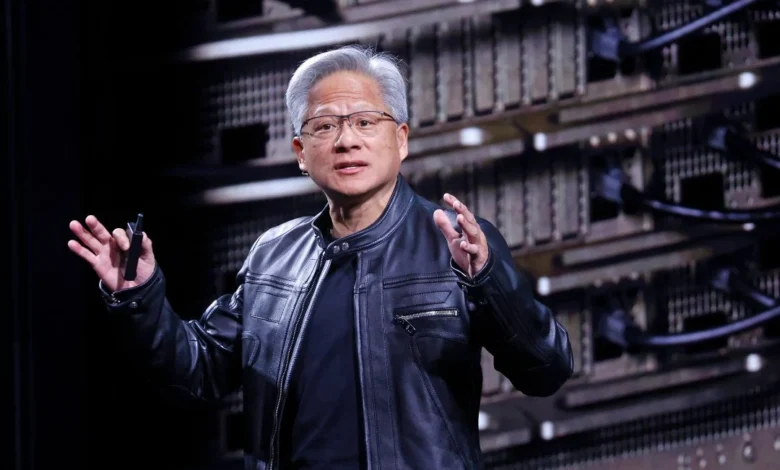
In an extraordinary corporate reversal that has gripped both Wall Street and Silicon Valley, Jensen Huang walked through the doors of Nvidia’s headquarters on Monday to a tumultuous hero’s welcome. Greeted by hundreds of chanting employees whose voices echoed through
the tech giant’s atrium, Huang’s reinstatement comes less than a month after a cascade of explosive scandals forced his sudden resignation. The tumultuous events—spanning national security investigations, high-level congressional hearings, internal workplace misconduct disclosures, and an unprecedented call from the Oval Office—have culminated in a dramatic restoration of power that highlights Nvidia’s irreplaceable reliance on its visionary leader.
For an industry accustomed to swift corporate ousters over personal misconduct, Huang’s return sets a stark precedent. As videos of the ecstatic reception circulated widely across social media platforms, the embattled founder took to a makeshift stage to address the packed crowd. Visibly moved by the display of solidarity, Huang offered a brief and direct mea culpa to his workforce. "Thank you all for the second chance," Huang told the cheering masses. "I’m going to be a better CEO the second time around."
The scene stood in sharp contrast to the regulatory and geopolitical crisis that had engulfed the company just weeks prior. Yet, beneath the celebratory chants of "Jensen! Jensen! Jensen!" lies a deeply complex narrative involving international espionage concerns, internal governance failures, and a polarized debate over corporate culture in the upper echelons of the American technology sector.
Chronology of a Crisis: From Espionage Allegations to Presidential Intervention
The sequence of events that nearly dismantled Nvidia’s leadership structure began unfolding earlier this month. Huang’s initial downfall was precipitated by a confluence of damaging revelations. Chief among them was an investigation into a personal relationship between Huang and an individual subsequently alleged to be a Chinese intelligence operative.
The security implications of the relationship immediately drew the attention of federal lawmakers. Intelligence committees in Congress launched rapid inquiries into whether sensitive supply chain data, semiconductor blueprints, or national security-adjacent artificial intelligence strategies had been compromised. Compounding the geopolitical fallout, independent internal investigations revealed two additional personal relationships between Huang and Nvidia employees, creating severe compliance and governance hurdles for the corporate board.
Facing mounting pressure from institutional investors, regulators, and cautious board members, Huang stepped down from his post as chief executive officer in mid-November. The move was initially framed as an unavoidable casualty of corporate accountability. However, the vacuum left by his departure sent immediate shockwaves through the market, erasing billions in shareholder value and triggering an unprecedented grassroots rebellion from within the tech community.
The resistance to Huang’s ouster was swift and formidable. Within days of his resignation, an open letter circulated across the tech ecosystem, ultimately amassing over 200,000 signatures. Among the signatories were approximately 10,000 current Nvidia employees, alongside software developers, venture capitalists, and prominent industry titans.
The defense of Huang reached its highest-profile peak during the DealBook Summit, where billionaire entrepreneur Elon Musk publicly castigated the decision to remove Nvidia’s chief. Drawing an analogy to professional sports, Musk remarked that ousting Huang during a generational artificial intelligence boom was akin to "kicking Michael Jordan off your team when you’re on a winning streak."

The groundswell of public and industrial pressure ultimately penetrated the highest levels of government. According to reports corroborated by multiple sources close to the board, President Donald Trump intervened directly, placing a phone call into an emergency Nvidia board meeting to advocate for Huang’s reinstatement. Citing the critical strategic importance of Nvidia’s semiconductor chips to American technological dominance in the global AI race, the political pressure proved decisive. The board reversed its stance, clearing the path for Huang’s triumphant Monday morning return.
The Other Side of the Ledger: Culture, Control, and Corporate Bullying
Even as employees and allies rallied around Huang as an indispensable engine of innovation, the crisis exposed profound criticisms regarding his management style and the internal culture at Nvidia.
In the wake of his initial resignation, a sweeping investigative report published by The New York Times presented a darker portrait of the chief executive. Drawing upon decades of unsealed court documents, legal depositions, and more than a dozen confidential interviews with current and former Nvidia employees, the report alleged that Huang fostered an environment of fear. According to these accounts, Huang routinely utilized public humiliation as a management tool, verbally belittling subordinates who failed to meet his exacting standards.
While defenders argue that such relentless intensity is the necessary byproduct of building the world’s most valuable hardware supplier, critics contend that the revelations expose systemic corporate governance failures. The juxtaposition between the adoring crowds chanting his name in the lobby and the documented accounts of psychological intimidation highlights the difficult tightrope modern technology companies walk when their corporate identity is entirely fused with a singular, charismatic founder.
Broader Implications for Corporate Governance and the AI Landscape
Huang’s rapid reinstatement carries profound implications for the future of corporate governance, particularly within the fast-moving artificial intelligence sector.
First, the episode demonstrates the immense leverage wielded by founder-CEOs who have successfully positioned themselves as technological messiahs. In an era where artificial intelligence hardware dictates geopolitical power and economic growth, traditional corporate accountability mechanisms—such as boards of directors acting independently to penalize personal misconduct—are increasingly vulnerable to external pressures. When national security interests and market stability intersect, shareholder sentiment and political expediency can easily override internal compliance protocols.
Second, the involvement of the executive branch in a private corporate leadership dispute underscores the degree to which semiconductor manufacturing and AI development have become matters of state. Nvidia’s graphics processing units (GPUs) form the backbone of global AI development, utilized by hyperscale cloud providers, defense contractors, and research institutions alike. Ensuring uninterrupted leadership at the firm was treated by key political figures not merely as a matter of corporate administration, but as a strategic national priority.
Finally, the incident leaves Nvidia with a delicate balancing act. While Huang has been handed a historic second chance, the company remains under intense scrutiny from federal investigators regarding national security and counterintelligence protocols. Furthermore, management must address the internal cultural fractures exposed by the investigations into workplace conduct.
As Jensen Huang steps back into the corner office, the immediate crisis has subsided, replaced by a wave of corporate euphoria. Yet, the foundational questions raised by his brief departure—concerning accountability, executive power, and the ethical boundaries of corporate leadership—will undoubtedly continue to resonate across Silicon Valley for years to come.
Related posts: