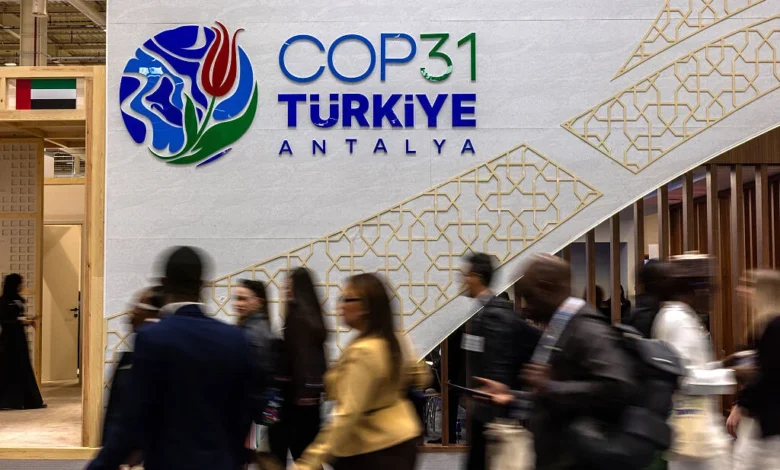
The curtains have closed on the United Nations COP31 climate summit in Antalya, Turkey, leaving the international community in a state of profound uncertainty as negotiations concluded without a consensus on a definitive final agreement. The impasse, which marks a significant failure in global climate diplomacy, has exposed widening fissures between the Global North and the Global South, particularly regarding the role of fossil fuels, the responsibility for historical emissions, and the viability of carbon management technologies.
The failure to produce an overarching pact, colloquially referred to as the "Antalya Pact" during the final hours of the summit, represents a setback for the multilateral process established under the 2015 Paris Agreement. As delegates departed Turkey, the vacuum left by the lack of a formal agreement underscored the escalating tension between nations pushing for an aggressive phase-out of coal, oil, and gas and those advocating for a more nuanced, technology-inclusive approach that emphasizes national sovereignty and energy security.
A Chronology of Diplomatic Stagnation
The COP31 summit, presided over by Turkey’s Kurum and Australia’s Chris Bowen, was intended to build upon the progress made in previous years. However, the timeline of the conference was marked by mounting frustration. Early in the negotiations, optimism was high that the summit would yield concrete commitments to align global policy with the 1.5-degree Celsius target. Yet, as the second week progressed, the text proposed by the presidency became a flashpoint for contention.
By the penultimate day, it became clear that the draft language was failing to satisfy the disparate requirements of the nearly 200 participating nations. The European Union, representing the bloc’s collective position, emerged as a vocal critic of the draft’s ambiguity regarding fossil fuels. As the final plenary session commenced, the failure to secure a consensus became inevitable, leading to a scramble for a watered-down concluding statement that ultimately proved insufficient to garner broad support.
The Fossil Fuel Debate: A Fundamental Divide
At the heart of the deadlock is the central question of whether the final document should explicitly call for the phase-out of fossil fuels. For the European Union and several other developed nations, a COP agreement that fails to name the "key driver of climate change" is fundamentally deficient.
“We will not endorse a decision that does not even mention fossil fuels, the key driver of climate change, and not accept a COP that greenwashes fossil fuels,” stated O’Brien, speaking on behalf of the EU during Ireland’s rotating presidency. This stance reflects a growing impatience among Western leaders who argue that the scientific consensus regarding the necessity of a rapid energy transition is being ignored in favor of diplomatic convenience.
Conversely, the League of Arab States, represented by negotiators from the Saudi Arabian energy ministry, framed the debate as an issue of equity. Mohammad Ayoub, a climate negotiator, articulated the perspective that developed countries are attempting to impose restrictive policies on developing nations after having already exhausted the majority of the global carbon budget. The carbon budget represents the cumulative amount of carbon dioxide that can be emitted while maintaining a reasonable chance of keeping global warming below specific temperature thresholds.
Ayoub’s argument is that forcing developing nations to abandon the energy sources that historically fueled the industrialization and prosperity of the West is inherently unfair. He contended that the focus should not be on a blanket rejection of fossil fuels, but on the deployment of all available solutions—including carbon capture and storage (CCS) and carbon dioxide removal (CDR)—that align with individual national circumstances.
Technological Disagreements and Scientific Contention
The role of carbon management technology served as a secondary, yet equally explosive, point of friction. While Saudi Arabia and several other petrostates pushed for language supporting CCS as a legitimate pathway to net-zero, other nations—supported by various environmental advocacy groups—argued that such technologies are currently unproven at the scale required to avert catastrophic warming.
Ayoub criticized the opposition to CCS, labeling it as unscientific. He argued that rejecting these tools limits the available arsenal for climate mitigation. However, critics of this approach point to data from the International Energy Agency (IEA), which suggests that while CCS will play a role in hard-to-abate sectors like cement and steel production, it cannot be used as a justification for the continued expansion of oil and gas extraction.
The skepticism toward CCS is rooted in the reality that current global deployment remains a fraction of what is required to keep the 1.5-degree goal within reach. As the IEA has noted in multiple reports, the focus must remain on a structural shift in the global energy mix, rather than relying on technological solutions that are still in their infancy in terms of global infrastructure.
Perspectives from Key Host Nations
The involvement of Egypt and Brazil—hosts of the UN climate talks in 2023 and 2025, respectively—added a layer of historical context to the proceedings. These nations, often caught between their roles as emerging economies and their commitments to climate leadership, expressed significant disappointment with the summit’s outcome.
Liliam Beatris Chagas de Moura, director for climate at Brazil’s Ministry of Foreign Affairs, noted that the momentum from previous years—particularly the progress made during the Brazilian-led sessions—had dissipated in Antalya. For Brazil, the lack of a strong, unified outcome is a concerning signal for the future of the COP process, which relies on the continuous build-up of political will to tackle systemic issues.
Global Impact and Institutional Response
UN Secretary-General António Guterres, who has consistently used his platform to advocate for urgent climate action, did not mince words following the collapse of the talks. Expressing his "deep disappointment," Guterres emphasized that while the diplomatic failure is significant, it does not alter the physical reality of the climate crisis.
“But this setback does not change the facts,” Guterres stated. “Fossil fuels are driving the climate crisis. We can’t put out the fire while pouring fuel on it.”
The failure in Antalya carries profound implications for international policy. Firstly, it signals a potential shift in the effectiveness of the COP process itself. If the summits continue to produce stalemate rather than consensus, there may be increased pressure to shift toward smaller, regional, or sectoral climate agreements outside the formal UN framework.
Secondly, the divergence between the EU and the Arab League highlights a fracturing of the "high ambition" coalition. For years, the Paris Agreement was heralded for its universal appeal; however, the Antalya failure suggests that the coalition is straining under the weight of divergent economic realities.
Data-Driven Reality: The Path Ahead
The scientific data underpinning the negotiations remains stark. According to the Intergovernmental Panel on Climate Change (IPCC), global emissions must peak before 2025 and decline rapidly thereafter to have a meaningful chance of limiting warming to 1.5 degrees. Current national pledges, even if fully implemented, still leave the world on a trajectory for warming well above that threshold.
The "carbon budget" referenced by negotiators is shrinking rapidly. Estimates suggest that if the world continues emitting at current levels, the remaining budget for a 50% chance of limiting warming to 1.5 degrees could be exhausted within the next decade. This mathematical reality makes the diplomatic impasse particularly acute: every year spent debating the language of an agreement is a year in which the window for cost-effective climate action narrows.
Furthermore, the economic implications of the failure to reach a consensus are significant for the transition to renewable energy. Predictability in international policy is a prerequisite for the massive private-sector investment required to build wind, solar, and grid infrastructure. By failing to provide a clear signal on the future of fossil fuels, the Antalya summit may inadvertently create market uncertainty, potentially slowing the transition that many of the delegates were there to champion.
Looking Toward Future Negotiations
As the dust settles on the Antalya summit, attention will inevitably shift toward the next round of preparatory meetings and the subsequent COP. There is already speculation regarding how the presidency of future conferences will handle the "fossil fuel" language, which has now become the third rail of climate diplomacy.
The challenge for the next hosts will be to bridge the gap between the existential urgency felt by climate-vulnerable nations and the economic development imperatives of emerging economies. Whether through enhanced climate financing, technology transfer, or more equitable carbon-sharing frameworks, the next summit will need to move beyond the binary arguments that crippled the proceedings in Turkey.
For now, the international community remains in a state of flux. The COP31 experience serves as a sobering reminder that while climate change is a global problem, the solutions remain subject to the complexities of geopolitics, national interest, and the fundamental tension between the energy needs of today and the climate stability of tomorrow. The lack of a final agreement in Antalya does not mean the end of the climate fight, but it does mark the beginning of a much more difficult chapter in the history of international climate diplomacy.
Related posts: