While Black Friday traditionally serves as the apex of the retail calendar, consumers seeking high-end imaging equipment this year have encountered a more selective landscape than in previous cycles. As global supply chains stabilize and manufacturers pivot toward newer flagship iterations, the market for professional-grade mirrorless cameras has shifted from widespread, across-the-board discounting to targeted price adjustments on legacy models. Despite this consolidation, significant value remains for those specializing in astrophotography, professional cinematography, and high-resolution still photography.
The Current Retail Landscape for Optical Gear
The transition into late 2024 has been marked by a significant influx of new hardware, particularly within the full-frame mirrorless segment. Manufacturers such as Canon, Sony, and Nikon have pushed forward with high-performance iterations, which historically triggers a price reduction cycle for their immediate predecessors. For the average consumer or professional, this creates a distinct opportunity: acquiring "previous-generation" technology that remains vastly superior to most entry-level consumer hardware while benefiting from steep retail markdowns.
Industry analysts note that while general consumer electronics have seen deep, sweeping discounts this Black Friday, the high-end photography market remains sensitive to stock levels. Major retailers like Walmart, B&H Photo, and Adorama have focused their promotional strategies on bundles and legacy inventory. For the astrophotographer, who requires specific sensor sensitivity and low-noise performance, the current deals represent a strategic entry point into professional-grade equipment.
Spotlight on Legacy Performers: The Canon EOS R6 II
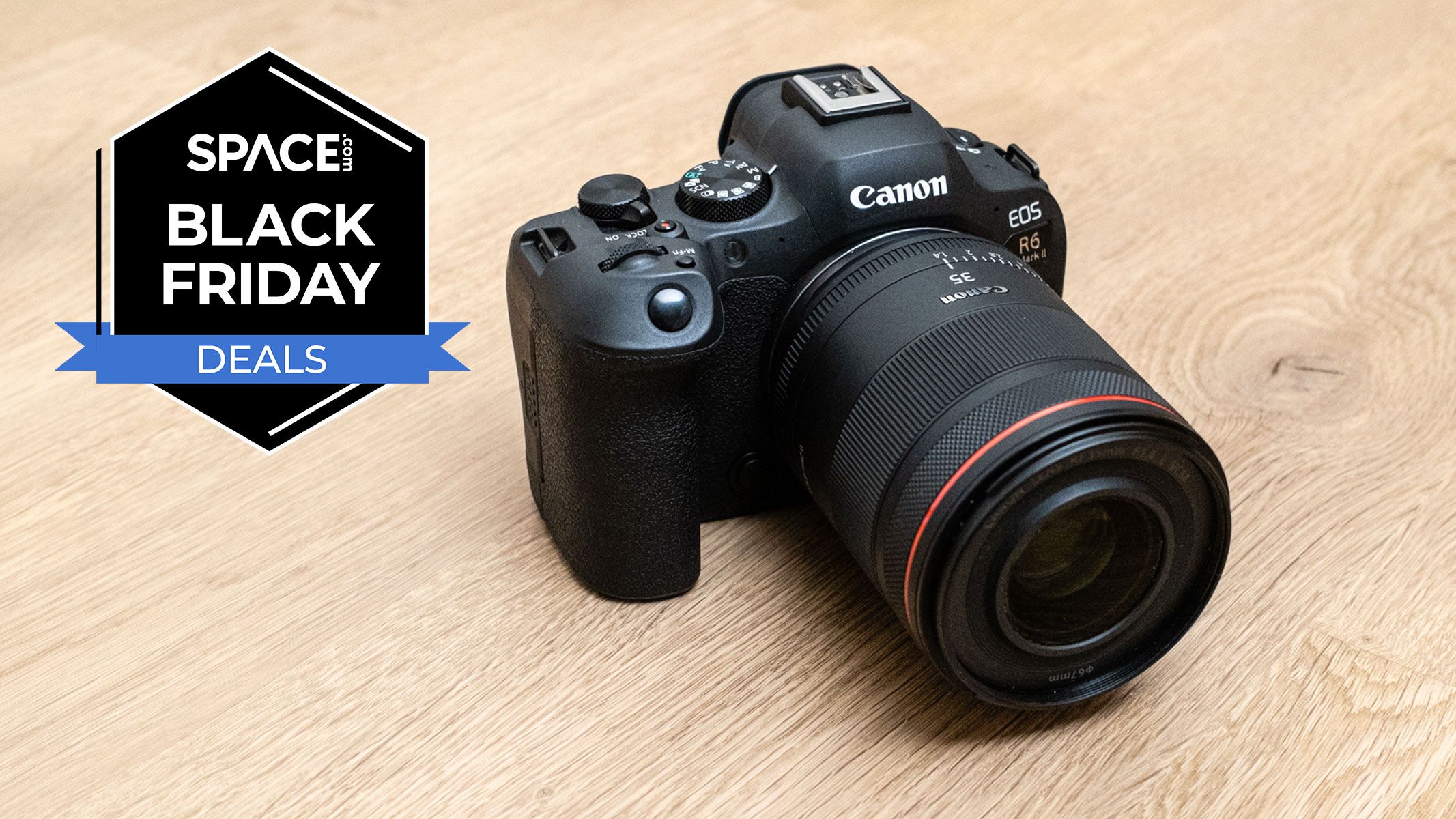
One of the most notable trends this season is the aggressive pricing of the Canon EOS R6 II. Following the introduction of the EOS R6 III, the preceding Mark II model has seen its price hit record lows at major retailers.
For those engaged in deep-sky imaging or night-sky landscape photography, the EOS R6 II remains a formidable tool. Its standout feature is its high ISO noise management, which allows for cleaner exposures when shooting in the extremely low-light conditions necessitated by celestial photography. Furthermore, the camera’s -6.5 EV low-light autofocus capabilities—a metric that significantly outperforms many competing models in the same price bracket—ensure that focus acquisition remains reliable even when the subject is a faint nebula or a distant horizon under moonlight.
While newer models offer incremental improvements in processor speed and video throughput, the R6 II provides the essential sensor performance required for long-exposure photography. Consequently, the current price drops are being interpreted by market experts as an optimal "value-buy" window before these units are phased out of major retail channels entirely.
High-Resolution Titans: Sony A7R V and Canon EOS R5
For professionals whose work demands extreme detail—such as large-scale astrophotography prints or architectural documentation—the focus remains on high-resolution, full-frame bodies. The Sony A7R V and the Canon EOS R5 continue to be the standard-bearers for this demographic.
The Sony A7R V, with its massive 61-megapixel sensor, provides a level of cropping flexibility and detail resolution that is essential for fine-art celestial photography. By capturing high-density data, photographers can extract significant detail from dark-field shots that would be lost on sensors with lower pixel counts. Similarly, the Canon EOS R5, celebrated for its robust build quality and professional-grade weather sealing, remains a staple for field photographers who operate in challenging environmental conditions.
The current market trend shows that these high-resolution models are not receiving the same "fire-sale" pricing as entry-level mirrorless cameras, but rather are being offered as part of comprehensive "pro-kits." These bundles, which often include high-speed memory cards, vertical battery grips, and professional-grade glass, provide a higher overall value proposition for the working photographer.
Chronology of the 2024 Imaging Market Shift
The current state of camera availability is the result of a deliberate, multi-year shift in manufacturer strategy. In early 2023, the industry faced significant component shortages, which kept prices artificially high and limited the frequency of deep-discount events. By the second quarter of 2024, inventory levels began to normalize, allowing manufacturers to release the "Mark III" and "Mark IV" iterations of their popular lines.
- Q1 2024: Industry-wide normalization of supply chains. Manufacturers begin to announce refreshed product roadmaps.
- Q2 2024: Initial price stabilization. Major retailers begin to clear shelf space for upcoming fall releases.
- Q3 2024: Release of the Canon EOS R6 III and competitive Sony flagship updates. This created the primary catalyst for the current price reductions on R6 II and other legacy models.
- Q4 2024 (Black Friday): Retailers utilize the holiday shopping window to liquidate remaining inventory of previous-generation bodies, resulting in the lowest-ever prices for high-performance units.
Implications for the Future of Astrophotography
The democratization of high-end imaging gear is having a measurable impact on the field of amateur astronomy and astrophotography. As professional-grade sensors become more affordable through these seasonal price adjustments, the barrier to entry for high-quality celestial imaging has significantly lowered.
Historically, the cost of a sensor capable of "clean" high-ISO performance was prohibitive for most hobbyists. Today, the availability of secondary-market and discounted new-in-box gear ensures that a wider range of enthusiasts can contribute to data collection. This has implications beyond mere hobbyist photography; the rise of high-quality, affordable imaging equipment allows for amateur contributions to citizen science projects, such as tracking variable stars or identifying transient celestial events.
Official Responses and Industry Outlook
While official comments from camera manufacturers often emphasize the "innovation and advancement" of their newest flagships, retailers have adopted a more pragmatic tone. A spokesperson for a major national photography retailer noted, "We are seeing a clear bifurcation in the market. Enthusiasts are looking for the latest tech, while the professional and serious hobbyist segments are hyper-focused on the value-to-performance ratio of the previous generation. Our Black Friday strategy reflects this by prioritizing bundles that make professional tools accessible to a wider user base."
This strategic focus on "value-tier" professional gear suggests that manufacturers are increasingly aware of the long-term loyalty benefits associated with getting high-end bodies into the hands of developing photographers. By lowering the price of entry during high-volume sales periods, brands are effectively securing their ecosystem of users for the next several years.
Strategic Considerations for Potential Buyers
For those currently evaluating their options, industry experts suggest a three-pronged approach to selecting gear during the remainder of the Black Friday season:
- Prioritize Sensor Performance over Features: For astrophotography, prioritize noise floor, dynamic range, and low-light autofocus over video frame rates or AI-assisted tracking features.
- Evaluate the Ecosystem, Not Just the Body: The cost of full-frame lenses often outweighs the cost of the camera body. When analyzing "deals," ensure that the savings extend to the lens mount ecosystem compatible with your chosen camera.
- Monitor "Open-Box" and "Refurbished" Inventory: As retailers clear out their backrooms, "open-box" items from returns often reach their lowest prices in the days immediately following Black Friday. These units typically carry manufacturer warranties and offer an additional 10% to 20% savings over standard sale prices.
As the retail season concludes, the consensus remains that the photography market is in a period of transition. While the days of universal, massive discounts on the latest cutting-edge gear may be fading, the opportunity to acquire sophisticated, proven technology at a significant discount has never been more accessible. Whether it is the high-ISO mastery of the Canon EOS R6 II or the raw detail of the Sony A7R V, the equipment currently available at discounted rates is more than capable of producing professional-grade results for years to come.
Related posts: