Stepping Back into the Taurus-Littrow Valley: A 3D Look at NASA’s Historic Apollo 17 Lunar Rover Site

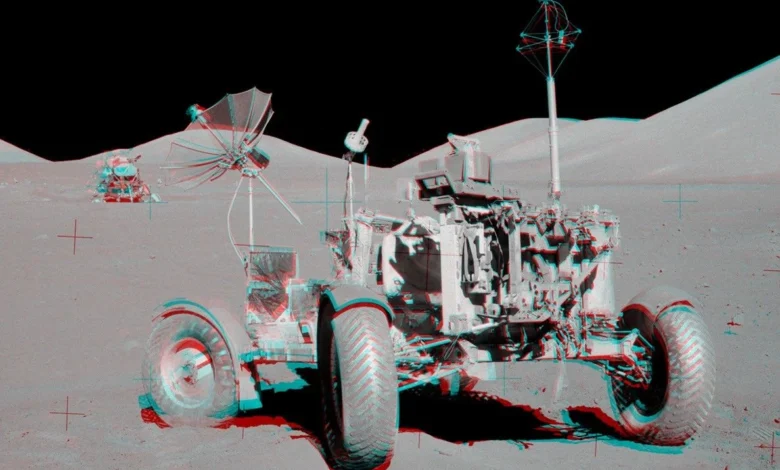
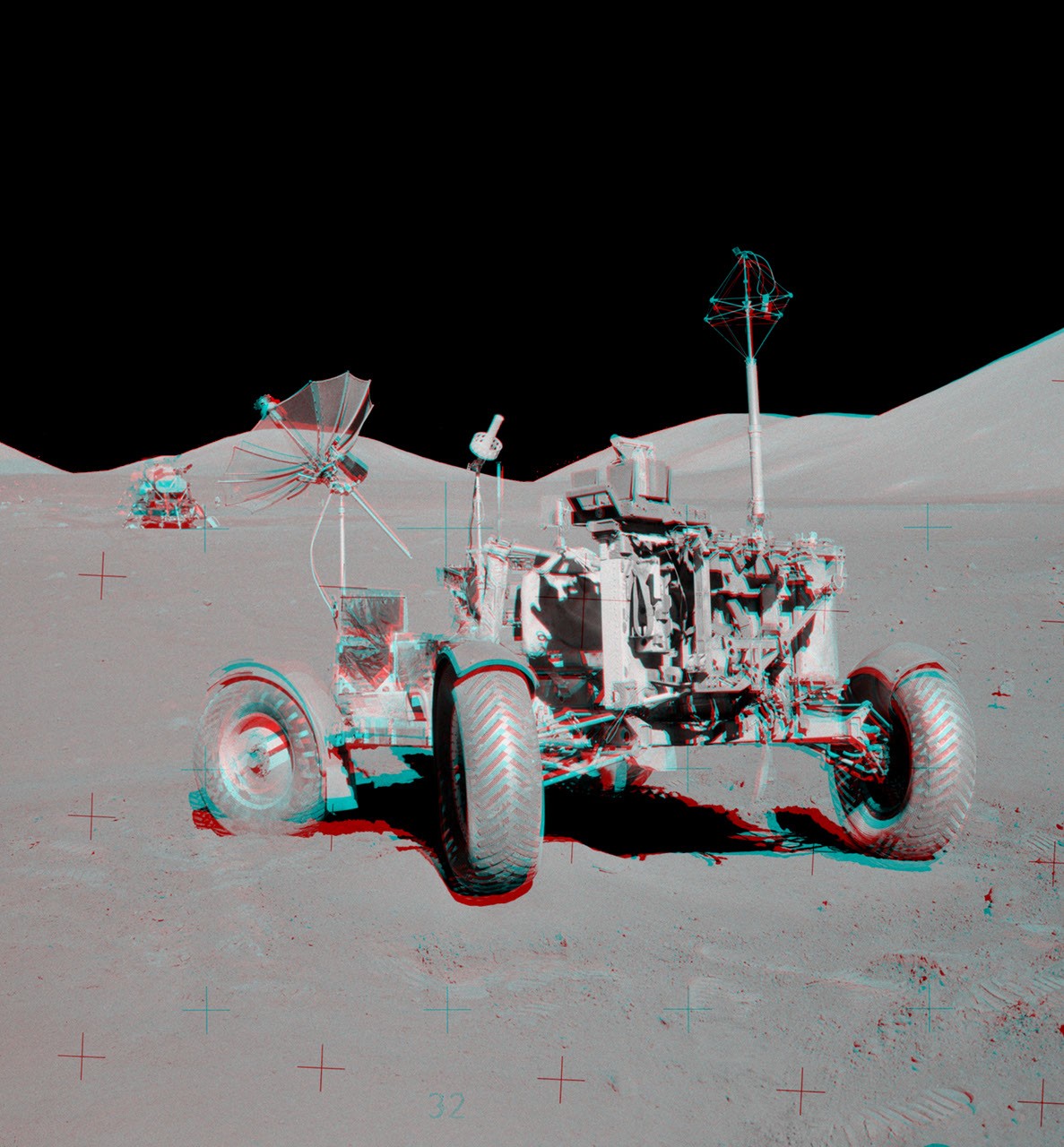
The exploration of the lunar surface remains one of humanity’s most defining technological and scientific achievements, and NASA’s Astronomy Picture of the Day (APOD) recently highlighted this legacy with a striking stereoscopic view. By utilizing a red/blue color anaglyph, space enthusiasts and researchers alike are given a vivid, three-dimensional window into the Taurus-Littrow valley, the final landing site of the Apollo program. In the foreground of this meticulously crafted image sits the iconic Lunar Roving Vehicle (LRV), framed against the backdrop of the Apollo 17 Lunar Module and the austere, rolling hills of the lunar highlands.
This specific vantage point offers more than just a nostalgic glance backward; it serves as a testament to the engineering prowess and scientific ambition of the early 1970s. Known historically as the "VIP Site," this parking location for the lunar rover was selected with deliberate care. From this exact spot, the rover’s television camera was positioned to capture a historic broadcast: the ascent stage liftoff of the Lunar Module as astronauts Eugene Cernan and Harrison Schmitt prepared to leave the surface and rejoin command module pilot Ronald Evans in lunar orbit.
Chronology of the Apollo 17 Mission
To fully appreciate the significance of the Taurus-Littrow anaglyph, one must look back at the precise timeline of December 1972, which marked the conclusion of the Apollo era of human lunar exploration.
The journey began on December 7, 1972, when the Saturn V rocket lifted off from Kennedy Space Center, carrying astronauts Eugene Cernan, Harrison Schmitt, and Ronald Evans into space. Following a smooth translunar injection and subsequent orbital insertion, Cernan and Schmitt descended to the lunar surface in the Lunar Module, named Challenger, while Evans remained aboard the Command and Service Module, America, maintaining lunar orbit to conduct extensive scientific mapping and observations.
Touchdown in the Taurus-Littrow valley occurred on December 11, 1972. Unlike previous Apollo missions that targeted relatively smooth, flat mare regions, Taurus-Littrow was chosen for its geological diversity. Nestled in a deep, dark valley carved into the rugged mountains of the moon’s near side, the site promised access to ancient highland material tossed up by the impact event that formed the adjacent Serenitatis basin, as well as younger volcanic deposits.
During their stay, Cernan and Schmitt spent approximately 75 hours operating on the lunar surface. They completed three separate Extravehicular Activities (EVAs), known colloquially as moonwalks, totaling over 22 hours outside the confines of the Lunar Module. Utilizing the Lunar Roving Vehicle, the crew traveled a cumulative distance of more than 30 kilometers across the valley floor, deploying a comprehensive suite of scientific instruments—the Apollo Lunar Surface Experiments Package (ALSEP)—and gathering an unprecedented volume of geological specimens.
On December 14, 1972, after completing their final surface excursion, the astronauts boarded the ascent stage of the Challenger and successfully blasted off from the lunar surface, monitored globally via the very rover camera highlighted in the recent APOD feature. After docking with the America, the trio initiated their journey home, splashing down safely in the Pacific Ocean on December 19, 1972.
Supporting Data and Scientific Return
The scientific yield of Apollo 17 surpassed that of any previous human landing mission, cementing its status as a cornerstone of planetary science. The mission’s primary triumphs lay in the sheer quantity and exceptional quality of the samples returned to Earth.
Cernan and Schmitt collected a staggering 110 kilograms (approximately 243 pounds) of lunar rock and soil samples. This collection included core tubes driven deep into the regolith, volcanic glass beads of a distinct orange hue that sparked intense scientific debate regarding ancient lunar volcanism, and massive boulder fragments fractured by ancient impacts.
Data from the ALSEP instruments deployed during the mission provided continuous telemetry regarding the moon’s internal structure, heat flow, magnetic field, and thin atmosphere long after the astronauts had departed. Decades later, planetary geologists continue to analyze the Apollo 17 sample repository, which is primarily curated at the Lunar Sample Laboratory Facility at NASA’s Johnson Space Center in Houston, Texas. Modern analytical techniques—far more advanced than those available in the 1970s—continually extract new secrets from these pristine rocks, reshaping our understanding of the solar system’s formation and the thermal history of our celestial neighbor.
The Last Footprints: Human Presence on the Moon
A poignant reality accompanying the imagery of the Taurus-Littrow valley is the passage of time. Eugene Cernan and Harrison Schmitt hold the unique and enduring distinction of being the last humans to walk and drive upon the surface of the Moon.
When Cernan climbed back up the ladder of the Lunar Module for the final time, more than half a century ago, he left behind not only footprints and tire tracks preserved indefinitely in the vacuum of the lunar environment, but also a temporary pause in direct human interplanetary exploration. While robotic orbiters, landers, and rovers—such as NASA’s Lunar Reconnaissance Orbiter (LRO)—have mapped the Taurus-Littrow landing site in high resolution from above, no human boot has disturbed the dust of the Moon since December 1972.
This hiatus, however, is drawing toward a close. As global space agencies and private aerospace entities pivot back toward sustained lunar exploration, the legacy of Apollo 17 serves as both a benchmark and a foundation for future endeavors.
Broader Impact and Future Implications
The release of detailed archival imagery, such as the 3D anaglyph of the Apollo 17 rover site, resonates deeply within the modern aerospace community. It bridges the gap between historical achievement and contemporary preparation, reminding a new generation of scientists and engineers of what is technically possible when national will and scientific rigor align.
Furthermore, the geological insights gleaned from the Taurus-Littrow valley directly inform current mission planning. As NASA’s Artemis program aims to return humans to the lunar surface—this time focusing on the lunar South Pole—the methodologies established during the Apollo era, particularly in surface mobility, geological sampling, and life support management, remain invaluable.
The VIP Site parking spot, frozen in time within the stereoscopic view of the Taurus-Littrow valley, stands as a silent monument to an era when humanity first reached beyond low Earth orbit. As preparations for future crewed lunar landings accelerate, the enduring tracks of the Apollo 17 Lunar Rover wait quietly on the desolate landscape, bearing witness to humanity’s past triumphs while anticipating the inevitable return of footprints to the lunar soil.