Hyundai Santa Fe EREV Set for 2027 Launch as Automaker Pivots Toward Extended Range Hybrid Technology

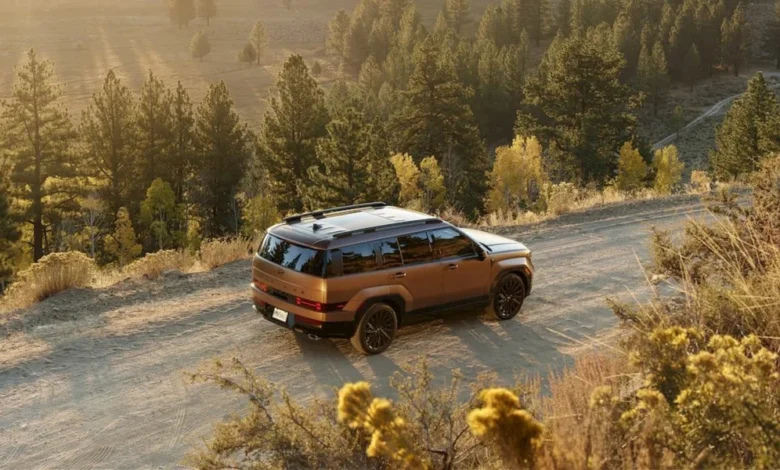
Hyundai Motor Company has officially confirmed that its flagship mid-size SUV, the Santa Fe, will serve as the vanguard for the brand’s foray into Extended-Range Electric Vehicle (EREV) technology, with a market debut scheduled for 2027. This strategic shift, announced during the company’s 2024 CEO Investor Day, represents a significant diversification of Hyundai’s powertrain portfolio as the global automotive industry navigates a period of fluctuating demand for pure battery-electric vehicles (BEVs). The Santa Fe EREV aims to bridge the gap between internal combustion engines and full electrification, offering a unique value proposition centered on eliminating range anxiety while maintaining the driving dynamics of an electric motor.
The Mechanics of the Extended-Range Electric Vehicle
To understand the significance of the Santa Fe EREV, it is essential to distinguish the technology from traditional plug-in hybrids (PHEVs) and standard hybrids (HEVs). An EREV is essentially a series hybrid. Unlike a PHEV, where both the internal combustion engine and the electric motor can provide torque to the wheels, the gas engine in an EREV acts solely as an onboard generator. This engine burns fuel to create electricity, which is then used to either charge the battery or power the electric drive motors directly.
Hyundai has indicated that its upcoming EREVs will be engineered to provide a driving experience that is indistinguishable from a BEV. Because the wheels are always driven by electric motors, the vehicle benefits from the instant torque, smooth acceleration, and silent operation characteristic of electric propulsion. By utilizing a smaller battery pack than a traditional long-range BEV—supplemented by a fuel tank and a high-efficiency generator—Hyundai claims it can achieve a combined range exceeding 600 miles (960 kilometers) on a single charge and a full tank of gas.

Strategic Pivot: The Hyundai Way
The decision to greenlight the Santa Fe EREV comes as part of the "Hyundai Way" strategy, a mid-to-long-term roadmap that involves an investment of approximately 120.5 trillion won ($90 billion) through 2033. This strategy is designed to provide the company with the flexibility to respond to "EV chasm" periods—phases where the growth of pure EV sales slows due to infrastructure limitations, high costs, or consumer hesitation.
During the CEO Investor Day in September 2024, Hyundai leadership emphasized that EREVs are a key pillar of their "powertrain hedging" strategy. By developing EREVs, Hyundai can utilize its existing internal combustion engine manufacturing capabilities while simultaneously advancing its electric motor and power electronics technology. This approach allows the company to remain competitive in markets where charging infrastructure remains underdeveloped, such as parts of North America and China, while still meeting increasingly stringent emissions regulations.
Insights from Recent Prototype Sightings
While Hyundai’s official announcements provided the theoretical framework, recent spy shots from South Korea have offered a tangible look at the Santa Fe EREV in development. Captured by automotive photographers and featured on platforms such as TheKoreanCarBlog, the prototypes reveal several defining characteristics of the upcoming model.
One of the most notable features observed on the test mules is the presence of two distinct access doors—one on each rear quarter panel. One door serves as the port for high-speed electric charging, while the other is the traditional fuel filler neck for the gasoline generator. This dual-fuel capability is the hallmark of the EREV, allowing owners to operate the vehicle as a pure EV for daily commutes while relying on the gas generator for long-distance travel.
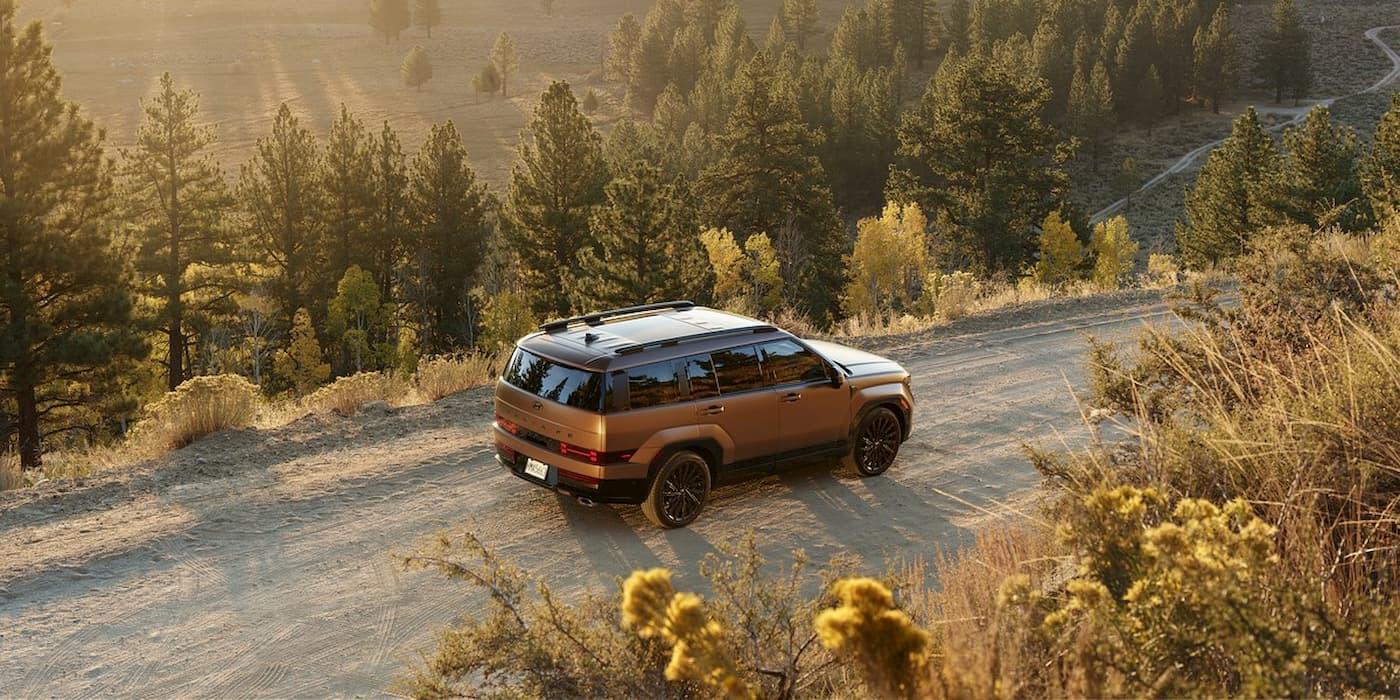
The spotted prototypes also indicate that Hyundai is using the EREV launch to debut its next-generation interior technology. The vehicles were seen equipped with the "Pleos" infotainment system. Pleos is Hyundai’s latest software-defined vehicle (SDV) operating system, designed to offer a more seamless, smartphone-like user interface, enhanced over-the-air (OTA) update capabilities, and integrated artificial intelligence features. This suggests that the Santa Fe EREV will not just be a powertrain variant, but a high-tech flagship for the brand’s digital evolution.
Proprietary Battery Technology and Performance Targets
A critical component of the Santa Fe EREV’s viability is Hyundai’s development of proprietary battery technology. The company has stated that these new EREVs will utilize self-developed batteries designed to provide "full EV power performance with less than half the battery capacity" of a comparable BEV.
By optimizing the power density and discharge rates of the battery, Hyundai intends to ensure that the Santa Fe EREV does not suffer from the performance degradation sometimes seen in hybrids when the battery is low. The goal is to maintain a consistent 200kW+ output, ensuring that the SUV remains capable of towing and high-speed highway merging regardless of the state of charge. Furthermore, by using a smaller battery (estimated to be in the 30-40 kWh range), Hyundai can significantly reduce the MSRP of the vehicle compared to a long-range BEV, making electrified mobility accessible to a broader demographic.
Timeline and Market Rollout
The chronological roadmap for Hyundai’s EREV expansion is ambitious. Following the anticipated official debut of the Santa Fe EREV in late 2025 or early 2026, mass production is slated to begin in 2027. Hyundai intends to focus its initial EREV efforts on the North American and Chinese markets, where the demand for large, long-range SUVs remains highest.
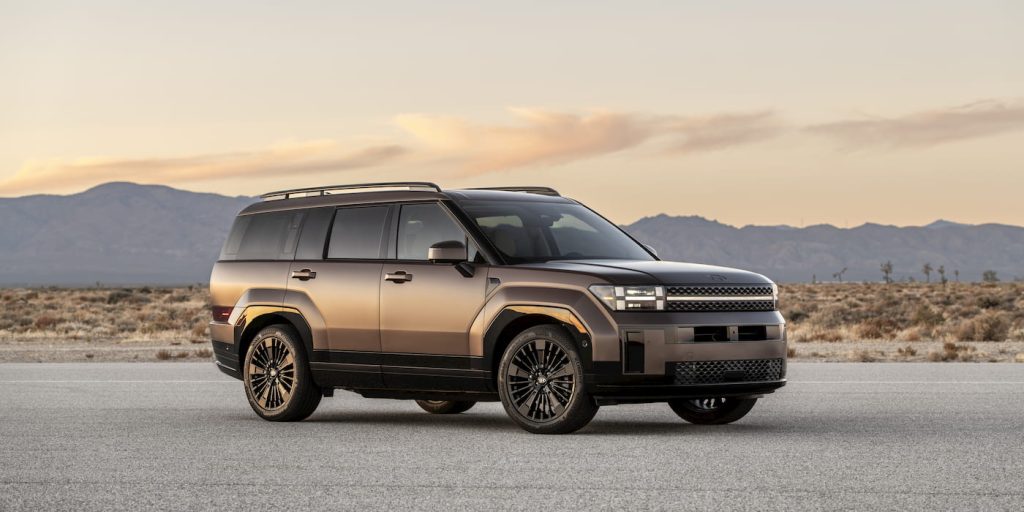
Following the Santa Fe, the EREV technology will trickle down and across the Hyundai Motor Group’s brands:
- Genesis: The luxury arm is preparing an EREV version of the GV70, also expected in 2027. This move is intended to provide a "refined" electric experience for luxury buyers who are not yet ready to commit to a full BEV.
- Kia: Hyundai’s sister brand has announced plans for a body-on-frame EREV pickup truck by 2030. This application is particularly promising, as EREV technology is well-suited for the high-torque, heavy-load requirements of towing and hauling, which typically drain BEV batteries rapidly.
Industry Context and Competitive Landscape
Hyundai is not the only automaker turning to EREV technology to navigate the current market landscape. In China, manufacturers like Li Auto have seen massive success with EREVs (often referred to as REEVs in that market), with models like the L7 and L9 consistently topping sales charts. In North America, Stellantis is preparing to launch the Ram 1500 Ramcharger, an EREV pickup that has generated significant interest for its promised 690-mile range.
Industry analysts suggest that Hyundai’s entry into this space is a calculated move to capture "on-the-fence" consumers. According to data from S&P Global Mobility, range anxiety remains the primary deterrent for 45% of potential EV buyers in the United States. By offering a vehicle that drives like an EV but can be refueled at any gas station in minutes, Hyundai is positioning the Santa Fe EREV as a "no-compromise" solution.
Implications for the Future of Mobility
The launch of the Santa Fe EREV marks a sophisticated evolution in Hyundai’s environmental strategy. While the company remains committed to a carbon-neutral future and a full transition to BEVs by 2040 in major markets, the EREV serves as a pragmatic bridge.

From a lifecycle emissions perspective, EREVs offer a significant reduction in CO2 compared to traditional internal combustion engines, especially when charged using renewable energy for short trips. Furthermore, because they require smaller batteries, they put less strain on the global supply chain for critical minerals like lithium, cobalt, and nickel, potentially allowing for a more sustainable scaling of electrified vehicle production.
As the 2027 launch date approaches, the automotive world will be watching closely to see if Hyundai can deliver on its 600-mile promise. If successful, the Santa Fe EREV could redefine the mid-size SUV segment and provide a blueprint for how legacy automakers can survive and thrive in the complex transition to the electric era. The combination of the Santa Fe’s popular boxy design, the advanced Pleos operating system, and a versatile, long-range powertrain positions Hyundai to maintain its momentum as a leader in the global race for automotive innovation.