Tesla Faces Escalating Legal Pressure in Europe as HW3 Owners Launch Collective Claim Over Unfulfilled FSD Promises

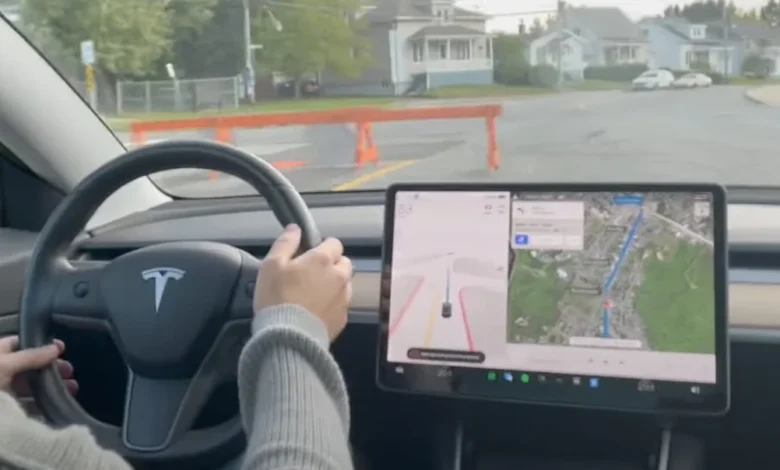
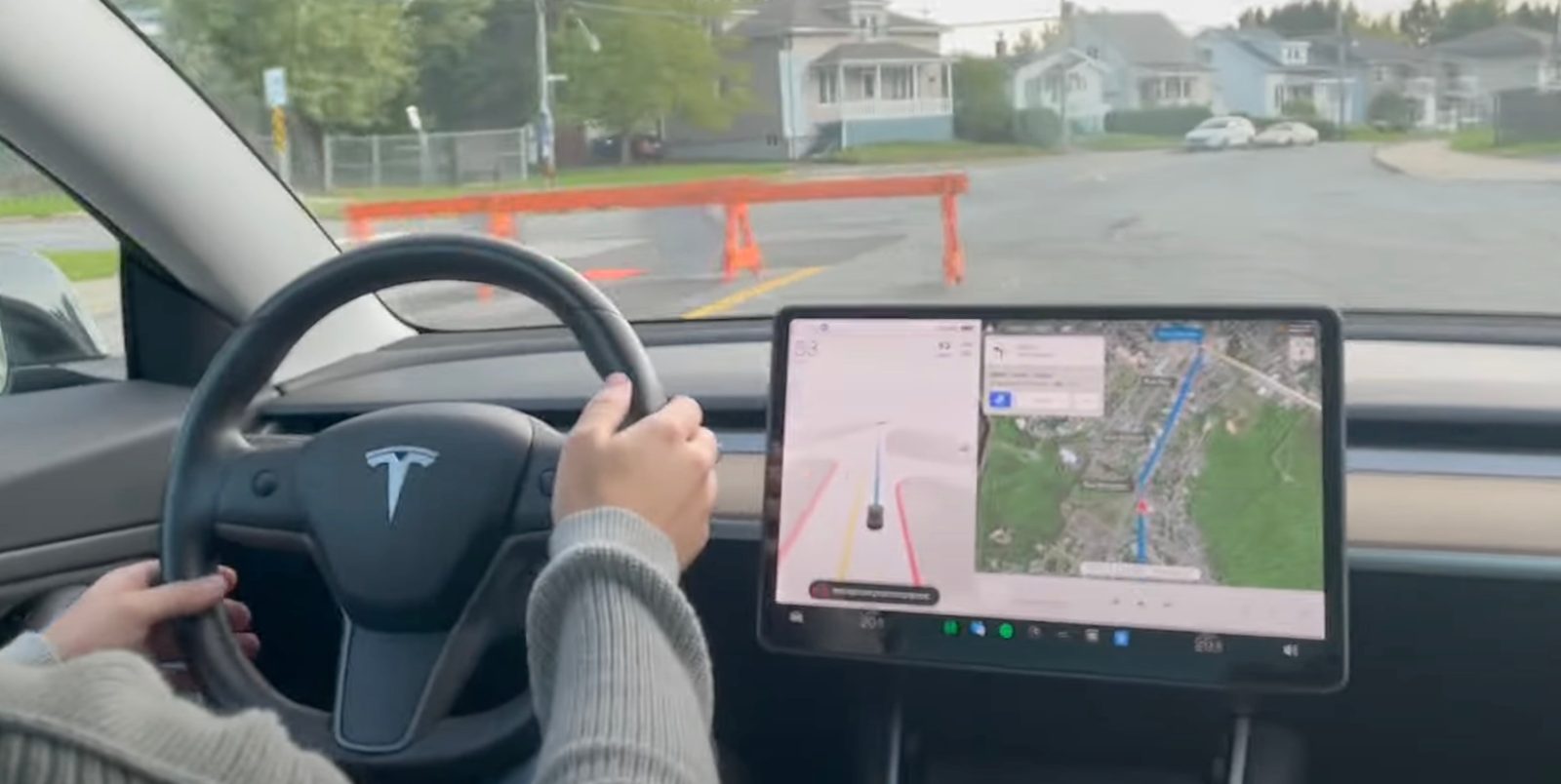
The friction between Tesla Inc. and its European customer base reached a new flashpoint this week after a Dutch owner, representing a growing collective of thousands, recorded a dismissive response from the automaker regarding long-promised self-driving capabilities. Mischa Sigtermans, the founder of a collective legal claim targeting Tesla’s Hardware 3 (HW3) limitations, contacted the company to inquire about the status of the "Full Self-Driving" (FSD) package he purchased in 2019 for €6,400. After seven years of anticipation, the official guidance provided by Tesla staff was for the owner to "just be patient," a statement that has catalyzed further legal mobilization across the European Union.
This interaction comes at a critical juncture for Tesla in Europe. Just last week, the Dutch vehicle authority, RDW, granted Tesla the first type approval for "FSD Supervised" within the European Union. However, this approval applies exclusively to vehicles equipped with Tesla’s newer AI4 (Hardware 4) computer. Owners of older vehicles equipped with HW3, which Tesla previously marketed as having all the necessary hardware for full autonomy, currently find themselves excluded from the rollout. The disparity has transformed a theoretical technical limitation into a concrete financial and functional loss for early adopters.
The Confrontation: "Just Be Patient"
Sigtermans, who purchased one of the first Model 3 units in the Netherlands, documented his inquiry to Tesla through a recorded phone conversation and subsequent social media thread. His objective was to seek clarification on the timeline for HW3 compatibility following the RDW’s approval of FSD Supervised for AI4 vehicles. The response from Tesla’s customer support indicated a profound lack of internal clarity or a deliberate withholding of information.
When Sigtermans asked when FSD would arrive for HW3 cars, the agent responded that there was "no information about when it comes, or if it comes at all." This admission—specifically the inclusion of "if"—directly contradicts years of corporate messaging suggesting that HW3 was the definitive platform for autonomous driving. Further inquiries regarding Elon Musk’s public admissions about HW3’s limitations and the promised free hardware upgrades were met with similar retorts, with the agent stating there was "no information within Europe" regarding such programs.
The conversation concluded with the agent advising Sigtermans to remain patient before abruptly closing the support case. Minutes later, Sigtermans received an automated email confirming the case was resolved, accompanied by a link inviting him to book a test drive for a new Tesla vehicle. This sequence of events has been characterized by legal experts and consumer advocates as a significant PR failure that underscores the growing divide between Tesla’s marketing promises and its technical delivery.
A Chronology of Shifting Promises
To understand the gravity of the current legal challenge, it is necessary to examine the timeline of Tesla’s FSD development and the evolving narrative surrounding the HW3 suite.

In 2019, Tesla began aggressive marketing of the Full Self-Driving package. At the time, the company assured buyers that every car produced since late 2016 contained the hardware necessary for full autonomy. When HW3 was introduced that year, it was framed as the "final" piece of the puzzle. Owners were told that software updates would eventually unlock Level 5 autonomy, where the car could operate without human intervention.
By August 2024, the narrative began to shift. Tesla’s Vice President of AI, Ashok Elluswamy, acknowledged that HW3 was running a "relatively smaller model" compared to the AI4 platform. He noted that significant engineering workarounds were required to maintain parity between the two systems, signaling for the first time that HW3 might be reaching its computational ceiling.
The most significant admission came in January 2025 during the Q4 2024 earnings call. Elon Musk conceded that Tesla would likely "need to replace all HW3 computers in vehicles where FSD was purchased" if they were to achieve unsupervised autonomy. Musk described the prospect of a global retrofit program as "painful and difficult," adding that he was "kind of glad that not that many people bought the FSD package," a statement that drew sharp criticism from those who had invested thousands of dollars in the software.
In early 2026, Tesla filed a patent for a "math trick"—a quantization method intended to compress AI models so they could fit onto the aging HW3 processor. However, the patent documentation itself noted that such workarounds could potentially render certain perception units "inoperable," highlighting the technical desperation of the hardware constraints.
The Collective Claim: Data and Demographics
The legal response to these developments has been swift. Sigtermans launched the website hw3claim.nl to aggregate affected owners across Europe. The speed of the site’s growth reflects widespread dissatisfaction among the Tesla community.
Within a single week of the site’s launch, more than 3,000 Tesla owners from 29 different countries registered to join the collective claim. Based on the average purchase price of the FSD package, these claimants represent approximately €6.5 million in initial investment. The claim seeks a refund or compensation of roughly €6,800 per owner, accounting for the original cost and the loss of advertised functionality.
The geographic spread of the claimants includes:
- The Netherlands: The primary hub of the claim, given the RDW’s recent regulatory decisions.
- Germany and France: Regions with robust consumer protection laws and large Tesla fleets.
- Scandinavia: A high-density market for Tesla where early adoption of the Model 3 was prevalent.
The claimants argue that Tesla sold a "capability" that it can no longer deliver on the hardware provided. Under European consumer law, specifically the principle of "conformity," products must perform as advertised at the time of sale. If a hardware limitation prevents a software feature from functioning as promised, the manufacturer is typically obligated to provide a repair, a replacement, or a refund.
Technical Disparity: HW3 vs. AI4
The technical crux of the dispute lies in the hardware architecture. HW3, released in 2019, features a custom-designed FSD chip capable of approximately 144 trillion operations per second (TOPS). While revolutionary at its launch, it has been eclipsed by the AI4 suite, which offers significantly higher processing power, improved camera resolution, and better thermal management.
The "FSD Supervised" build currently approved in the Netherlands utilizes the full capabilities of AI4 to process high-resolution video feeds and run complex neural networks. For HW3 vehicles to run a similar version, Tesla has proposed a "v14 Lite" version, expected in Q2 2026. However, legal representatives for the Dutch collective argue that a "Lite" version constitutes a different product than the "Full Self-Driving Capability" originally sold.
Furthermore, the "Supervised" nature of the current rollout—requiring constant driver attention—is still categorized as Level 2 automation. This remains far short of the "unsupervised" or "Robotaxi" functionality that was a core part of the original 2019 sales pitch.
Broader Implications and Global Precedents
The situation in Europe does not exist in a vacuum. In October 2025, thousands of Tesla owners in Australia initiated a class-action lawsuit following Musk’s admissions regarding HW3. That case is currently moving through the Australian court system and focuses on misleading and deceptive conduct.
In the United States, Tesla has historically managed to avoid large-scale hardware retrofits by offering "FSD transfers" to new vehicles, effectively encouraging owners to buy a new car to access the software they already paid for. However, European regulators and consumer groups are traditionally less permissive of such practices.
The RDW’s decision to approve FSD for AI4 but not HW3 provides the "smoking gun" that many legal teams were waiting for. It offers regulatory proof that the two hardware suites are not functionally equivalent in the eyes of safety authorities. This distinction makes it difficult for Tesla to argue in court that HW3 owners are receiving the same service as AI4 owners.

Economic and Market Impact
If the collective claim is successful, the financial implications for Tesla could be substantial. While the current claim involves 3,000 owners, there are hundreds of thousands of HW3 vehicles in Europe. A court-mandated refund or a mandatory hardware retrofit program would cost the company hundreds of millions, if not billions, of euros.
Beyond the direct financial cost, the "HW3 problem" threatens Tesla’s brand equity. The company’s valuation is heavily tied to its lead in autonomous driving technology. If a significant portion of its fleet is deemed "obsolete" for the very feature that defines the brand, the resale value of those vehicles could plummet, further aggravating the owner base.
As of this report, Tesla has not issued a formal statement regarding the collective claim or the recorded phone conversation. The company’s typical strategy of remaining "dark" to press inquiries has, in this instance, allowed the narrative of the "be patient" response to dominate the discussion among European consumers.
The growing legal pressure suggests that the era of vague timelines and "coming soon" promises may be ending. With the first court filings expected in the Netherlands by the end of the quarter, Tesla may soon be forced to provide a definitive solution for the hardware it once claimed would change the world.