Audi Explores Hybridization to Save the Iconic Five-Cylinder Engine Amid Stringent European Emissions Standards

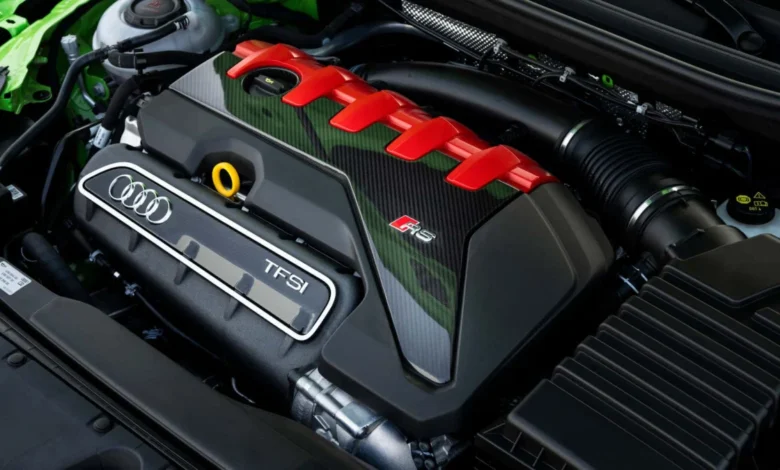
The future of one of the most celebrated internal combustion engines in automotive history currently hangs in a delicate balance as Audi Sport evaluates technological pathways to keep its legendary 2.5-liter five-cylinder engine alive in the European market. While increasingly stringent emissions regulations have effectively signaled the end of the current iteration of the powertrain on the continent, Audi executives have confirmed that the company is not yet ready to consign the "five-pot" to the history books. In a recent dialogue regarding the brand’s performance strategy, Audi Sport boss Rolf Michl indicated that the division is exploring a variety of engineering solutions, including hybridization, to ensure the engine meets upcoming regulatory hurdles without sacrificing the visceral character that has defined the RS3 and its predecessors for decades.
The Regulatory Impetus: Euro 7 and the European Dilemma
The primary catalyst for this technological soul-searching is the impending implementation of the Euro 7 emissions standards. Originally proposed as a drastic overhaul that threatened to make many internal combustion engines financially unviable, the finalized Euro 7 regulations have been somewhat moderated following intense lobbying from automotive manufacturing nations. However, even in its "watered down" form, the legislation introduces stricter testing parameters and tighter limits on nitrogen oxides (NOx) and particulate matter that pose a significant challenge for high-performance, high-displacement engines like Audi’s 2.5 TFSI.
In the European Union, the automotive landscape is shifting rapidly toward full electrification, driven by the 2035 mandate to end the sale of new CO2-emitting vehicles. For a niche, high-output engine like the five-cylinder, the cost of compliance is high. Under current configurations, the engine struggles to balance the high-pressure fuel injection and exhaust gas temperatures required for its signature 400-plus horsepower output with the low-emission thresholds mandated by Brussels. Consequently, Audi has had to make the difficult decision to pause or limit the engine’s availability in several European jurisdictions, leading many to believe the engine’s demise was imminent.
Audi Sport’s Commitment to Innovation
Despite the regulatory headwinds, Audi Sport remains committed to its heritage. Speaking to industry analysts and media, Rolf Michl emphasized that the company is "open to every possibility" to sustain the engine’s presence in Europe. This openness includes a comprehensive overhaul of the engine’s architecture. According to sources close to the development team in Ingolstadt, the most viable path forward involves integrating electric assistance.
"I can tell you we are still thinking in different technological possibilities," Michl stated, suggesting that the engineering team is moving beyond theoretical discussions and into the feasibility stage of a hybrid five-cylinder powertrain. This could take several forms, ranging from a 48-volt mild-hybrid system designed to improve efficiency during start-stop cycles and low-load cruising, to a more robust plug-in hybrid (PHEV) configuration that could offer significant "electric-only" range while providing an electric boost to the turbocharger to eliminate lag.
A Legacy Built on Five Cylinders
To understand why Audi is fighting so hard to save this specific engine, one must look at its historical significance. The five-cylinder engine is the heartbeat of the Audi brand, a legacy that began in the late 1970s with the Audi 100. However, it was the 1980s and the legendary Group B rally era that cemented the engine’s status. The Audi Sport Quattro, with its turbocharged five-cylinder and Quattro all-wheel-drive system, revolutionized motorsport and established the "Vorsprung durch Technik" ethos.
The modern 2.5-liter TFSI engine is a direct descendant of that rally-bred DNA. Known for its unique 1-2-4-5-3 firing order, the engine produces a rhythmic, syncopated exhaust note that is instantly recognizable to enthusiasts. It has been a perennial winner of the "International Engine of the Year" award in its category, praised for its compact dimensions, power-to-weight ratio, and immense tuning potential. For many Audi customers, the five-cylinder engine is the primary reason for choosing an RS3 or TT RS over competitors from BMW M or Mercedes-AMG, which typically utilize four- or six-cylinder configurations.
The Technical Challenge of Hybridization
Integrating a hybrid system into the RS3 platform is not without its complications. The current RS3 is praised for its agility and the sophisticated "Torque Splitter" rear differential that allows for controlled drifts and sharp turn-in. Adding a battery pack and electric motors introduces significant weight—a factor that could potentially dull the sharp handling characteristics that RS customers expect.
If Audi opts for a full plug-in hybrid system, the challenge will be packaging. The MQB platform, which underpins the RS3, was designed with versatility in mind, but cramming a high-performance internal combustion engine, an electric motor, and a battery into a compact sedan or hatchback footprint requires surgical precision. Engineers must ensure that the weight distribution remains balanced and that the cooling requirements for both the high-stress engine and the electrical components are met.
However, hybridization also presents opportunities. An electric motor can provide instantaneous torque at the low end of the rev range, filling the gap before the turbocharger reaches full spool. This could result in an RS3 that is even faster off the line than the current model, which already boasts a 0-60 mph time of just 3.6 seconds.
Global Market Disparity: A Tale of Two Regions
While the five-cylinder faces an uphill battle in Europe, the outlook for enthusiasts in North America and other global markets is considerably brighter. Because emissions regulations in the United States (overseen by the EPA and CARB) follow a different trajectory and set of priorities than the EU’s Euro 7, Audi intends to continue offering the pure, non-hybridized 2.5 TFSI engine in these regions for the foreseeable future.
The current 2025 Audi RS3 Sedan remains a flagship of the brand’s performance lineup in the U.S. market. For these "rest of the world" versions, Audi can continue to refine the engine for power and sound without the immediate threat of the engine being regulated out of existence. This creates a unique situation where Audi Sport must essentially maintain two parallel development tracks: one focused on the transition to hybrid and electric power for the European domestic market, and another focused on maximizing the potential of traditional internal combustion for international buyers.
Broader Implications for the Audi Brand
The struggle to save the five-cylinder engine is emblematic of the broader transition occurring at Audi. The company has already announced that it will launch its last new internal combustion engine model in 2026, with a goal of becoming a fully electric brand by 2033. This leaves a narrow window of approximately one decade for "transitional" models.
The survival of the five-cylinder engine through hybridization would serve as a bridge, allowing Audi to retain its performance-oriented identity while meeting corporate ESG (Environmental, Social, and Governance) targets. It also reflects a realization within the industry that a "one-size-fits-all" approach to electrification may not work for every market or every vehicle segment.
Furthermore, Audi’s recent maneuvers in other markets—such as the launch of the ringless "AUDI" brand in China and the development of the large Q9 SUV for the American market—demonstrate a brand that is becoming increasingly comfortable with regional specialization. Saving the five-cylinder for Europe via hybridization is simply another facet of this localized strategy.
Future Outlook and Enthusiast Expectations
As Audi Sport continues its feasibility studies, the automotive world is watching closely. If Audi succeeds in creating a hybridized five-cylinder that retains the character of the original, it could set a blueprint for other manufacturers struggling to keep their performance icons alive.
For now, the RS3 and RS3 Sportback remain the standard-bearers for the inline-five. While the 2025 models represent the pinnacle of current gasoline technology, the "different technological possibilities" mentioned by Rolf Michl suggest that a "Version 2.0" of the five-cylinder is on the horizon. Whether it arrives as a mild-hybrid or a high-performance PHEV, the goal remains the same: to ensure that the unique roar of the Audi five-cylinder does not go silent on the roads of Europe.
In the interim, the secondary market for existing five-cylinder models like the TT RS and the current RS3 is expected to remain robust. Collectors and driving enthusiasts view these vehicles as the end of an era—mechanical masterpieces that offer a sensory experience that even the fastest electric vehicles struggle to replicate. Audi’s willingness to explore expensive, complex engineering solutions to keep this engine alive is perhaps the greatest testament to the five-cylinder’s enduring impact on the world of high-performance motoring.