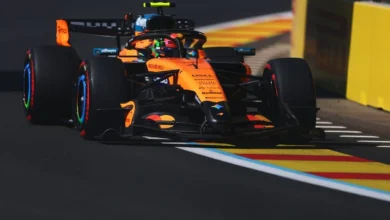
Red Bull faces “awkward” Gianpiero Lambiase dilemma ahead of McLaren move, says David Coulthard

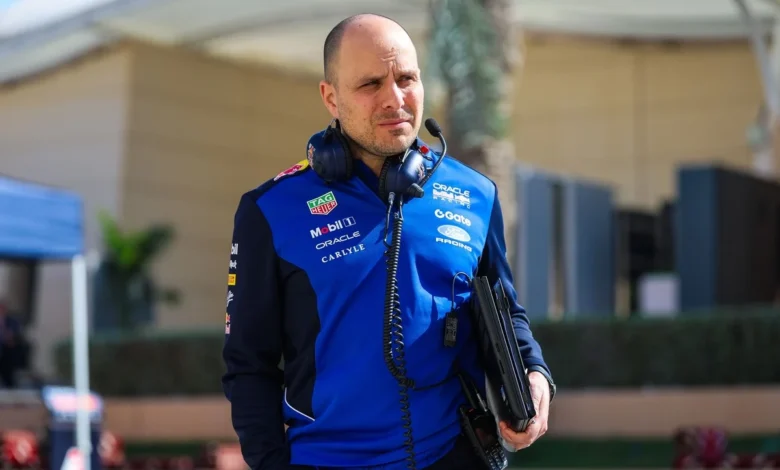
Former Formula 1 driver David Coulthard has articulated a significant strategic challenge facing Red Bull Racing following the confirmed departure of Max Verstappen’s highly valued race engineer, Gianpiero Lambiase, to McLaren. Coulthard posits that Red Bull will almost certainly be compelled to place Lambiase, affectionately known as "GP," on gardening leave to safeguard its proprietary and highly sensitive future car development strategies. Lambiase is slated to join McLaren in a pivotal role as Chief Racing Officer in 2028, a move that coincides with the expiration of his current contract with the Austrian-British powerhouse. However, Coulthard questions the wisdom of Red Bull retaining Lambiase in an active capacity throughout the intervening period, particularly as 2027 approaches.
The Strategic Conundrum of Technical Knowledge Transfer
Speaking on the Up To Speed podcast, Coulthard elaborated on the inherent difficulties of the situation. "He’s still got a contract with Red Bull. We expect him to still continue in that contract," Coulthard stated. "But of course, one of the tricky moments for Red Bull is, he can’t walk out of the factory with a laptop with all the data at the end of the year, but what’s in your mind, you’re allowed to take with you." This fundamental principle of knowledge transfer, where tacit knowledge and strategic insights held within an individual’s mind are portable, presents a significant risk for Red Bull.
Coulthard continued, "So, there’ll be a point where they’re going to want to say, ‘Look, you can’t really be working on this car, or you certainly can’t be across any of the discussions about developments going into 2027 and beyond.’ So, that becomes an awkward scenario." The potential for Lambiase to inadvertently or intentionally convey crucial technical direction and developmental philosophies from Red Bull to a direct competitor like McLaren is a risk that seasoned F1 strategists would be loath to accept.
Historical Parallels and the Practicalities of Transition
Drawing upon his own career transition, Coulthard highlighted the precedent set by such moves. "And I’ve been there as a driver. At the end of 1995, I’d already signed to join McLaren, and you still go about the race weekend in a normal fashion," he recalled. However, he also acknowledged the necessary restrictions imposed by his then-current team, Williams. "But I wasn’t allowed to go into certain areas in the factory when I went to Williams, understandably so, because I’m moving to another team. So it just starts to erode the relationship and make it a little bit of a compromise."
This historical context underscores the standard industry practice of protecting sensitive information during employee transitions, particularly when moving between rival organizations. The "gardening leave" period, a contractual agreement where an employee is paid by their current employer but is prohibited from working for a competitor or even engaging in work that could benefit a competitor, is designed to prevent the immediate transfer of confidential knowledge and strategic planning. For Red Bull, with its dominant position and extensive investment in cutting-edge technology, the stakes are exceptionally high.
The Timeline of Lambiase’s Departure
Gianpiero Lambiase’s impending move to McLaren marks a significant shift in the F1 personnel landscape. While the exact date of his formal departure from Red Bull is not publicly disclosed, his commitment to McLaren in 2028 suggests a multi-year transition period. This lengthy runway provides ample opportunity for sensitive information to be shared, even if unintentionally.
- Confirmation of Move: The initial announcement of Lambiase’s appointment at McLaren as Chief Racing Officer in 2028 sent ripples through the paddock.
- Contractual Obligations: Lambiase is understood to be under contract with Red Bull until the end of 2027, creating the potential for him to remain in his current role for an extended period.
- Coulthard’s Analysis: Former F1 driver David Coulthard has voiced concerns about the strategic implications of this extended tenure.
- Potential for Gardening Leave: Coulthard believes Red Bull will likely place Lambiase on gardening leave to protect future car developments.
- McLaren’s Hope: It is suggested that McLaren might prefer an earlier release for Lambiase to expedite his integration and contribution.
The Economic and Competitive Implications

The situation also presents a complex negotiation point between Red Bull and McLaren. "So what McLaren, I’m sure, would be hoping is that Red Bull would release GP early from his contract, release the obligation to pay his salary and allow him to join McLaren early," Coulthard mused. From McLaren’s perspective, securing the expertise of a highly regarded engineer like Lambiase as soon as possible would be a significant advantage, allowing him to contribute to their ongoing development programs and strategic planning for the 2028 season and beyond.
However, Coulthard rightly points out the counter-argument from Red Bull’s standpoint: "But on the other side, why would they want to do anything that gives your competitors an advantage?" Red Bull, having achieved unprecedented success in recent years, is fiercely protective of its competitive edge. Relinquishing a key member of its technical team to a rival, especially one with the ambition and resources of McLaren, without any strategic benefit would be counterintuitive.
Supporting Data: The Value of Race Engineers in F1
The significance of a race engineer like Gianpiero Lambiase cannot be overstated. In modern Formula 1, race engineers are far more than data analysts; they are integral to the driver’s performance and the car’s ongoing development. They work in close proximity with the driver, interpreting telemetry, providing strategic feedback during races, and crucially, feeding insights back to the design and aerodynamic teams.
- Driver-Engineer Synergy: The relationship between a driver and their race engineer is often one of the most critical partnerships within a team. Max Verstappen and Lambiase have cultivated an exceptionally effective synergy, widely recognized for its contribution to their success.
- Technical Expertise: Race engineers possess a deep understanding of car dynamics, race strategy, and the nuances of how a car performs under various conditions.
- Developmental Input: They play a vital role in translating on-track feedback into tangible improvements for the car, influencing design choices and aerodynamic configurations.
- Data Interpretation: The ability to rapidly and accurately interpret vast amounts of real-time data is a hallmark of a top-tier race engineer, enabling critical strategic decisions.
The departure of such an individual, particularly to a team actively seeking to close the performance gap, represents a significant loss of institutional knowledge and operational expertise. Red Bull’s likely response – placing Lambiase on gardening leave – is a standard, albeit potentially costly, defensive measure to mitigate this risk.
Broader Impact and Implications for the 2028 Season
The move of personnel like Lambiase is a microcosm of the intense competition and strategic maneuvering that defines Formula 1. While the 2028 season may seem distant, the development cycles for F1 cars begin years in advance. The information Lambiase carries, or could impart, pertains to Red Bull’s design philosophies, future aerodynamic concepts, and potentially even innovative solutions to current regulations.
For McLaren, securing Lambiase is a clear indication of their long-term strategy to build a formidable technical and operational unit capable of challenging for championships. His role as Chief Racing Officer suggests a broader remit, encompassing not just race operations but also strategic direction for the racing department.
Red Bull’s adherence to a gardening leave policy, if implemented, would serve as a stark reminder of the competitive landscape. It underscores that even during the final years of a contract, the proprietary nature of Formula 1 technology necessitates strict controls to prevent rivals from gaining an unfair advantage. The financial implications for Red Bull include the continued payment of Lambiase’s salary without the benefit of his direct contribution, a cost that is likely deemed acceptable when weighed against the potential loss of competitive advantage.
The ultimate outcome of this situation will likely hinge on the contractual specifics and any negotiations that may occur between Red Bull and McLaren. However, as David Coulthard rightly points out, the protection of future development is paramount for any team aspiring to maintain or achieve a leading position in Formula 1. The prolonged tenure of a key individual like Gianpiero Lambiase, before his eventual move to a competitor, presents an unavoidable strategic dilemma that Red Bull must navigate with extreme caution.