US Republicans Threaten Sanctions Against Canada Amid Unprecedented Wildfire Smoke Emergency

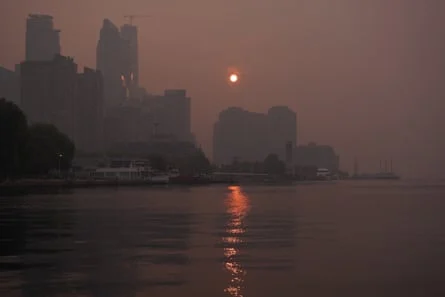
A wave of severe condemnation and the threat of international sanctions have emerged from the United States, as prominent Republican figures and lawmakers hold Canada accountable for the widespread drift of wildfire smoke across vast regions of the U.S. This atmospheric phenomenon has plunged tens of millions of Americans into hazardous air quality conditions, sparking a diplomatic and environmental dispute between the two historically allied nations. The unprecedented severity of the current wildfire season in Canada has ignited calls for punitive measures, including tariffs and direct action against Canadian government officials, despite the complex and shared nature of North American wildfire challenges.
Escalating Rhetoric and Proposed Measures
The severity of the rhetoric escalated significantly on Friday when former President Donald Trump publicly assigned blame to Canada for the "dirty air" infiltrating the United States. In a post on his social media platform, Truth Social, Trump declared the U.S. had been "invaded" by the smoke and suggested a direct economic reprisal. "The cost of this pollution must of necessity be added to the TARIFFS Canada is currently paying," he wrote, signaling a potential expansion of trade disputes beyond existing economic agreements. Trump also indicated his intent to contact Mark Carney, identified as the Canadian prime minister in the original report, to discuss Ottawa’s strategies for mitigating the blazes. (It is important to note that Justin Trudeau is the current Prime Minister of Canada, while Mark Carney is a prominent Canadian economist and former Governor of the Bank of England and the Bank of Canada; this discrepancy may reflect an error in the original source material or a hypothetical scenario.)
These remarks followed closely on the heels of a legislative threat from Senator Bernie Moreno, a Republican from Ohio. On Thursday, Moreno announced his intention to introduce a bill aimed at sanctioning Canada and specific Canadian government officials whom he deemed "responsible for this atrocity." In an official statement from his office, Senator Moreno criticized Canada’s government for an alleged "failure to invest in wildfire prevention methods including forest thinning, fuel reduction, prescribed burns, and stronger enforcement against arson." Ohio, a state sharing a maritime border with the Canadian province of Ontario, has experienced significant impacts from the smoke, contributing to the heightened political pressure from its representatives.
Further amplifying the chorus of Republican discontent, four members of the House of Representatives from Michigan, another state bordering Canada, dispatched a letter to Prime Minister Carney. Their communiqué delivered a stark warning: "If Canada will not manage its forests to prevent these fires, the United States will look elsewhere, and act on our own, to protect our people." This collective stance from border states underscores the perceived urgency and frustration among U.S. lawmakers regarding the cross-border environmental impact.
Canada’s Stance and Call for Cooperation
In response to the American accusations, Prime Minister Carney, addressing reporters on Thursday, emphasized the global nature of climate change and its associated challenges. "Fighting climate change is the responsibility of all countries, including the United States," he stated, implicitly redirecting the conversation towards the shared underlying cause of increased wildfire activity. This statement highlights Canada’s position that the issue transcends national borders and requires a collaborative, rather than confrontational, approach.
Adding to the Canadian perspective, Ontario Premier Doug Ford called for reciprocal assistance rather than criticism. On Friday, Ford urged the U.S. to offer aid in battling the fires, referencing Canada’s history of providing support to its southern neighbor during similar crises. "Maybe what you should do rather than complain is send support, send help," Ford remarked. "Because we have done the exact same thing for our American friends, and that’s what you’re supposed to do." His comments underscore the established tradition of mutual aid and cooperation between the two nations, which typically characterizes their bilateral relationship in times of emergency. Canada has historically deployed firefighters and resources to assist the U.S. during severe wildfire seasons, and vice versa, making the current U.S. stance a significant departure from typical cross-border disaster response protocols.
A Continent Under a Haze: The Public Health Crisis
The immediate and most palpable impact of the Canadian wildfires has been the dramatic deterioration of air quality across vast swathes of the U.S. On Friday, approximately 109 million people across the Midwest, Mid-Atlantic, and Northeast regions of the United States were grappling with poor air quality alerts. The smoke, laden with fine particulate matter, has caused widespread hazy conditions and posed significant public health risks.
Major metropolitan areas reported alarming Air Quality Index (AQI) readings, prompting urgent health advisories. In cities like Chicago and Detroit, residents were cautioned to remain indoors and reduce physical activity as the AQI soared to "hazardous" levels, reaching as high as 361 in Detroit, according to the government’s AirNow website. An AQI above 300 is classified as "Hazardous," signifying that everyone may experience more serious health effects.
Overnight, the pungent wildfire smoke drifted further south and east, engulfing Baltimore and Washington D.C. By early Friday morning, these cities recorded "very unhealthy" AQI values of 281 and 247, respectively. An AQI between 201 and 300 is deemed "Very Unhealthy," indicating a heightened risk of health effects for the entire population, with sensitive groups experiencing more severe impacts. New York City, which had been blanketed by smoke since Tuesday, registered an "unhealthy" AQI of 184 early Friday, later improving marginally to 124, which is still considered "Unhealthy for Sensitive Groups." Philadelphia and Cleveland also reported "very unhealthy" readings around 260. Other parts of Michigan, Minnesota, and Wisconsin experienced "hazardous" air quality, necessitating extreme caution for their populations.
The health implications of wildfire smoke are severe and far-reaching. The particulate matter (PM2.5) present in smoke can penetrate deep into the lungs and even enter the bloodstream, attacking nearly every system in the human body. It is known to exacerbate respiratory conditions such as asthma, bronchitis, and chronic obstructive pulmonary disease (COPD), and can trigger heart attacks, strokes, and irregular heartbeats. Vulnerable populations, including children, the elderly, and individuals with pre-existing cardiovascular or respiratory conditions, are particularly at risk. Medical studies indicate that wildfire smoke contributes to tens of thousands of premature deaths annually, underscoring the gravity of the current public health emergency. Organizers of the World Cup final in East Rutherford, New Jersey, are reportedly monitoring smoke patterns closely, as projections suggest the smoke currently over the Mid-Atlantic could drift back into the Northeast, potentially impacting outdoor events.
Wildfires: A Shared North American Challenge
While the immediate focus of U.S. Republican criticism has been on Canadian wildfires, it is crucial to acknowledge that the United States is also experiencing an above-average wildfire year. Data from the National Interagency Fire Center (NIFC) indicates that more than 5,740 square miles of U.S. land have burned from wildfires so far this year. This figure represents a 31% increase compared to the average over the previous 10 years for the same period. The NIFC’s predictive outlook for the season points to a challenging period ahead for the U.S.

The scale of wildfire activity in the U.S. has shown a concerning upward trend over recent decades. The amount of U.S. land consumed by fires annually in the 2020s, when averaged over the decade, has more than doubled compared to 30 years ago. Northern Minnesota, for instance, has seen over 63,000 acres burned, while significant wildfires have also been reported in Oregon, Washington, and Idaho. Smoke from these U.S. blazes frequently drifts northward, affecting air quality in Canadian provinces, demonstrating the reciprocal nature of cross-border atmospheric pollution.
In Canada, the current wildfire season has been particularly devastating. The largest active fire, located near Ontario’s remote Wabakimi Provincial Park, has reportedly spread across an astounding 787,802 acres (318,812 hectares). This massive blaze is one of 191 large, out-of-control fires burning across the country as of Friday morning. The human toll has been severe, with thousands of people evacuated from their homes, and at least one First Nations community tragically erased by the fires. Toronto, Canada’s largest city, experienced the ignominious distinction of having the worst air quality in the world on a recent Wednesday, coinciding with a record-breaking heatwave.
Estimates suggest that nearly 6 million acres have burned across Canada this season. While this is a significant area, it is less than a quarter of the land consumed by blazes in 2023, when Canadian wildfire smoke last extensively blanketed the U.S., highlighting the variability and increasing severity of these events year-on-year.
The Climate Change Nexus and Policy Divergence
The escalating frequency and intensity of wildfires across North America are inextricably linked to the planet’s heating climate. Scientific consensus overwhelmingly attributes these changes to human activities, primarily the emission of greenhouse gases. Warmer, drier conditions during the summer months create an environment highly conducive to ignition and rapid fire spread. This phenomenon not only amplifies wildfire activity but also extends the traditional wildfire season, a natural ecological cycle, making it longer and more unpredictable.
Against this backdrop of a worsening climate crisis, the policy approaches of the U.S. and Canada, particularly under the Trump administration, have diverged significantly. The United States, by far the world’s largest oil-and-gas-producing nation, has historically been the largest emitter of greenhouse gases globally, making it a pivotal driver of climate change.
During the last period of his presidency, Donald Trump implemented policies that critics describe as a "sledgehammer" to U.S. climate initiatives. His administration aggressively rolled back environmental protections and regulations, aiming to bolster the domestic fossil fuel industry and expand oil and gas exploration. Efforts were also made to revive the struggling coal sector. Concurrently, renewable energy industries faced significant challenges, with millions of dollars in earmarked funding for clean energy projects being blocked. State-level initiatives to address pollution were also targeted.
Furthermore, the Trump administration took steps to suppress climate research and dismantle key federal agencies responsible for environmental monitoring and conservation. This included mass firings of federal workers in fields critical to climate and conservation work, weather forecasting, and wildlife monitoring. In a particularly controversial move, the administration sought to shutter several government laboratories dedicated to studying the impacts of wildfires on human health, air quality, wildlife habitat, and forest ecosystems. Scientists warned that these actions could severely hinder efforts to protect people and the environment from the escalating threat of wildfires, potentially impacting the very summer they were being implemented. This stark divergence in climate policy and environmental management approaches forms a critical context for the current cross-border dispute over wildfire smoke.
Economic and Diplomatic Implications
The threat of sanctions and tariffs against Canada carries significant economic and diplomatic implications for a relationship that is one of the most extensive and integrated in the world. The U.S. and Canada share the longest undefended border globally and maintain an unparalleled bilateral trade relationship, with goods and services crossing the border daily. In 2022, total U.S. goods and services trade with Canada was estimated at $943.4 billion, making Canada the United States’ second-largest trading partner. Any imposition of tariffs or sanctions could disrupt these intricate supply chains, increase costs for consumers and businesses in both countries, and potentially trigger retaliatory measures, harming both economies.
Beyond economics, such punitive actions would undoubtedly strain the deep diplomatic ties between Washington and Ottawa. Historically, the two nations have cooperated extensively on security, environmental protection, and international affairs. A move to sanction Canada over wildfires could undermine decades of goodwill and collaborative efforts, making future cooperation on shared challenges, including environmental management and disaster response, significantly more difficult. It could also set a precedent for using environmental impacts as grounds for trade disputes, potentially destabilizing international trade relations more broadly.
Looking Ahead: The Future of Cross-Border Environmental Management
The current crisis underscores the urgent need for a unified, cooperative approach to environmental challenges that transcend national boundaries. While political rhetoric and the immediate impact of the smoke have created friction, the underlying issue of climate change and its effect on wildfire seasons demands sustained collaboration. Both the U.S. and Canada face increasing threats from wildfires, and their shared ecosystems dictate that a fragmented or adversarial response will ultimately prove ineffective.
Future strategies will likely need to focus on enhanced joint efforts in wildfire prevention, suppression, and recovery. This could include sharing resources, expertise, and advanced technologies for early detection and mitigation. Investment in sustainable forest management practices, including prescribed burns and fuel reduction, which Senator Moreno highlighted, would benefit both nations. Crucially, a renewed commitment to addressing climate change at a policy level, with coordinated strategies for emissions reduction and adaptation, will be essential to mitigate the long-term drivers of extreme wildfire events.
The ongoing public health emergency caused by the smoke serves as a stark reminder that environmental problems do not respect national borders. The ability of the U.S. and Canada to navigate this challenge, moving beyond blame to embrace collaboration, will be a critical test of their enduring relationship in an era defined by shared environmental threats.