Australian Alps Record Unprecedented Winter Heat as Escalating Middle East Tensions Threaten Fuel Prices and Interest Rate Hikes

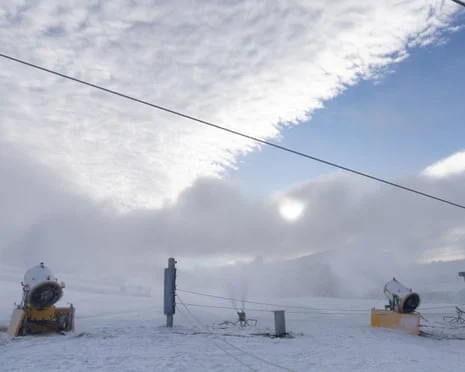
The Australian Alps are grappling with an exceptionally warm winter day, recording temperatures that are poised to shatter long-standing July records across several key ski fields. This unusual weather event unfolds concurrently with a significant surge in Australian fuel prices, driven by escalating geopolitical tensions in the Middle East, a development economists warn could precipitate an interest rate hike from the Reserve Bank of Australia (RBA). These two seemingly disparate narratives — one concerning climate, the other global economics and geopolitics — converge to highlight the multifaceted challenges confronting Australia’s environment and economy.

Australian Alps Experience Record-Breaking Winter Warmth
Yesterday marked a notably warm day for the Australian alpine region, with provisional data indicating that several popular ski resorts experienced temperatures significantly above their historical July averages. These figures, while awaiting official confirmation from the Bureau of Meteorology’s (BoM) climate team, suggest a troubling trend for the country’s winter tourism industry and delicate alpine ecosystems, which are already vulnerable to the impacts of a changing climate.
Mount Hotham, a prominent Victorian ski destination renowned for its challenging terrain and pristine snow, registered a peak temperature of 11.1 degrees Celsius. If confirmed, this would represent a substantial increase of 2.4 degrees Celsius above its previous July record of 8.7 degrees Celsius, which had stood unchallenged since 1994. This significant leap underscores the magnitude of the recent warmth. Similarly, Falls Creek, another major resort in Victoria, reported an astonishing 11.5 degrees Celsius, comfortably surpassing its 1992 July maximum of 9.8 degrees Celsius. This indicates a consistent pattern of elevated temperatures across the Victorian Alps. Further north, in New South Wales, Perisher, Australia’s largest and most expansive ski resort, also recorded a remarkable 11.9 degrees Celsius. This figure is widely expected to establish a new July high for the area, impacting conditions across its extensive network of slopes.

These unseasonably high temperatures have naturally raised considerable concern among climate scientists, environmental advocates, and stakeholders within the ski industry. Dr. Andrew Watkins, a respected research associate at Monash University and a prominent voice in Australian meteorology, offered a scientific explanation for the phenomenon, sharing his observations on social media. He attributed the unusual warmth to a complex interplay of atmospheric conditions: "Big slow moving high pressure systems creating large areas of descending & warming air hitting a radiation inversion = warm air trapped above the ground. Plus climate change…"
To elaborate, high-pressure systems are typically associated with clear skies and stable weather. When they move slowly, they can allow air to descend over a prolonged period. As air descends, it compresses and warms, a process known as adiabatic heating. This warm air then interacts with a "radiation inversion," which is a meteorological condition where a layer of cooler air is trapped near the Earth’s surface by a layer of warmer air above it. While inversions often lead to cold, foggy conditions, in this specific scenario, the powerful descending and warming air from the high-pressure system appears to have interacted with and effectively elevated the temperatures within or above the inversion layer, trapping the heat and significantly increasing surface readings. This specific meteorological setup, when superimposed on the long-term trajectory of anthropogenic climate change, creates conditions ripe for extreme heat events, even in traditionally cold alpine environments during winter.

Broader Implications for Australia’s Alpine Regions
The timing of these record temperatures, occurring deep in the Southern Hemisphere winter, is particularly alarming for Australia’s ski season. The nation’s alpine regions are a cornerstone of winter tourism, attracting hundreds of thousands of visitors annually. This sector directly and indirectly supports thousands of jobs, from ski instructors and hospitality staff to retail and transport operators, contributing significantly to regional economies in Victoria and New South Wales. A consistently warmer and drier winter season, as initially forecast by the BoM back in June, could have profound long-term consequences for the economic viability and operational sustainability of the ski industry. The BoM’s earlier outlook had already predicted "poorer conditions for snow" this winter, a forecast that now appears to be manifesting with concerning accuracy and potentially greater severity than anticipated.
Beyond economic considerations, the ecological health of Australia’s unique alpine ecosystems is critically dependent on consistent and adequate snow cover. These regions are biodiversity hotspots, home to unique flora and fauna, including endangered species that have adapted to cold, snow-bound environments. Reduced snowpack affects not only their habitats but also crucial water resources, as snowmelt feeds numerous rivers and reservoirs across the Murray-Darling Basin, which are vital for agriculture, hydroelectric power generation, and urban water supply downstream. The long-term implications for biodiversity loss, water security across vast areas of southeastern Australia, and the integrity of the natural landscape underscore the gravity of these warming trends. Environmental groups have consistently highlighted the acute vulnerability of these fragile regions to the impacts of climate change, and these latest temperature anomalies serve as a tangible and stark example of those predictions coming to pass.

Geopolitical Tensions Drive Australian Fuel Prices Upward
While the Australian Alps contend with unusual warmth, the nation’s motorists and the broader economy are facing a different kind of heat: rapidly escalating fuel prices. Over the past week, heightened geopolitical tensions and military engagements in the Middle East have triggered a significant rebound in global oil prices, directly translating into higher costs at Australian petrol pumps and raising fears of broader inflationary pressures that could impact household budgets and business profitability across the country.
Diesel prices have seen a particularly sharp and concerning increase, jumping by an average of 15 cents per litre in just five days. Comprehensive data from MotorMouth, a leading fuel price tracking service, reveals the dramatic shifts. In Melbourne, for instance, diesel prices surged from 192.8 cents per litre (cpl) on Monday to a staggering 209.9 cpl by Saturday. Other major capital cities experienced similar, substantial spikes: Brisbane registered 207.1 cpl, Sydney 205.1 cpl, Adelaide 204.3 cpl, and Perth 201.5 cpl. These figures represent significant jumps for a staple commodity in such a short period. Unleaded petrol prices also climbed noticeably, rising by an average of seven cents per litre over the past week, reaching 177.5 cpl in Brisbane, 175.8 cpl in Melbourne, and 172.5 cpl in Sydney.
This dramatic increase in fuel costs is a direct and immediate consequence of escalating military actions and heightened tensions in the Middle East, particularly concerning the strategic Strait of Hormuz. This narrow waterway, located between the Persian Gulf and the Gulf of Oman, is a critical choke point for global oil supplies, through which an estimated 20% of the world’s total petroleum consumption, or roughly 21 million barrels per day, passes. Any disruption or perceived threat to shipping in this strait, whether real or anticipated, immediately sends shockwaves through international energy markets, leading to rapid price increases.
Oil Market Volatility and the Middle East Crisis
The current surge in oil prices follows a brief period of relative calm and optimism in global energy markets. Brent crude oil prices, the international benchmark, had fallen to nearly US$70 a barrel after a mid-June peace deal between the United