Navigating the Human Element of School Mergers Lessons in Leadership and Organizational Transition from the 2024 NAESP Conference

At the National Association of Elementary School Principals (NAESP) National School Leaders Conference in Orlando, Florida, education experts and building leaders gathered to address one of the most volatile challenges in modern district management: the closing and merging of schools. While the administrative side of a school merger—the logistics of moving furniture, reassigning bus routes, and balancing budgets—can be executed with the stroke of a pen or a decisive school board vote, the psychological transition of the human beings involved is a far more complex and time-consuming endeavor. Vicki Wilson, a veteran school leadership consultant and former principal, emphasized that the speed of a policy decision often stands in stark contrast to the slow, deliberate pace of human adaptation. According to Wilson, the most significant hurdle in organizational change is not the excitement of a new start, but the grief associated with what is being left behind.
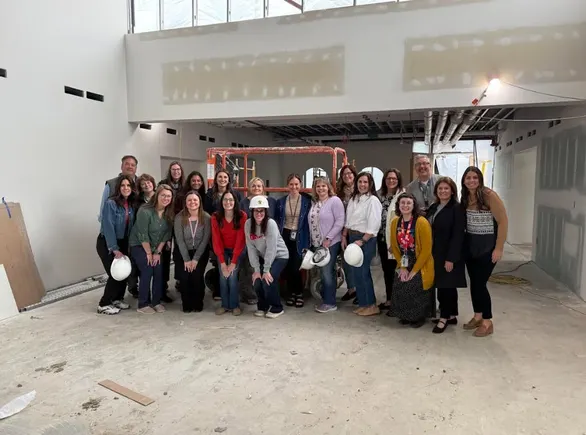
The presentation, co-led by Nicole Garza, principal of the newly unified Grosse Ile Elementary School in Michigan, provided a blueprint for how leaders can navigate the "human piece" of school consolidation. By utilizing established psychological frameworks and creative team-building strategies, Garza and Wilson demonstrated that the success of a merger is measured not by the completion of a construction project, but by the eventual shift in staff identity from "us and them" to a collective "we."
Theoretical Framework: The William Bridges Transition Model
A central pillar of the Orlando presentation was the application of William Bridges’ Transition Model, a staple of organizational psychology first introduced in his seminal work, Managing Transitions. Wilson argued that school leaders must distinguish between "change," which is situational (the move to a new building), and "transition," which is the internal psychological process people go through as they come to terms with the new situation.
The Bridges model identifies three distinct phases that must be managed for a transition to be successful:
- The Ending: This phase begins with the announcement of the change. It is characterized by loss, letting go, and the grieving of old identities. Wilson noted that if leaders do not honor this loss, staff members often remain stuck in the past, resisting the new reality.
- The Neutral Zone: This is the bridge between the old and the new. In a school merger, this often occurs during the year of planning before the buildings officially combine. It is a period of high anxiety and confusion where the old way is gone but the new way isn’t yet fully operational. However, it is also a period of immense creativity if managed correctly.
- The New Beginning: This final phase involves the development of new identities, the emergence of fresh values, and a return of energy. Success in this phase is only possible if the previous two stages have been navigated with transparency and empathy.
Case Study: The Grosse Ile Elementary Merger
The practical application of these theories was exemplified by Nicole Garza’s experience in Michigan. The Grosse Ile Township Schools district faced a common dilemma: the need to consolidate two separate elementary buildings—one serving grades K-2 and the other serving grades 3-5—into a single K-5 entity. The announcement initially sparked significant friction. Staff members from both buildings were protective of their existing cultures and were hesitant to integrate, creating a climate that Garza described as potentially disastrous.
The timeline for the Grosse Ile transition was deliberate. Following the announcement, the district allowed for a multi-year transition period. During the 2023-2024 academic year, as one principal prepared to step down, Garza took on the monumental task of leading both buildings simultaneously. This period served as the "Neutral Zone," a year dedicated entirely to building a unified culture before the physical merger was finalized for the 2024-2025 school year.
Honoring the Loss: Managing the Ending Phase
To address the "Ending" phase of the Bridges model, Garza took the unconventional step of dedicating a full professional development day in August 2024 to grief. Recognizing that teachers and staff were losing their specific building identities, traditions, and close-knit peer groups, Garza allowed the staffs of the two buildings to meet separately.
Crucially, administrators removed themselves from these sessions. This provided a "psychologically safe" space for staff to voice their frustrations, fears, and sadness without the pressure of appearing "on board" for their superiors. Wilson observed that this act of verbalizing loss was cathartic; by the end of the day, staff members reported feeling a sense of relief, having been given the permission to mourn the end of their era before being asked to embrace the next one.
Crossing the Neutral Zone: The "Leaving Your Mark Olympics"
To bridge the gap during the 2024-2025 school year, Garza and Wilson developed a year-long engagement strategy titled the "Leaving Your Mark Olympics." The initiative was designed to break down silos between grade levels and buildings through friendly competition and collaborative discovery.
The 44 staff members involved were divided into six cross-functional teams. One of the first tasks was the creation of "collective resumes." Teams were asked to aggregate their total years of teaching experience, the number of advanced degrees earned, and specific certifications held. This exercise served a dual purpose: it validated the expertise of veteran teachers who may have felt overlooked during the change and introduced the "new" colleagues to one another as professionals with shared goals and impressive credentials.
The "Olympics" featured physical and mental challenges, such as "trashketball" (tossing paper into bins), balance beam walks, and a high jump challenge using sticky notes. While these activities appeared lighthearted, they were strategically designed to foster laughter and shared memories—the "social glue" necessary for organizational unity. To maintain momentum, Garza implemented a point system where staff could earn "Olympic points" for acts of cross-building collaboration, such as sending encouraging notes to colleagues or sharing lesson resources.
The National Context: Why Mergers are Increasing
The strategies discussed in Orlando come at a time when school mergers are becoming increasingly common across the United States. According to data from the National Center for Education Statistics (NCES), public school enrollment in many regions has seen a steady decline, a trend accelerated by the COVID-19 pandemic and shifting national demographics.
Many districts are currently facing a "fiscal cliff" as federal Elementary and Secondary School Emergency Relief (ESSER) funds expire. With less supplemental funding and fewer students, school boards are often forced to consolidate facilities to maintain operational efficiency. However, research into school closures suggests that poorly managed mergers can lead to increased teacher turnover and a dip in student achievement. The Grosse Ile model presented at the NAESP conference offers a counter-narrative, suggesting that proactive leadership can mitigate these risks by prioritizing the psychological well-being of the educators.
Analysis of Leadership and Long-term Implications
The success of the Grosse Ile merger, as analyzed by Wilson and Garza, suggests that the "soft skills" of leadership—communication, empathy, and cultural curation—are actually the "hard skills" of successful school management. Wilson noted that Garza’s success was rooted in "clarity and empowerment." By keeping staff informed and giving them agency during the neutral zone, the district avoided the common pitfalls of top-down mandates.
The ultimate indicator of a successful merger, according to Wilson, is a shift in language. When staff members stop referring to their original buildings and start using possessive pronouns for the new entity—referring to it as "our school"—the transition is complete. In Grosse Ile, while the 2024-2025 school year still faced challenges related to ongoing construction and physical logistics, the "people problem" had been largely resolved. The staff had moved through the neutral zone and into the "New Beginning" phase, united by a shared identity.
Conclusion
As school districts across the country continue to grapple with shifting populations and budgetary constraints, the lessons from Orlando serve as a vital reminder for educational leaders. Change may be an administrative necessity, but transition is a human requirement. By acknowledging the pain of endings, providing structure during the uncertainty of the neutral zone, and intentionally building a new collective culture, school leaders can ensure that the merger of two buildings results in the birth of a stronger, more resilient educational community. The Grosse Ile experience demonstrates that while you can build a school with bricks and mortar, you must build a "school home" with time, empathy, and shared purpose.