Supreme Court Agrees to Hear Landmark Montgomery County Public Schools Admissions Case Focusing on Alleged Racial Discrimination

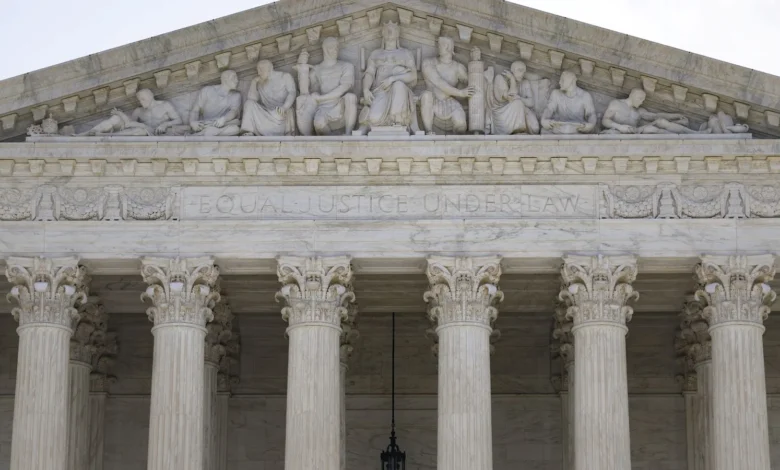
The legal and educational landscapes in the United States face a significant turning point following a major decision by the nation’s highest court. On October 19, 2026, the U.S. Supreme Court officially agreed to take up a high-stakes education case that will determine the precise legal standards required to prove allegations that a K-12 public school district’s admissions policies are racially discriminatory. The case, Association for Education Fairness v. Montgomery County Board of Education, centers on Maryland’s prominent Montgomery County Public Schools and addresses deep-seated tensions between academic merit, holistic evaluation, and demographic diversity initiatives.
This forthcoming judicial review arrives at a time of intense national scrutiny over how public education systems balance equal protection guarantees with the push to achieve equitable representation in elite academic tracks. As the Supreme Court prepares to hear arguments during its October 2026 term, school districts, civil rights organizations, and legal scholars across the country are closely monitoring a dispute that could reshape student selection processes nationwide.
Background and Origins of the Dispute
The controversy in Association for Education Fairness v. Montgomery County Board of Education dates back to structural changes implemented by Maryland’s largest school system. Montgomery County Public Schools sought to diversify the student bodies of its highly competitive magnet middle school science, technology, engineering, and math (STEM) programs. For years, these elite programs had drawn criticism from community advocates and district officials who noted a stark imbalance in demographic representation, pointing out that certain racial and ethnic groups—most notably Black and Hispanic students—were significantly underrepresented compared to their overall share of the district’s public school population.
To correct these disparities, the school board overhauled its admissions protocols. The district moved away from a system that heavily weighted standardized testing and quantitative metrics, opting instead for a holistic admissions framework designed to broaden access. This new approach incorporated teacher recommendations, socioeconomic indicators, and local school performance metrics, aiming to surface high-potential students who might have been overlooked by traditional standardized tests.
However, the policy shift immediately triggered sharp pushback. A group of Asian American parents, operating under the banner of the Association for Education Fairness, filed a federal lawsuit challenging the constitutionality of the new guidelines. The plaintiffs argued that the overhauled admissions process was intentionally designed to reduce the proportion of Asian American students admitted to the magnet programs. According to the lawsuit, the policy changes severely damaged their children’s enrollment prospects, amounting to unconstitutional racial balancing and discrimination under the Fourteenth Amendment’s Equal Protection Clause.
Chronology of Legal Proceedings
The legal battle over Montgomery County’s magnet school admissions has wound its way through the federal judiciary for several years, generating conflicting lower-court interpretations that ultimately invited Supreme Court intervention.
The chronology of the dispute highlights its escalating legal complexity:
- Pre-2020: Montgomery County Public Schools relies primarily on standardized testing and academic benchmarks to select students for its prestigious middle school STEM magnet programs.
- 2020–2021: Prompted by equity audits and community pressure, the district redesigns its admissions process, replacing standardized tests with a multi-factor, holistic evaluation model to increase demographic diversity.
- 2023: The Association for Education Fairness files a lawsuit in federal district court, alleging that the new policy discriminates against Asian American applicants by artificially depressing their admission rates.
- Early 2024: Lower federal courts review the challenge. The legal debate centers on the appropriate evidentiary standard: whether plaintiffs must prove intentional discrimination by showing that a specific racial group’s enrollment dropped relative to its share of the qualified applicant pool, or whether broader statistical disparities suffice.
- February 2026: The U.S. Court of Appeals for the Fourth Circuit issues a ruling that leaves the district’s policy intact, prompting the plaintiffs to petition the nation’s highest court.
- October 19, 2026: The U.S. Supreme Court officially grants certiorari, agreeing to hear Association for Education Fairness v. Montgomery County Board of Education during its current term.
Core Legal Questions Before the Supreme Court
When the justices hear oral arguments, the central question will revolve around the evidentiary burdens placed on plaintiffs challenging public school admissions policies. Specifically, the court must decide whether allegations that a school admissions policy is racially discriminatory under the Fourteenth Amendment must first demonstrate that the policy demonstrably harmed a particular racial group’s enrollment rate when compared specifically to the size of its qualified applicant pool, rather than the general student population.
Legal experts note that the ruling could clarify or modify established precedents regarding disparate impact and intentional discrimination in public education. If the Supreme Court adopts a standard that makes it easier for plaintiffs to challenge diversity-driven adjustments, school districts nationwide may find it significantly harder to alter admissions criteria for selective-admission schools. Conversely, a ruling favoring the school board would affirm local administrative flexibility in structuring educational programs to achieve socio-economic and racial integration.
Broader Regulatory Context: The Rollback of Federal Guidance

The Supreme Court’s decision to hear the Montgomery County case coincides with broader federal shifts in educational civil rights enforcement. In late October 2026, the administration announced that a total of seven federal guidance and resource documents concerning K-12 civil rights enforcement are no longer enforceable.
These abandoned documents—originally issued by the U.S. Departments of Education and Justice during the Obama and Biden administrations—were primarily designed to assist school districts in making educational opportunities more accessible for English learners, Black students, and other marginalized demographics. The official designation of these documents as obsolete or non-enforceable underscores a shifting federal philosophy regarding civil rights oversight in public schools, leaving local educational agencies to navigate compliance questions with diminished federal backing.
Stakeholder Perspectives and Industry Reactions
The Supreme Court’s acceptance of the case has drawn swift reactions from advocacy groups, educational associations, and legal scholars, reflecting deep ideological divisions over the role of race in public education.
Proponents of the lawsuit, including the Association for Education Fairness and various Asian American community organizations, view the Supreme Court’s intervention as a crucial step toward protecting individual merit and ensuring that admissions standards remain colorblind. Representatives argue that policies engineered to alter the racial composition of specialized academic programs inherently penalize high-achieving students based on their ancestry, violating fundamental constitutional guarantees of equal protection.
On the other side, public school administrators, education policy think tanks, and civil rights coalitions defend holistic admissions models as essential tools for fostering inclusive learning environments. They argue that standardized test scores alone do not fully measure a child’s academic potential and that public school systems have a compelling interest in ensuring that all communities have equitable access to rigorous academic programs, such as STEM magnet schools. Education sector analysts point out that many districts adopted similar holistic reforms in the wake of the Supreme Court’s landmark 2023 ruling against race-conscious admissions in higher education, making the Montgomery County case a vital test of how those principles apply to the K-12 sector.
Implications for K-12 School Districts Nationwide

As the legal community prepares for the upcoming Supreme Court arguments, the implications of Association for Education Fairness v. Montgomery County Board of Education extend far beyond Maryland. Hundreds of school districts across the United States operate selective-admission magnet schools, gifted and talented programs, and specialized high schools.
Many of these districts have spent recent years grappling with how to diversify their student rosters without running afoul of evolving constitutional standards. If the Supreme Court establishes a stringent legal test that restricts how districts evaluate applicants, education leaders may be forced to abandon holistic review processes in favor of rigid, test-based admission criteria. Such a shift could lead to a significant rollback of diversity initiatives in selective public schools across major metropolitan areas.
At the same time, cash-strapped and administratively burdened school districts are managing a complex array of overlapping operational challenges. Beyond navigating shifting civil rights mandates and high-stakes litigation, districts continue to face acute financial pressures, ranging from volatile diesel fuel prices impacting pupil transportation budgets to ongoing staffing shortages.
Ultimately, the outcome of the Montgomery County case will serve as a definitive legal benchmark for K-12 education policy. As the justices prepare to weigh the arguments, school boards, parents, and advocates await a decision that will define the boundaries of equity, merit, and constitutional compliance in American public schools for years to come.