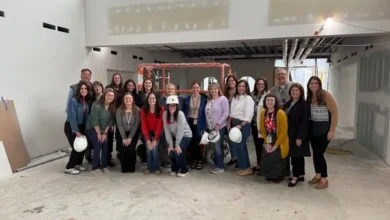
How a small town in rural Maine built a public school that serves a whole community including infants and toddlers.

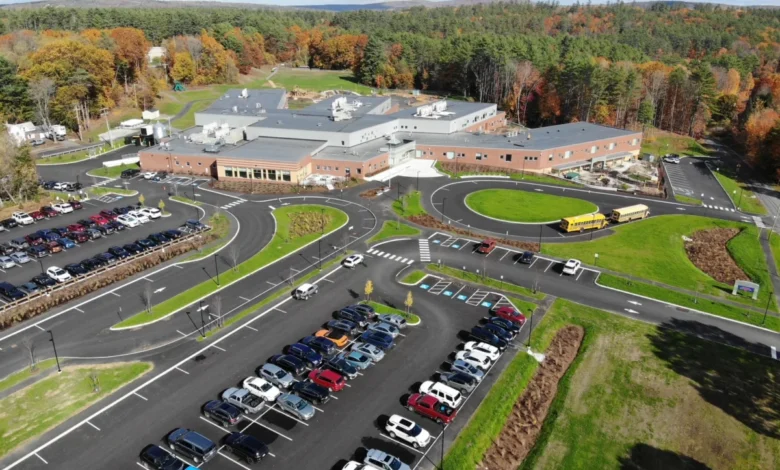
The traditional American educational system has long been defined by a stark and often detrimental divide between early childhood care and formal K-12 schooling. While the latter is viewed as a public right and a collective responsibility, the former—comprising the critical developmental years from birth to age five—is frequently treated as a private family burden, governed by a patchwork of disconnected programs. In Skowhegan, Maine, a rural community facing the compounded pressures of poverty and limited infrastructure, a transformative new model is challenging this status quo. The opening of the Margaret Chase Smith Community School represents a paradigm shift in public education, integrating infants, toddlers, and preschoolers into the same campus as elementary students.
This "cradle-to-fifth-grade" approach is more than a convenience for parents; it is a structural solution to the systemic fragmentation that has plagued early childhood education for decades. By aligning Head Start, child care, public pre-K, and special education under a single administrative and physical roof, Skowhegan has created a blueprint for how rural communities can stabilize their workforces and ensure equitable developmental starts for their youngest citizens.
The Problem of Fragmentation in Early Education
For years, policymakers and education advocates have attempted to improve early childhood outcomes by focusing on isolated variables: increasing teacher pay, expanding access to subsidies, or improving the quality of specific programs. However, these efforts often fail to gain traction because the underlying system is fundamentally disjointed.
In most states, early childhood services are funded through a confusing array of federal, state, and private streams. Head Start operates under federal guidelines; child care centers rely on a mix of private tuition and state-administered vouchers; and public pre-K programs are often tethered to local school district budgets. These silos create "transitions" that are often more like cliffs for families. When a child moves from a toddler program to a pre-K program, or from pre-K to kindergarten, they often change buildings, teachers, and support systems, losing the continuity of care that is essential for healthy development.
In rural areas like Skowhegan, these problems are magnified by geography. A parent might work in one town, live in another, and have child care options scattered across a third. Without a centralized hub, the logistical and financial barriers to accessing high-quality care become insurmountable for many families, particularly those living below the poverty line.
A Chronology of Innovation: From Local Pilot to State Policy
The realization of the Margaret Chase Smith Community School was not an overnight achievement but the result of a decade of intentional collaboration and evidence-based advocacy. The process began with a partnership between local educational leaders and Educare Maine (formerly Educare Central Maine), an organization dedicated to high-quality early childhood programming.
- The Lab School Foundation (2010s): The movement gained momentum through the Educare Maine Lab School and Learning Hub. Rather than acting as an outside entity, Educare coaches worked directly with home-based and center-based child care providers in the Skowhegan area. The goal was to stabilize the existing ecosystem rather than replace it.
- Data Collection with the University of Maine: To prove the efficacy of their model, leaders partnered with the University of Maine to gather data on the "Elevate Maine" initiative. The research confirmed a vital hypothesis: child care providers were significantly more likely to remain in business and improve their quality ratings when they were part of a coordinated support network rather than operating in isolation.
- Legislative Advocacy and "First4ME": The success of the local pilot in Skowhegan and the surrounding Somerset County provided the evidence needed to influence state-level policy. This led to the creation of "First4ME," a statewide legislative model designed to help Maine communities collaborate on early care. This legislation signaled a shift in thinking at the state level, recognizing that early childhood is a public priority.
- The Construction Breakthrough (2020-2024): When Maine School Administrative District 54 (MSAD 54) began planning a new elementary school to replace aging facilities, local leaders saw an opportunity. They argued that the new building should reflect the integrated model they had been piloting. In a historic move, the Maine Department of Education agreed to fund the inclusion of infant and toddler spaces within the new elementary school construction project—a first for the state.
Breaking the "Silo" of School Construction
Perhaps the most significant hurdle overcome by the Skowhegan project was the rigid definition of what constitutes a "public school." Traditionally, state education funding for infrastructure is strictly reserved for K-12 or, in some cases, pre-K facilities. Infants and toddlers are almost universally excluded from these capital budgets.
By persuading the Maine Department of Education to include birth-to-age-three spaces in a public school building project, Skowhegan leaders achieved a fundamental policy shift. This integration acknowledges that a child’s education does not begin at age five or even age four. By bringing infants and toddlers into the public school fold, the community has ensured that these children have access to the same high-quality facilities, specialized staff, and therapeutic resources (such as speech or occupational therapy) that were previously only available to older students.

Supporting Data: The Economic and Developmental Case
The decision to build an integrated school is backed by a wealth of economic and developmental data. Research by Nobel laureate James Heckman has famously shown that high-quality birth-to-five programs for disadvantaged children can yield a 13% return on investment per year through improved health, social, and educational outcomes, as well as increased labor force participation by parents.
In Maine, the need for such investment is acute. According to data from the Bipartisan Policy Center, rural Maine often qualifies as a "child care desert," where the number of children far outstrips the number of available licensed slots. This shortage has a direct impact on the regional economy. When parents cannot find reliable care, they are forced to reduce their hours or exit the workforce entirely, exacerbating labor shortages in vital sectors like healthcare and manufacturing.
Furthermore, the "connectedness" of the Skowhegan model addresses the "kindergarten readiness gap." Children who attend the integrated school from infancy are already familiar with the building, the staff, and the expectations of the school environment by the time they reach kindergarten. This continuity reduces the stress of transitions and allows teachers to begin instruction with a deeper understanding of each child’s developmental history.
Responses from the Community and Education Leaders
The project has garnered praise from a wide range of stakeholders, from local parents to national education experts. Tracye Fortin, the Chief Impact Officer for Educare Maine, has emphasized that the school is not just a building, but a "scalable blueprint" for the rest of the country.
"Families cannot navigate five disconnected systems across long distances with limited transportation," Fortin noted. "Programs cannot sustain quality without shared infrastructure. And communities cannot thrive when early childhood is treated as a private challenge instead of a public priority."
Local educators have also pointed to the professional benefits of the model. By housing early childhood educators alongside K-5 teachers, the school fosters a culture of professional collaboration. Early childhood staff gain access to the district’s professional development resources, while elementary teachers benefit from the deep expertise in child development held by the infant and toddler specialists.
Broader Implications for National Education Policy
The Margaret Chase Smith Community School serves as a challenge to the national education narrative. While many states are currently debating the merits of "universal pre-K," Skowhegan’s model suggests that pre-K alone may not be enough to solve the child care crisis. By extending the public school umbrella down to birth, the community is addressing the most expensive and hardest-to-find segment of the child care market: infant and toddler care.
For other rural districts across the United States, the Skowhegan experience offers several key lessons:
- Partnerships are Essential: Small districts lack the resources to solve child care alone. Partnering with non-profits like Educare and state universities is critical for funding and data validation.
- Policy Follows Practice: By starting with a local pilot and gathering data, Skowhegan was able to make a "compelling case" to state officials that eventually changed funding rules.
- Infrastructure is a Public Asset: Integrating early care into school construction projects ensures that the program is sustainable and not dependent on year-to-year grant funding.
As the United States continues to grapple with a "child care cliff" and declining birth rates, the integration of birth-to-fifth-grade care into the public infrastructure represents a bold step toward a more resilient social safety net. Skowhegan has proven that even in a town with significant economic challenges, it is possible to build a system that is whole, rather than one built in pieces. The Margaret Chase Smith Community School stands as a testament to the idea that when a community decides to treat its youngest members as a public priority, the entire social and economic fabric of the region begins to strengthen.