Federal Health Officials Maintain Focus on Taylor Farms Lettuce Amidst Cyclospora Outbreak Investigations, Despite Temporary False Positive Alert

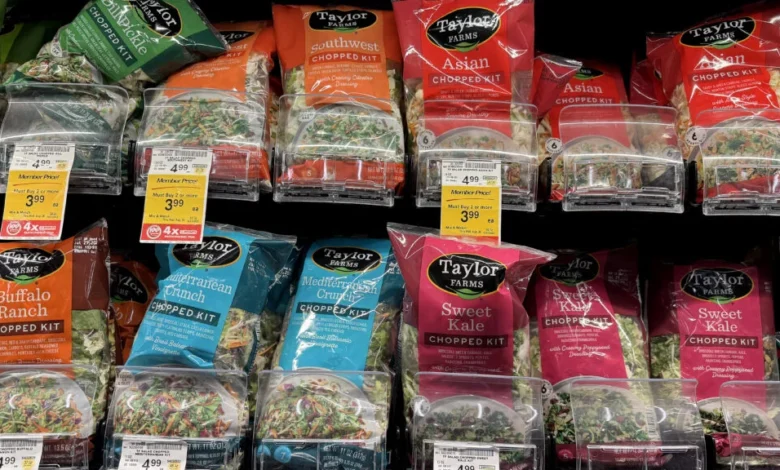
Federal health officials are steadfastly concentrating their investigative efforts on lettuce supplied by Taylor Farms as the likely source of a multi-state outbreak of Cyclospora, a parasitic infection causing significant gastrointestinal distress. This focus remains firm despite a brief period over the weekend during which inaccurate laboratory test results, temporarily publicized by the government, suggested a positive identification of the parasite on a sample of Taylor Farms lettuce. The Food and Drug Administration (FDA) has since clarified that the initial positive result was a false positive, a correction that has led to some public relations friction with the implicated company.
A Developing Investigation and Shifting Information
The investigation into the Cyclospora outbreak, which has affected individuals across five states, initially drew attention to lettuce served at Taco Bell restaurants. This early linkage prompted Taylor Farms, a major food supplier, to proactively announce a recall on Saturday of 25 shredded lettuce and salad mix products. These products are distributed under eight different brand codes and are utilized by a wide array of U.S. food chains and other suppliers, underscoring the potential breadth of the contamination.
However, the investigative landscape encountered a temporary complication on Saturday when the FDA posted a finding of cyclospora on a sample of lettuce from Taylor Farms to its website. This announcement, intended to inform the public about potential risks, was quickly followed by a retraction on Sunday. FDA officials explained that a subsequent quality control check revealed the initial positive finding to be an error, specifically a false positive generated by a rapid screening test used to detect traces of cyclospora. This particular sample, while originating from Taylor Farms, was not part of the company’s voluntarily recalled product line. The FDA stated its decision to alert the public to the initial finding was driven by a commitment to transparency and immediate risk communication, even in the face of preliminary and unconfirmed data.
Official Statements and Clarifications
Donald Prater, the acting food chief for the FDA, reiterated the agency’s ongoing focus during a press briefing on Monday. He emphasized that the FDA’s comprehensive traceback investigation, coupled with the gathered outbreak data, continues to strongly indicate shredded iceberg lettuce from Taylor Farms’ production facilities in central Mexico as the primary source of the contamination. To further bolster the investigation, FDA staff have initiated testing of produce entering the U.S. from various border crossings, broadening the scope of their surveillance.
The false positive incident, while now clarified, has led to a public exchange between the FDA and Taylor Farms. The company took to social media to highlight the corrected test results, asserting that "FDA apologized to us." In response, FDA officials clarified that no official apology was issued, suggesting a difference in interpretation of the communication that transpired.
Understanding Cyclospora: The Parasite and its Impact
Cyclospora is a microscopic, single-celled parasite that poses a significant public health threat when it contaminates food. The infection typically occurs when produce comes into contact with human feces, often through irrigation or washing with contaminated water. Once ingested, the parasite infects the intestines, leading to a range of debilitating symptoms. According to the Centers for Disease Control and Prevention (CDC), these symptoms characteristically include "frequent and sometimes explosive bowel movements," along with other gastrointestinal complaints such as diarrhea, loss of appetite, stomach cramps, bloating, gas, nausea, and fatigue. In some cases, individuals may also experience fever. The illness can be prolonged, with symptoms persisting for weeks or even months if left untreated.
Broader Outbreak Context and Scale
The current investigation into the Taylor Farms lettuce is part of a larger pattern of Cyclospora outbreaks that have affected the United States. According to data compiled by the FDA and CDC, in 2026 alone, cyclospora had sickened at least 1,645 people across the U.S. and led to 141 hospitalizations. The agencies are actively investigating five distinct clusters of illnesses, with the current outbreak linked to Taylor Farms being one of the most prominent.
The persistence of new cases associated with the current outbreak underscores the urgency of the situation. Kyle Diamantas, acting commissioner of the FDA, noted on Monday that health officials have continued to identify new cases, some as recent as the preceding week. This ongoing emergence of illness highlights the critical need for swift and decisive action to prevent further contaminated products from reaching consumers.
Economic Repercussions and Consumer Confidence
The public health concerns surrounding the Cyclospora outbreak have not been without their economic consequences. Data tracking foot traffic in restaurants, compiled by Placer.ai based on cellphone usage patterns, reveals a noticeable decline in customer visits to several prominent dining chains in the period leading up to Friday. This trend is particularly evident in the wake of federal health officials publicly naming specific establishments in their investigations.
Taco Bell experienced the most significant downturn, with an 18.9% drop in foot traffic after being identified in the investigation. Other chains also saw notable decreases: Chopt reported a 14.3% decline, while Chipotle and Panera Bread each experienced close to a 7% drop in customer visits. Cava, though also affected, saw a less pronounced decrease of 4.2%. These figures illustrate how foodborne illness scares can rapidly impact consumer confidence and business operations, even before definitive source attribution is finalized.
Challenges in Foodborne Illness Investigation
Investigating foodborne illnesses, particularly those caused by less common pathogens like Cyclospora, presents unique scientific and logistical challenges. Food safety investigators often find it difficult to establish a direct, biological link between a specific recalled food product and an outbreak. This is partly due to the limitations of some diagnostic tests. For instance, standard tests for common food poisoning agents may not be specifically designed to detect Cyclospora. Furthermore, the parasite’s inability to be readily cultured or grown in laboratory settings makes it exceptionally challenging to derive definitive evidence from contaminated produce samples.
Consequently, investigators frequently rely on a combination of epidemiological data and circumstantial evidence. This includes detailed accounts from affected individuals about their dietary histories, the timing and geographical proximity of reported illnesses, and the identification of common consumption patterns. The process of piecing together these various elements is crucial in identifying the likely source and preventing further spread.
Timeline of Key Events
- Early July 2026: Federal health officials begin to observe a rise in Cyclospora cases across multiple states.
- Mid-July 2026: Investigations initially link the outbreak to lettuce served at Taco Bell locations.
- Saturday, July [Date], 2026: Taylor Farms announces a voluntary recall of 25 shredded lettuce and salad mix products. On the same day, the FDA briefly publicizes a positive test result for cyclospora on a Taylor Farms lettuce sample.
- Sunday, July [Date], 2026: The FDA retracts its earlier announcement, clarifying that the positive test result was a false positive identified during a quality control check. The agency informs Taylor Farms of the correction.
- Monday, July [Date], 2026: FDA officials hold a press briefing to reiterate their continued focus on Taylor Farms’ lettuce from Mexico as the likely source and provide an update on the investigation. Data on restaurant foot traffic declines is released.
- Ongoing: The FDA and CDC continue to monitor the outbreak, investigate five separate clusters of illness, and test produce at border crossings. New cases are still being reported.
The Path Forward: Prevention and Public Health
The ongoing investigation into the Cyclospora outbreak serves as a critical reminder of the complexities inherent in ensuring food safety within a globalized supply chain. The FDA’s commitment to rigorous testing, traceback investigations, and transparent communication, even when faced with initial inaccuracies, is paramount. The incident also highlights the importance of robust quality control measures within food processing facilities and the need for continued investment in advanced diagnostic technologies for emerging foodborne pathogens.
Public health officials urge consumers to remain vigilant, practice safe food handling, and report any suspected cases of foodborne illness to their healthcare providers and local health departments. The collaborative efforts of regulatory agencies, food producers, and the public are essential in mitigating the impact of such outbreaks and safeguarding national health. The FDA’s persistent focus on the Taylor Farms lettuce, despite the temporary setback of the false positive, demonstrates a determined pursuit of identifying and eliminating the source of this concerning parasitic infection.
Related posts: