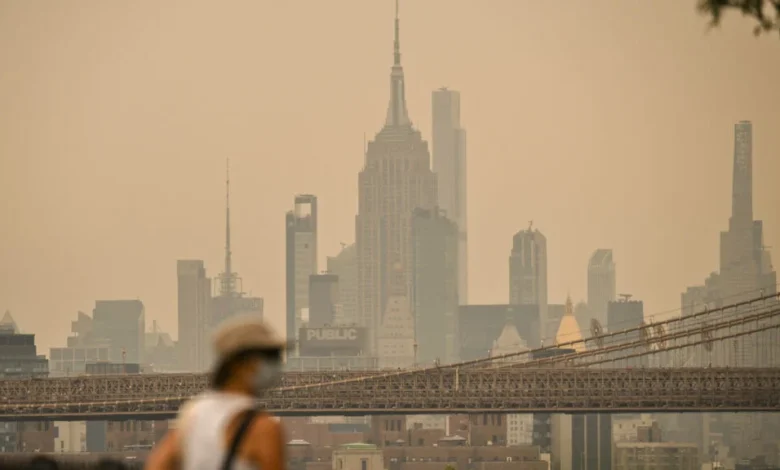
As millions of acres across Canada are engulfed in flames, a dense pall of smoke has settled over cities throughout the United States, drastically degrading air quality to unhealthy and even hazardous levels. In New York City, a metropolis already grappling with the oppressive second major heat wave of the season, emergency room visits for asthma exacerbations surged by a stark 31% by the close of the initial day of elevated smoke exposure. This confluence of environmental calamities underscores a deeply concerning and cyclical relationship between the relentless combustion of fossil fuels, a rapidly warming planet, the escalating frequency and intensity of natural disasters, and the resultant burden of illness. While some may view these compounding crises as irrefutable evidence of an insurmountable climate emergency, history offers a potent lesson: environmental crises, particularly those impacting public health, should never be squandered opportunities for meaningful change.
The Echoes of Smog: Lessons from the Past
The current spectacle of smoke-laden skies serves as a chilling echo of a similar, though distinct, environmental challenge that plagued industrialized cities in the post-World War II era: severe air pollution. Decades before the specter of a warming climate entered popular discourse, urban centers worldwide contended with air that was visibly thick with pollutants, a consequence of largely unregulated industrial emissions, widespread incineration of refuse rather than its transport to landfills, and the unchecked proliferation of automobiles and coal-fired energy sources. The absence of stringent emission standards resulted in dangerously polluted air, with soot and smoke becoming ubiquitous features of daily life, often accumulating on vehicles and windowsills.
At this time, scientific understanding was beginning to solidify regarding the specific health risks associated with key components of air pollution. These included carbon monoxide, particulate matter, ground-level ozone, sulfur dioxide, and nitrogen dioxide – substances now recognized by the World Health Organization as "classical air pollutants" and by the U.S. Environmental Protection Agency as "criteria air pollutants." Each of these had demonstrably distinct adverse effects on human health, directly attributable to their chemical properties. Despite this growing body of evidence, the implementation of effective regulatory measures remained elusive for decades, leaving populations vulnerable to the insidious impacts of toxic air.
The Great Smog and its Transformative Aftermath
The turning point for substantive regulatory action arrived only after cities across the globe experienced increasingly severe and prolonged smog events. These episodes occurred when atmospheric conditions became stagnant, trapping pollutants near the ground. The air would take on a bronzed or yellowish hue, and significant portions of urban populations would suddenly experience acute illness, primarily respiratory and cardiac conditions, or succumb to premature death.
A seminal example is the Great Smog of London in December 1952. This devastating event persisted for five days, leading to an estimated 4,000 immediate deaths and tens of thousands more illnesses. The sheer scale of the tragedy and the undeniable link to air pollution galvanized public opinion and directly precipitated the passage of the Clean Air Act of 1956 in the United Kingdom. This landmark legislation aimed to curb industrial emissions and improve the quality of the air Londoners breathed.
A similar, though perhaps less globally recognized, event unfolded in New York City in November 1966. The city endured its most alarming smog episode on record. Levels of sulfur dioxide and carbon monoxide soared to dangerous heights. For the first time, public health officials resorted to direct emergency appeals through television, radio, and print media, urging citizens to reduce energy consumption and limit automobile use. Individuals with pre-existing heart or lung conditions were strongly advised to remain indoors. As municipal incineration services were temporarily suspended, garbage accumulated throughout the city, exacerbating the suffocating atmosphere. The irritating and inflammatory nature of the smog led to hundreds of thousands of New Yorkers experiencing shortness of breath or the exacerbation of underlying heart disease symptoms. Tragically, approximately 200 people lost their lives during this period.
A Swift Legislative Response and its Lasting Impact
The 1966 New York City smog tragedy served as a potent catalyst for public demand for environmental stewardship and spurred a swift legislative response. Within a month, the New York City administrative code was amended to enhance air pollution surveillance capabilities and implement measures to curtail emissions. The extensive media coverage of the event resonated deeply with vulnerable urban populations across the nation, highlighting the shared threat posed by polluted air.
This heightened public awareness and concern culminated in a landmark address by President Lyndon B. Johnson in January 1967. In his special message to Congress, titled "Protecting Our National Heritage," President Johnson explicitly referenced the New York City smog event and advocated for the passage of the Air Quality Act of 1967. This act established procedures for air pollution abatement and marked a significant federal commitment to addressing air quality issues. It laid the groundwork for subsequent, more comprehensive legislation.
The momentum continued with the passage of the landmark Clean Air Act of 1970. This pivotal legislation established National Ambient Air Quality Standards (NAAQS) for the six principal "criteria air pollutants," including those responsible for the smog events of the past. The act also mandated the development of state implementation plans to achieve and maintain these standards. The impact of this legislation and its subsequent amendments has been profound. By 2020, the U.S. Environmental Protection Agency reported a collective reduction of 78% in criteria pollutant levels compared to 1970 figures, with some individual pollutants seeing declines as high as 91%. This remarkable progress has largely eliminated the phenomenon of local emissions causing widespread smog events in the United States.
The Intertwined Threats: Criteria Pollutants and Greenhouse Gases
While criteria air pollutants and greenhouse gases both stem from the combustion processes that are central to modern industrial and societal activities, their impacts on human health and the environment operate through distinct pathways. Criteria air pollutants, such as sulfur dioxide, nitrogen oxides, and particulate matter, exert their harmful effects directly. Their chemical and physical properties interact with the human body, leading to a range of illnesses including sinus inflammation, lung and heart disease, various cancers, and ultimately, premature death.
Greenhouse gases, conversely, primarily contribute to climate change. These include carbon dioxide, methane, nitrous oxide, and tropospheric ozone. Their accumulation in the atmosphere traps heat, leading to a gradual but significant warming of the planet. The health consequences of this warming are often less direct but no less severe. A warming climate exacerbates a multitude of health threats, including:
- Injuries from Extreme Weather Events: Increased frequency and intensity of hurricanes, floods, heat waves, and wildfires result in direct physical trauma and displacement.
- Allergen Proliferation: Warmer temperatures and altered precipitation patterns can lead to longer and more intense pollen seasons, exacerbating allergies and asthma.
- Wildfire Smoke Exposure: Increased wildfire activity, fueled by hotter and drier conditions, releases vast quantities of smoke containing harmful particulate matter and other toxins into the atmosphere, impacting air quality over vast distances.
- Emergence and Spread of Infectious Diseases: Changes in temperature and precipitation patterns can alter the geographic range and seasonality of disease vectors, such as mosquitoes and ticks, leading to an increased risk of vector-borne illnesses like West Nile virus and Lyme disease. Warmer oceans can also contribute to the spread of waterborne pathogens.
The Climate Crisis: From Abstract Threat to Tangible Reality
More than fifty years after the enactment of the Clean Air Acts, humanity finds itself confronting another environmental crisis of immense proportions: climate change. The increasing frequency and severity of natural disasters – wildfires, hurricanes, floods, heat waves, and droughts – have transformed climate change from an abstract, future threat into a palpable, present-day reality for hundreds of millions of people worldwide. Even for those not directly impacted by these catastrophic events, the indirect consequences, such as the visible haze from distant wildfires descending upon major metropolitan areas, are now undeniable.
This tangible experience of extreme weather is demonstrably influencing public perception. Pew Research Center data from August 2025 indicated that 67% of individuals across 25 countries now view climate change as a major threat. Furthermore, among those who have personally experienced extreme weather events, more than 80% recognize climate change as a contributing factor. Research also reveals a significant correlation: individuals who personally endure extreme weather events are more than twice as likely to perceive climate change as a crisis compared to those who have not experienced such events firsthand.
Seizing the Moment: Health as a Unifying Force
The current confluence of extreme weather events, from Canadian wildfires to prolonged heat waves, presents a critical juncture. It is imperative that every extreme weather event and its fundamental underlying cause – climate change – be brought to the forefront of public discourse. A particularly effective strategy for engaging and motivating a broader segment of the population, including those who may harbor skepticism towards climate science, lies in highlighting the direct health risks and economic costs associated with these events.
The connection between extreme weather, climate change, and adverse health outcomes must be articulated with clarity, efficiency, and an unwavering commitment to scientific accuracy. This emphasis on health impacts can serve as a unifying force, bridging ideological divides and fostering a shared sense of urgency. Every instance of extreme weather provides an opportunity to reinforce this critical link.
If this commitment is made and diligently followed through, the current era may be remembered not only for the alarming escalations in climate-fueled environmental disasters but also for how these crises were effectively harnessed as a catalyst for securing a sustainable and healthier future for all. The lessons learned from past battles against air pollution offer a blueprint for action, demonstrating that when public health is visibly and undeniably threatened, collective will and decisive policy can lead to transformative change. The challenge now is to apply this historical wisdom to the overarching crisis of climate change.