NASA’s SunRISE Mission Shifts Launch Vehicle to SpaceX Falcon Heavy Amidst ULA Vulcan Centaur Booster Anomalies

In a significant programmatic adjustment for its upcoming heliophysics mission, NASA has announced that the six satellites comprising the Sun Radio Interferometer Space Experiment (SunRISE) will now launch aboard a SpaceX Falcon Heavy rocket. This change marks a departure from the mission’s original assignment to a United Launch Alliance (ULA) Vulcan Centaur vehicle, reflecting broader shifts in launch provider assignments, particularly within the U.S. national security space sector. The decision, detailed in a recent NASA mission update, underscores the critical importance of ensuring mission reliability and timely access to space for vital scientific endeavors, especially in the context of increasing space weather threats.
The SunRISE Mission: A Sentinel for Solar Storms
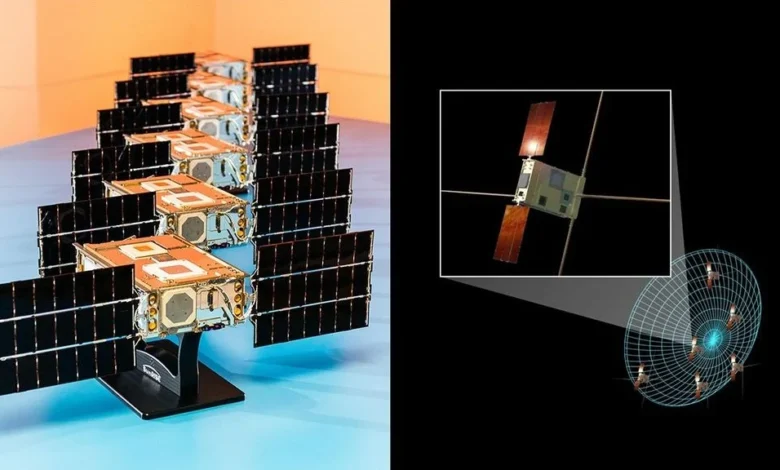
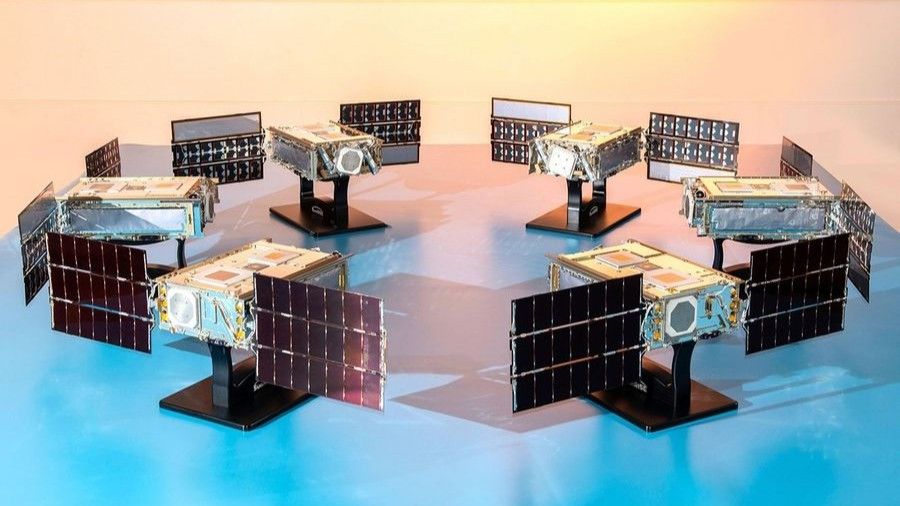
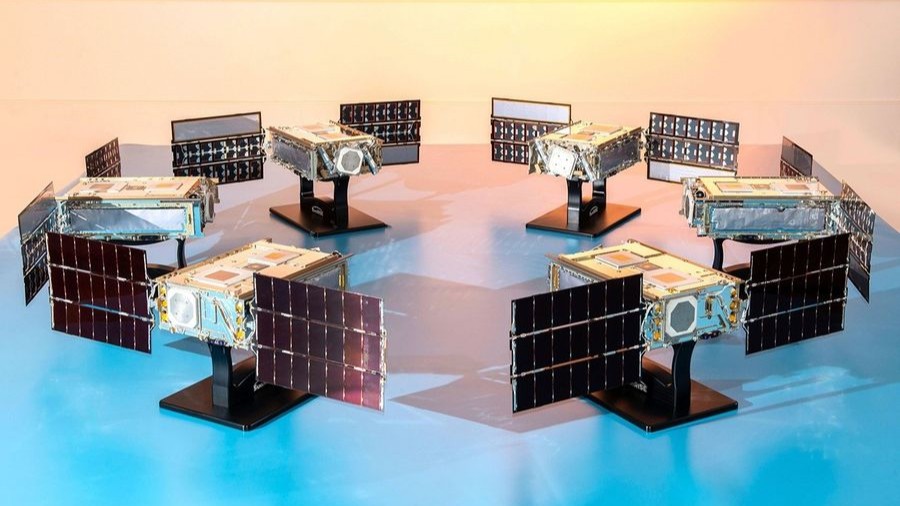
The SunRISE mission is designed to provide crucial early warnings for incoming solar storms, which pose a significant threat to Earth’s technological infrastructure. Comprising six small satellites, each roughly the size of a household mailbox, the constellation will operate in Earth orbit as a sophisticated radio interferometer. These mini-satellites will extend approximately 10-foot (2.5-meter) antenna booms, working in concert to form a virtual radio telescope spanning 10 miles (16 kilometers). This innovative approach allows them to detect and track solar radio bursts, which precede the arrival of energetic particles from solar storms, such as Coronal Mass Ejections (CMEs), when directed towards Earth.
The scientific objective is paramount: to enhance our understanding of space weather phenomena and improve predictive models. While SunRISE itself will not function as an immediate alert system, the data it collects will be instrumental in refining the forecasts of space weather events. This improved foresight could lead to the development of more robust mitigation strategies, protecting satellites, power grids, communication networks, and even astronauts from the potentially devastating effects of severe solar activity. The mission is managed by NASA’s Jet Propulsion Laboratory in Southern California, with its scientific leadership rooted at the University of Michigan, operating under NASA’s Science Mission Directorate’s "missions of opportunity" within the Explorers Program, overseen by Goddard Space Flight Center.
The chosen orbit for the SunRISE constellation is approximately 22,000 miles (35,000 kilometers) above Earth, a region just beyond geostationary altitude. From this vantage point, the satellites will maintain a precise "X" formation, meticulously tracking the radio emissions generated by solar flares and CMEs. These radio bursts travel at the speed of light, significantly faster than the charged particles they herald, offering a precious window of time—potentially hours or even days—before the full impact of a solar storm reaches Earth.
The Growing Threat of Space Weather
The urgency of missions like SunRISE is underscored by the increasing awareness of space weather’s potential to disrupt modern society. Solar storms, particularly powerful coronal mass ejections (CMEs) and solar flares, can unleash torrents of energetic particles and electromagnetic radiation. These phenomena can induce geomagnetic storms in Earth’s magnetosphere, leading to a cascade of adverse effects. Satellites in orbit are particularly vulnerable; their sensitive electronics can be damaged, communications systems disrupted, and orbital trajectories altered. The cumulative impact could render entire constellations of critical infrastructure, from GPS to meteorological satellites, temporarily or permanently inoperable.
Beyond orbit, the effects can reach the ground. Intense geomagnetic storms can induce geomagnetically induced currents (GICs) in long conductors, such as power transmission lines, potentially causing widespread blackouts. Communication systems, including shortwave radio and even some satellite phone services, can be severely degraded. Aviation also faces risks, with increased radiation exposure for passengers and crew on polar flights, where Earth’s magnetic field offers less protection. Historical events, such as the 1859 Carrington Event, demonstrated the extreme potential of solar storms, causing widespread telegraph system failures and auroras visible near the equator. More recently, a significant solar radiation storm impacted Earth in January, highlighting the ongoing threat and the necessity for advanced warning systems and predictive capabilities. SunRISE aims to be a foundational element in building that crucial predictive capacity.
The Catalyst for Change: Vulcan Centaur’s Performance Issues
The reassignment of SunRISE to a different launch vehicle appears to be directly linked to recent performance anomalies experienced by the United Launch Alliance’s (ULA) new Vulcan Centaur rocket. The Vulcan Centaur, ULA’s successor to the venerable Atlas V and Delta IV rockets, has been positioned as a key player for national security launches and other critical missions. However, its operational debut has not been without challenges.
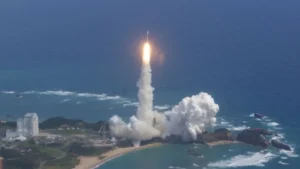
During its most recent launch, designated USSF-87, the Vulcan Centaur experienced a significant performance anomaly in one of its solid rocket boosters (SRBs). While the mission ultimately succeeded in delivering its payload to the designated orbit, this incident marked the second such booster issue observed across the rocket’s limited flight history of four launches. The recurrence of this problem prompted the U.S. Space Force (USSF) Space Systems Command (SSC), a critical procurer of launch services for national security payloads, to take decisive action.
The Space Force announced a pause on national security launches utilizing the Vulcan Centaur until the booster anomaly could be thoroughly investigated and addressed. This pause is a standard precautionary measure to ensure the highest levels of reliability for classified and high-value government assets. Given that the SunRISE mission is slated to fly as part of a rideshare mission sponsored by the USSF’s SSC, it is highly probable that this broader Space Force directive directly influenced NASA’s decision to shift the launch provider for SunRISE. The Space Force has already demonstrated its willingness to adjust its launch manifest, shifting other missions between ULA’s Vulcan and SpaceX’s Falcon 9, indicating a proactive approach to maintaining assured access to space and diversifying launch options to mitigate risks. The exact USSF rideshare mission SunRISE will now join has not been publicly disclosed, but the move reflects a clear prioritization of mission success and adherence to launch schedules.
SpaceX Falcon Heavy: A Proven Heavy-Lift Alternative
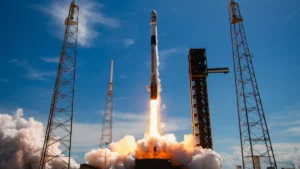
The selection of the SpaceX Falcon Heavy as the new launch vehicle for SunRISE introduces a robust and experienced heavy-lift capability. The Falcon Heavy, which debuted in 2018, is currently one of the most powerful operational rockets in the world. It is essentially comprised of three modified Falcon 9 first stages acting as boosters, strapped together around a central core. This configuration provides immense thrust, enabling the rocket to deliver up to 58,860 pounds (26,700 kg) to geostationary transfer orbit, far exceeding the requirements for the relatively small SunRISE satellites.
SpaceX has successfully launched the Falcon Heavy 12 times since its maiden flight, demonstrating a strong track record of reliability and performance. Notably, four of these launches have carried critical national security payloads for the U.S. government, including the most recent USSF-52 mission in December 2023. Its most recent flight overall occurred in April, delivering the Viasat-3 F3 telecommunications satellite to orbit. This established flight heritage and its proven capability for high-value government missions make the Falcon Heavy a logical and reassuring choice for NASA, especially for a mission critical to space weather prediction.
The Falcon Heavy’s robust performance capabilities and its operational maturity provide a compelling alternative in the U.S. launch landscape. While the Vulcan Centaur is a newer entrant, still establishing its flight heritage, the Falcon Heavy offers a highly reliable platform that can accommodate complex mission profiles and stringent government requirements. This strategic flexibility in launch options is a cornerstone of the Space Force’s "Assured Access to Space" policy, which aims to ensure that critical national security and scientific payloads can reach orbit regardless of potential issues with any single launch provider or vehicle.
Implications for the Launch Industry and Space Weather Preparedness
The decision to move the SunRISE mission to Falcon Heavy has several significant implications. For ULA, it underscores the intense pressure to thoroughly investigate and resolve the Vulcan Centaur’s booster issues. As a key partner for national security launches, ULA’s ability to quickly address these anomalies will be crucial for maintaining its competitive standing and regaining the full confidence of government clients. The Vulcan Centaur represents a substantial investment for ULA and is central to its future business model, particularly in the competitive landscape against SpaceX.
For SpaceX, this reassignment further solidifies its position as a dominant force in the U.S. launch market, particularly for government missions. The Falcon Heavy’s continued operational success and its ability to absorb missions originally assigned to other vehicles highlight SpaceX’s increasing reliability and capacity. This shift also reflects the growing trend of government agencies leveraging the competitive commercial launch market to ensure mission success and potentially optimize costs.
From NASA’s perspective, the move prioritizes mission success and the timely acquisition of critical scientific data. Space weather research is becoming increasingly vital as humanity’s reliance on space-based assets grows. Any delay in deploying missions like SunRISE could have long-term consequences for our ability to forecast and mitigate the effects of solar storms. By transitioning to a proven, high-reliability vehicle, NASA ensures that the SunRISE constellation will reach its operational orbit as planned, allowing scientists to begin collecting data and enhancing predictive models without undue delay.
The broader impact extends to the national strategy for space access. The Space Force’s actions to pause Vulcan Centaur national security launches and re-manifest missions emphasize the importance of having a diverse and resilient launch industrial base. This ensures that even if one launch system experiences a setback, alternative, equally capable options are available, preventing bottlenecks and maintaining consistent access to orbit for critical assets.
Looking Ahead: SunRISE and Future Launches
While a precise launch window for SunRISE has not yet been announced beyond "later this year," the mission is now securely on a launch vehicle with a robust flight manifest. The Falcon Heavy’s next mission is scheduled to lift off no earlier than August 30, carrying NASA’s Nancy Grace Roman Space Telescope, a crucial observatory designed to explore dark energy and exoplanets. This upcoming mission further demonstrates the Falcon Heavy’s role in delivering high-value scientific payloads.
The SunRISE mission, once in orbit, will embark on a critical phase of data collection, transmitting observations back to Earth for analysis. Researchers will scrutinize these measurements to understand the fundamental physics of solar radio bursts, their propagation through the heliosphere, and their correlation with geomagnetic disturbances at Earth. The insights gained will not only deepen our scientific understanding of the Sun-Earth connection but also directly inform operational space weather prediction centers, enabling them to issue more accurate and timely warnings.
This launch vehicle change for SunRISE is a testament to the dynamic nature of space operations, where technical performance, strategic partnerships, and mission assurance constantly intertwine. It underscores the unwavering commitment of NASA and the U.S. Space Force to safeguard critical space infrastructure and enhance our preparedness for the ever-present, yet often unpredictable, challenges posed by our active Sun. The successful deployment and operation of SunRISE will mark a significant step forward in securing our technological future in space and on Earth.