Southport Killer Axel Rudakubana Transferred to Psychiatric Hospital Amidst Accusations of System Manipulation

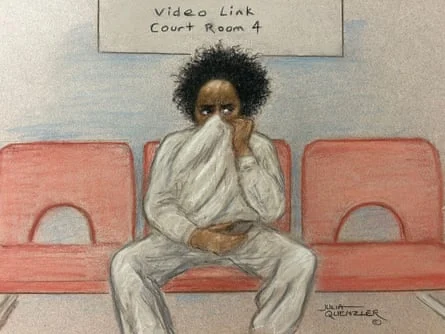
The families of the young victims tragically murdered by Axel Rudakubana, the Southport killer, have voiced profound outrage, accusing him of attempting to "manipulate the system" following his transfer from a Category A prison to a high-security psychiatric hospital. This development, revealed by The Guardian on Thursday, has reignited the harrowing grief for the families as the second anniversary of the devastating attack approaches.
Rudakubana, now 19, was handed a life sentence in January of last year, with a stringent minimum term of 52 years, for the premeditated murders of seven-year-old Elsie Dot Stancombe, six-year-old Bebe King, and nine-year-old Alice da Silva Aguiar. The horrific crimes, which shocked the nation, occurred at a Taylor Swift-themed dance class on July 29, 2024. His recent relocation from Belmarsh, one of the UK’s most secure prisons, to Broadmoor Hospital, a high-security psychiatric facility, was reportedly due to a determination that he "could not be managed safely in jail." Despite the transfer, authorities have confirmed that the killer’s original 52-year minimum sentence remains unchanged.
A Deepening Wound: Families’ Anguish and Accusations
For the bereaved families, the news of Rudakubana’s transfer has been met with a mixture of devastation and profound suspicion. Chris Walker, a representative from the law firm Bond Turner, which acts on behalf of the three families, conveyed their anguish in a public statement. "The three families we represent have been made aware of this development in the last 48 hours and it is safe to say that whilst this news would devastate them at any time, the fact that this has occurred as we approach the second anniversary in our view is another move by AR who would appear to be attempting, once again, to manipulate the system," Walker stated, underscoring the raw emotional impact of the timing.
The proximity of the transfer to the somber two-year anniversary of the attack amplifies the families’ pain, transforming a period of remembrance into one of renewed distress and perceived injustice. Walker further emphasized the lack of transparency surrounding the decision: "We have been given the barest of details and whilst we are supporting the families through this, we are urgently seeking a meeting with the appropriate authorities to understand the situation before commenting further." This demand for clarity reflects a broader public concern about the mechanisms of justice, particularly when it intersects with complex mental health considerations for convicted offenders. The families’ accusation of "manipulation" stems from a deeply held belief that Rudakubana may be exploiting legal and medical provisions to gain perceived advantages, even if the strict legal framework for such transfers aims to address genuine clinical needs.
Concerns from the Frontline: Prison Officers Speak Out
The sentiment of betrayal and concern is not limited to the victims’ families; it resonates strongly within the prison service. Mark Fairhurst, chair of the Prison Officers’ Association (POA), echoed the accusation of manipulation, issuing a scathing critique of the transfer. "This vile offender has played the system and will now enjoy the freedoms that are afforded mentally unwell patients in secure psychiatric hospitals, including benefits that law-abiding taxpayers will fund," Fairhurst declared. His statement highlights a prevalent concern among prison staff that such transfers can inadvertently lead to a more comfortable or less punitive environment for dangerous criminals.
Fairhurst further raised serious concerns about the safety of his members, arguing that classifying Rudakubana as a "patient" rather than a "prisoner" diminishes the protective measures typically afforded to staff in correctional facilities. "My members will be placed at risk without the protections afforded to staff in prisons because he is now classed as a patient," he asserted. The POA’s position is clear: "He should spend his entire sentence in a prison in solitary confinement." This robust stance reflects a desire for unwavering punishment for heinous crimes and a skepticism towards rehabilitation efforts, particularly for offenders deemed to have demonstrated extreme depravity. Fairhurst concluded by extending his thoughts to "the families of the victims and all those affected by his heinous crimes," reaffirming the solidarity of the prison service with those who have suffered.

The Shadow of a Heinous Crime: A Chronology of Violence
The events of July 29, 2024, remain etched in the national consciousness as a day of unspeakable horror. Rudakubana’s rampage at the Taylor Swift-themed dance class in Southport claimed the lives of three innocent girls and left a trail of trauma. Beyond the fatalities, he attacked eight other children, the class instructor Leanne Lucas, and a courageous businessman, John Hayes, who attempted to disarm him. The brutality and indiscriminate nature of the attack sent shockwaves across the country, prompting widespread calls for stricter measures against violence and a deeper examination of early intervention strategies for individuals exhibiting concerning behaviors.
Further complicating the profile of this dangerous offender, Rudakubana was also convicted on charges far beyond the immediate murders. He was found guilty of producing the biological toxin ricin, a highly potent and deadly substance, and of possessing an al-Qaida training manual. This latter conviction, an offence under the Terrorism Act, painted a disturbing picture of an individual with an alarming interest in extreme violence and potentially extremist ideologies, even if his motivations were never fully categorized as purely ideological. These additional convictions underscore the profound danger Rudakubana posed and continue to pose, raising complex questions about his risk management within any institutional setting.
Unheeded Warnings: Rudakubana’s Troubled Past
The path leading to Rudakubana’s horrific crimes was marked by a series of concerning incidents and missed opportunities for intervention. Originally from Banks, Lancashire, Rudakubana’s troubled history began years before the dance class massacre. Alder Hey Children’s NHS Foundation Trust confirmed that he had been under their care as a mental health patient between 2019 and 2023. However, his engagement with the services reportedly "stopped engaging" prior to the attacks, raising critical questions about the effectiveness of outpatient care for individuals presenting high-risk behaviors.
One alarming early indicator was an incident where Rudakubana took a knife to school, later admitting he had done so "to use it." This event, a clear red flag, should have triggered more robust interventions. He was subsequently referred to Prevent, the UK’s counter-extremism programme, after he was discovered researching school massacres on a computer at his next school, the Acorns. Despite two additional referrals to Prevent, none of these interventions were fully progressed. The official reason cited was Rudakubana’s lack of a "clear ideology behind his obsession with violence," suggesting a gap in the programme’s ability to address individuals driven by generalized or personal violent tendencies rather than specific extremist doctrines. This history highlights the profound challenges faced by authorities in identifying and managing individuals who pose a severe risk to public safety, particularly when their dangerousness is not neatly categorized by existing frameworks.
Broadmoor: A High-Security Sanctuary or a Loophole?
Broadmoor Hospital, located in Crowthorne, Berkshire, holds a significant place in the UK’s criminal justice and mental health landscape. It is the oldest of England’s three high-security psychiatric hospitals, designed to house individuals deemed both criminally dangerous and severely mentally unwell. Its patient roster has included some of the UK’s most infamous and dangerous offenders, such as Peter Sutcliffe, the notorious "Yorkshire Ripper." The very name "Broadmoor" evokes a sense of both dread and strict containment.
The transfer of Rudakubana to such a facility is governed by the Mental Health Act 1983, which allows for prisoners requiring specialized psychiatric care that cannot be adequately provided within a conventional prison setting to be transferred to a hospital. This decision is typically made following a comprehensive assessment by medical professionals, often independent, who determine that the individual suffers from a severe mental disorder warranting hospital treatment and that such treatment is necessary for their health, safety, or for the protection of others. The criteria for transfer emphasize that the prisoner cannot be safely managed in prison due to their mental state.
Conditions within Broadmoor are far from lenient. Patients remain "locked up," and the environment is heavily regulated by stringent physical security measures, including locked wards, constant monitoring by highly trained staff, and 24-hour CCTV surveillance. Unlike a traditional prison focused on punishment and deterrence, Broadmoor’s primary mandate is therapeutic and rehabilitative. Patients receive mandatory therapeutic and rehabilitative programmes, tailored to their specific mental health needs. This distinction between punitive incarceration and therapeutic detention is often at the heart of the public’s confusion and concern. Crucially, the Mental Health Act 1983 also provides a clear pathway for offenders to be swiftly returned to prison if they no longer require treatment in a hospital setting, ensuring that such transfers are not permanent exemptions from their sentences.

Navigating Justice and Mental Health: Legal Framework and Implications
The decision to transfer Axel Rudakubana to Broadmoor represents a complex intersection of the criminal justice system and mental health care. From a legal and medical perspective, the transfer is not a reduction or alteration of his sentence but rather a change in the setting of his detention, dictated by his clinical needs and the assessment of risk. The core principle is that individuals with severe mental illness who pose a danger to themselves or others require specialized care that a standard prison environment is not equipped to provide. The legal framework ensures that such transfers are medically justified and reviewed.
However, the implications extend beyond mere legal technicalities. The public perception, especially among victims’ families and prison staff, often views such transfers as a "softer option" or a potential "loophole" in the justice system. This perception is fueled by concerns about the perceived "freedoms" within a hospital environment compared to a prison, even within a high-security facility like Broadmoor. While patients do engage in therapeutic activities and may have different daily routines than prisoners, the level of security and containment at Broadmoor is exceptionally high, designed to manage the most dangerous individuals.
There are also significant financial implications. Care in a high-security psychiatric hospital is typically far more expensive than incarceration in a prison. Taxpayers bear the cost of this specialized treatment, which adds another layer to the public’s scrutiny, particularly when the offender is widely reviled. The distinction between punishment and treatment, while clear in legal and medical theory, often blurs in the public consciousness, leading to a demand for retributive justice that can conflict with the principles of mental health care.
The Broader Discourse: Public Trust and Systemic Challenges
Axel Rudakubana’s case, particularly this latest development, highlights broader systemic challenges within the UK’s approach to severe mental illness, violent crime, and public safety. The repeated referrals to the Prevent programme that did not lead to effective intervention raise fundamental questions about early warning systems and the criteria for assessing evolving threats. If an individual is researching school massacres and has admitted to bringing a knife to school with intent to use it, the absence of a "clear ideology" should not necessarily negate the urgent need for intensive mental health intervention and risk management. This case underscores the need for a more integrated and adaptive approach to identifying and addressing high-risk individuals, irrespective of their specific ideological leanings.
Moreover, the emotional impact on victims’ families and the concerns of frontline staff necessitate greater transparency and communication from authorities regarding such transfers. While patient confidentiality and legal procedures are paramount, providing clear, accessible information about the rationale, safeguards, and implications of these decisions is crucial for maintaining public trust in the justice system. The families’ plea for a meeting with "appropriate authorities" underscores this critical need for open dialogue and understanding.
The case of Axel Rudakubana is a stark reminder of the devastating consequences of unchecked violence and the complex ethical, legal, and medical dilemmas inherent in managing offenders with severe mental health issues. While his 52-year minimum sentence remains firmly in place, ensuring he will spend decades in detention, the ongoing discourse surrounding his care will undoubtedly continue to shape public debate on justice, mental health, and the protection of the innocent.