Trump Grapples with Iran War, Global Trade Battles, and Domestic Political Turmoil Amidst Midterm Concerns and Security Threats

President Donald Trump is navigating a complex landscape of international conflicts, escalating trade disputes, and domestic political challenges, all while downplaying the potential impact of an ongoing war with Iran on the upcoming midterm elections. His administration’s actions, from imposing new tariffs on over 80 countries to facing lawsuits over politicized disaster aid, reflect a period of heightened tension and controversy, punctuated by personal remarks and security concerns.
Escalating Tensions with Iran and the Looming Midterms
The protracted conflict with Iran, now in its thirteenth consecutive day of strikes, remains a dominant theme in the White House. Despite widespread concern that the war could jeopardize Republican control of Congress in the forthcoming midterms, President Trump conveyed a sense of calm, telling reporters at the White House, "Despite what everybody says about the election I’m not in a hurry. We have to do it right. Elections take care of themselves." This statement underscores a strategy that prioritizes perceived national security actions over immediate electoral considerations, or at least aims to project such an image.
During a Friday appearance in the Oval Office, Trump reiterated a familiar, yet contentious, claim: that Israel’s very existence was contingent on his 2004 presidential election victory against Kamala Harris. He then linked this assertion to the present conflict, renewing his threat of a "massive attack" on Iran. "If I thought they were anywhere near getting a nuclear weapon—if I wasn’t elected, Israel would, in my opinion, not be around any more. They would have been hit by a nuclear weapon," Trump stated. He further blamed "Barack Hussein Obama’s nuclear deal" with Iran as "a road to a nuclear weapon," a claim that directly contradicts the preamble of the 2015 agreement. The Joint Comprehensive Plan of Action (JCPOA) explicitly stated Iran’s reaffirmation "that under no circumstances will Iran ever seek, develop or acquire any nuclear weapons," and established a robust international inspection regime to ensure compliance.
Trump also asserted that his 2025 order to bomb Iranian nuclear sites was the sole preventative measure against Iran developing and deploying nuclear weapons to destroy Israel. "If that didn’t happen, they would have a nuclear weapon and there would be no Israel," he argued, expanding the potential devastation to the entire region: "If they had a nuclear weapon, they would have used that. There might not be a Middle East as we know it today."
These claims are at odds with official U.S. intelligence assessments. A 2025 report presented to Congress by Trump’s own Director of National Intelligence, Tulsi Gabbard, stated that the collective assessment of 18 U.S. intelligence agencies was "that Iran is not building a nuclear weapon and Supreme Leader Khamanei has not authorized the nuclear weapons program he suspended in 2003." Furthermore, the notion of Iran launching a nuclear attack on Israel directly conflicts with the doctrine of mutually assured destruction (MAD), given Israel’s well-established nuclear capabilities. The intertwined populations of Jewish and Palestinian communities within a small geographical area also raise questions about the feasibility of such an attack without catastrophic collateral damage, including to revered Islamic sites like Jerusalem’s al-Aqsa Mosque.
Trump’s rhetoric, however, resonates with long-standing claims made by Israeli Prime Minister Benjamin Netanyahu, a key partner in the current military offensive against Iran. Netanyahu, speaking at a Jerusalem policy summit last month, echoed similar sentiments: "We have prevented Iran from carrying out a plan to annihilate us, and today they would have had a nuclear weapon, an atomic bomb to do so. We removed an existential danger. And had we not acted… Iran would have had atomic bombs. And let me tell you something, they would have used them."

Amidst this escalating rhetoric, Trump stated that the White House continues to engage in dialogue with Tehran, noting, "I think they’re getting more and more serious as the days go by. We can take that to a much higher level if we want to. You know, we’re prepared to do that, as you know. We’re locked and loaded… we’ll see what comes of it." However, when pressed by New York Times reporter Shawn McCreesh on whether threats to bomb civilian infrastructure in Iran would constitute war crimes, Trump notably declined to answer.
In an effort to isolate Iran further, Trump claimed that both Chinese President Xi Jinping and Russian President Vladimir Putin had separately assured him in recent meetings that their nations would not sell weapons to Iran. "Considering our relationship, I take him at his word," Trump remarked about Xi. Regarding Putin, despite the ongoing war in Ukraine, Trump asserted similar guarantees, explaining that Putin understood the U.S. sells weapons not to Ukraine directly, but to NATO countries who "pay full price, and how those weapons are distributed, I have no idea." He concluded, "Two major countries that people speak of often in terms of Iran are, in my opinion, not participating. If they did, it would be very bad for them — certainly not in their best interests."
The geopolitical maneuvering extends to a planned meeting between Netanyahu and Trump at the White House on Tuesday, marking their seventh encounter since Trump’s return to office last year and the first in five months. Their previous meeting in February reportedly laid the groundwork for the joint offensive against Iran that commenced weeks later.
Global Trade Battles: New Tariffs and International Backlash
The Trump administration has ignited fresh global trade disputes by imposing a new wave of tariffs on over 80 countries, replacing a temporary levy that was set to expire. These new duties, ranging from 10% to 12.5%, target nations purportedly failing to enforce bans on goods produced by forced labor, a rationale that has been met with significant international skepticism and bewilderment.
The new tariffs, which took effect on Friday morning, are imposed under Section 301 of the 1974 U.S. Trade Act. They effectively replace a blanket 10% tariff that Trump implemented in February, many of which were later declared illegal by the Supreme Court for exceeding executive authority. Countries affected by the new levies include major trading partners such as the UK, Mexico, Canada, Australia, India, China, and the 27 member states of the European Union.
The economic fallout was immediate. Asian stock markets experienced a significant downturn overnight, with Japan’s Nikkei 225 falling 3.1%, China’s SSE Composite dropping 1.4%, and Hong Kong’s Hang Seng index hit hardest with an 11.4% decline. South Korea’s Kospi, heavily influenced by its semiconductor industry, slumped 6.2%. European markets saw a mixed picture at Friday’s open; the Stoxx 600 initially fell 0.7% before stabilizing to a 0.1% dip. France’s Cac 40 and Germany’s Dax also saw initial drops before recovering to positive territory, while the UK’s FTSE 100 rose 0.28%.
The "forced labor" justification for the tariffs drew sharp criticism from international officials. Kaja Kallas, the EU’s foreign policy chief, expressed bewilderment at the rationale, stating on the sidelines of the ASEAN meeting in Manila, "You can’t say that for the European Union. If you compare our labor laws to the ones of the United States, I mean, we have paid vacations, we have very good labor conditions for our employees, so it’s not really grounded." Similarly, the government of Brazil vehemently rejected the U.S. claim, calling the 12.5% tariff on its imports "completely arbitrary and unjustified."

The tariffs have also sparked domestic legal challenges. Two U.S. small businesses, Burlap and Barrell (a New York-based spice importer) and Collective Horology (a California watchmaker), have sued the Trump administration. Filed in the U.S. Court of International Trade by the Liberty Justice Center – the same organization that successfully challenged Trump’s previous tariffs – the lawsuit argues that the latest duties lack the necessary "detailed country-specific findings about ‘forced labor’" to be legally justified. They contend that Section 301 is "arbitrary and capricious" and seek a court order to block the levies.
Beyond the "forced labor" rationale, Trump has also threatened "substantial" tariffs against the European Union in direct retaliation for Brussels imposing hefty fines on U.S. tech companies. Following Google’s €890 million ($1 billion) fine from the EU for breaching online competition laws with its search and app store services, Trump posted on Truth Social: "The United States of America is not a ‘PIGGYBANK’ for Europe, nor will we allow it to be!" He vowed an "immediate" investigation "into the practice of ‘ROBBING’ American Companies and, in turn, the American Taxpayer," asserting that "The European Union will pay a very big price for this illegal and highly unethical conduct, which I have consistently warned them about."
A diplomatic spat also erupted with Canada over the opening of the Gordie Howe Bridge. Trump complained that the U.S. was "disinvited" to the ceremony celebrating the multibillion-dollar project, a critical trade link over the Detroit River. He claimed his administration had "changed the terms of the deal" to secure "50% of the Profit" due to his tariffs on Canadian goods. Canada reportedly retracted the invitation after Trump announced the 50% tariffs, highlighting the strained bilateral relations. Ontario Premier Doug Ford criticized Trump, saying, "it’s very hard to deal with President Trump when he changes his mind every single day. One day the prime minister [Canada’s Mark Carney] is with him side by side, and next thing you know, President Trump turns on him like a rabid dog."
Domestically, the tariffs have drawn criticism from both Democratic politicians and some of Trump’s own allies. Congresswoman Linda Sánchez, a California Democrat, denounced the "forced labor" pretext as a "sham," arguing, "President Trump isn’t serious about combating forced labor. He’s trying to make an end-run around the Supreme Court and Congress to reimpose his illegal tariffs." She pointed out the inconsistency of applying the same tariff rate to China, "one of the worst forced labor abusers in the world," as to Australia, noting Australia does not manufacture Trump corporation products. Congressman Brendan Boyle, a Pennsylvania Democrat, warned that "Trump is hell-bent on raising your prices," labeling the new tariffs "a nationwide sales tax that will only serve to make life harder for Americans just trying to make ends meet."
White House sources, speaking anonymously to Politico, also expressed concern. One noted that "Everything that you do that’s not focused on affordability is not helpful. This might not be a negative five, but it’s a negative 0.5. Anything that you’re doing that is not on the plus side of the scale is a problem." Another ally cautioned that "Any conversation about tariffs, unless it’s reducing them, is a bad conversation for Republicans."
Domestic Political Landscape and Emerging Controversies
Beyond foreign policy and trade, the Trump administration faces a range of domestic political issues and personal controversies.
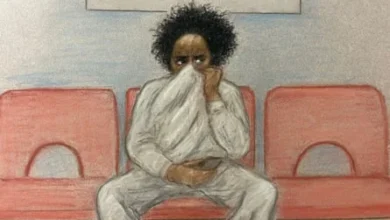
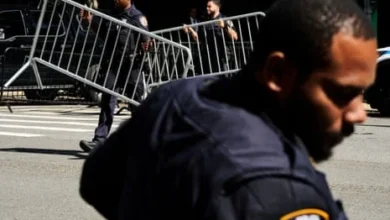
The White House Correspondents’ Association (WHCA) Dinner is set to proceed later today, nearly three months after a shooting incident at the Washington Hilton hotel forced its cancellation on April 25. The black-tie event, which traditionally gathers journalists, politicians, and administration officials, was interrupted when a man, Cole Allen, attempted to force his way through a security checkpoint and fired a shotgun outside the ballroom where Trump and his cabinet were seated. Allen later pleaded not guilty to charges including attempting to assassinate the president. The rescheduled dinner, moved to the Waldorf Astoria hotel, will feature enhanced security protocols, with Secret Service director Sean Curran stating, "We do expect bad people to show up. It’s just a reality of where we are, but we’re treating it no differently than any other site that the president goes to." This marks Trump’s first presidential appearance at the dinner since the incident, as he had previously boycotted the event in his earlier years in office. The replanned dinner is expected to host around 700 guests, significantly fewer than the approximately 2,600 attendees in April.
In a separate domestic legal battle, two dozen states are suing the White House for allegedly politicizing Federal Emergency Management Agency (FEMA) disaster aid. Led by California’s Democratic Attorney General Rob Bonta, a coalition of 25 Democratic attorneys general has filed a lawsuit in federal court in Rhode Island, accusing the Department of Homeland Security (DHS) and FEMA of imposing "unlawful" conditions on federal grants for disaster preparedness and response. The lawsuit claims these stipulations amount to a "campaign of coercion" designed to compel states to adopt the White House’s preferred voting and immigration policies. The requirements, affecting over $740 million in combined funding for disaster preparedness and counter-terrorism, include mandates for states to use a federal system to verify the citizenship of all voters and to conduct post-election audits.
The political spotlight also falls on the Maine Senate race, where Democrats are poised to select a new nominee after Graham Platner withdrew following sexual assault allegations. Troy Jackson, a logger, longtime legislator, and former president of the Maine senate, is now expected to clinch the nomination at a special convention on Saturday. Platner’s abrupt departure earlier this month triggered a "frantic scramble" within the Maine Democratic party to find a replacement. Morris Katz, a former adviser to Platner, reflected on the campaign’s implosion, admitting that "knowing what we know now," many prior controversies "should have been enough" to end his candidacy. Katz cited issues like Reddit posts, a problematic tattoo, and an initial New York Times story on troubling behavior, acknowledging that while no standard vetting process would have uncovered the specific rape allegation that ultimately ended the campaign, these earlier red flags were missed.
On the energy front, President Trump celebrated a significant milestone in the U.S. nuclear industry, hosting executives from several advanced nuclear reactor companies at the White House. Privately held firms Antares Nuclear Inc., Deployable Energy, Aalo Atomics, and Valar Atomics Inc. joined Trump in the Oval Office to mark the successful startup of their experimental reactors. White House officials confirmed that these test reactors had reached "criticality," the crucial stage where a nuclear fission chain reaction becomes self-sustaining and releases steady energy. These projects represent the first privately funded, non-light-water advanced reactors to achieve criticality in the U.S. in over 40 years. Trump also elaborated on a new condition placed on the U.S.-Saudi Arabia nuclear deal, requiring the kingdom to join the Abraham Accords, stating, "it’s a two-way street, and we think it’s very important for the future of the Middle East."
Adding a touch of personal controversy, Trump waded into a debate about basketball legends. Asked by a Fox News correspondent to choose between LeBron James and Michael Jordan as the greatest player, Trump instead pivoted to which player liked him better. He praised Michael Jordan as "a guy that’s a friend of mine," with whom he plays golf. Conversely, he speculated about LeBron James, saying, "maybe he’s a racist. But maybe he doesn’t like Trump, I don’t know." Trump attributed James’s dislike to a nine-year-old social media post where James called him a "bum" after Trump canceled a White House visit for the Golden State Warriors, whose star Steph Curry had expressed reluctance to attend. Trump concluded, "I only like people that like me, so I would say Michael Jordan all the way."
Broader Impact and Implications
The confluence of these events paints a picture of a presidency defined by assertive and often unilateral action, both domestically and internationally. The ongoing Iran war, coupled with the new tariffs and the threat of further trade retaliation, signals a period of heightened global instability and economic uncertainty. The legal challenges to the administration’s tariff policies and FEMA aid, alongside the internal political fallout from the Maine Senate scandal, underscore persistent domestic discord and accountability issues. Meanwhile, the President’s personal remarks, such as those directed at LeBron James, continue to fuel public debate and shape his polarizing public image. As the midterm elections draw closer, these multifaceted challenges will undoubtedly influence the political discourse and the nation’s trajectory.