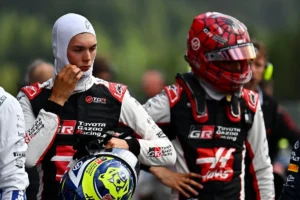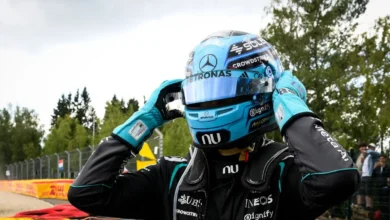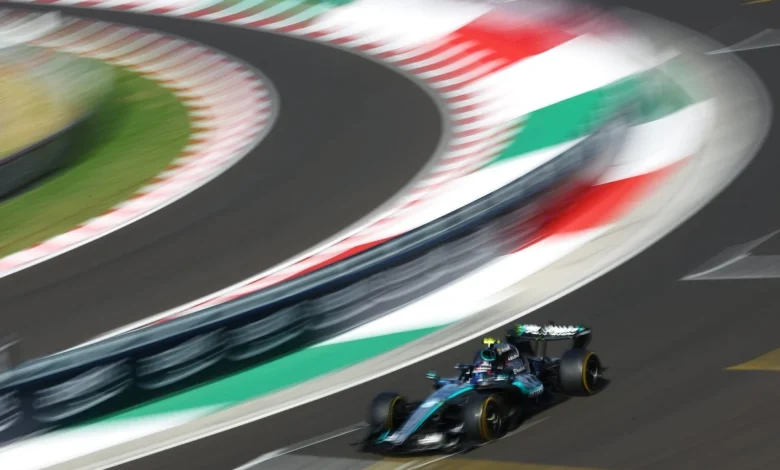
The opening day of practice for the Hungarian Grand Prix at the Hungaroring presented a complex and potentially misleading picture of the competitive order, with traditional frontrunners Ferrari and Red Bull showcasing flashes of outright speed that belied underlying concerns about their race pace. While the timesheets initially suggested a dominant performance from the Scuderia, deeper analysis of long-run data revealed a more nuanced and competitive landscape, hinting at significant challenges for several established teams.
Ferrari’s Fleeting Dominance and Underlying Race Pace Concerns
At first glance, Ferrari appeared to have a commanding presence during Friday’s practice sessions in Hungary. The Italian marque’s drivers topped both the morning and afternoon sessions, posting lap times that suggested a comfortable advantage of around half a second over their nearest rivals. This initial impression, however, proved to be superficial. As the teams transitioned to longer runs with significant fuel loads at the end of the second practice session, a starkly different reality began to emerge.

The long-run simulations, often considered a more reliable indicator of true race performance, painted a less rosy picture for Ferrari. Championship leader Kimi Antonelli, who had a disrupted qualifying simulation attempt hampered by a red flag and a subsequent error on his second run, demonstrated exceptionally strong pace on his extended stints. When adjusted for differing fuel loads and tyre compounds, Antonelli’s average lap time over his race simulation was a remarkable 0.46 seconds per lap quicker than that of Ferrari’s Charles Leclerc. Leclerc’s own race simulation was described as inconsistent, further highlighting the disparity between Ferrari’s single-lap pace and their potential race endurance.
This significant divergence between qualifying pace and race pace has become a focal point for the Scuderia. The question on everyone’s mind, both within the Ferrari garage and among the paddock observers, is the reason behind this discrepancy. Why did Ferrari exhibit such potent performance over a single flying lap, only to falter when tasked with maintaining consistent speeds over a race distance? This is precisely the puzzle that the Ferrari engineers will be dissecting in their post-session debriefs, aiming to optimize the car’s setup for the remainder of the weekend, particularly on a circuit like the Hungaroring where track position and tyre management are paramount.
The struggles with long-run pace were not confined to Ferrari. Lewis Hamilton, a seven-time world champion, also experienced a less-than-convincing race simulation, posting times approximately 0.67 seconds per lap slower than the benchmark set by Antonelli. Even Lando Norris in the McLaren and George Russell in the second Mercedes, both strong contenders in the midfield, demonstrated superior race pace compared to Hamilton, with Norris averaging 0.52 seconds per lap faster and Russell 0.61 seconds per lap faster over their respective long runs.
Interestingly, the narrative had been somewhat different in the first practice session. During FP1, Hamilton’s long run pace was reportedly around four-tenths of a second per lap faster than his Mercedes teammate, Russell. However, the consistent standout in Hungary, according to the available data, appears to be Antonelli, who was not participating in the opening session due to Frederik Vesti utilizing his cockpit. This suggests that Antonelli’s performance metrics might represent the true benchmark for race pace, placing many of the established teams under increased scrutiny.
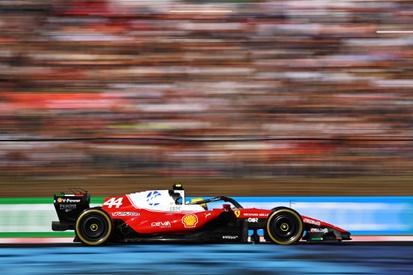
Red Bull’s Lingering Questions Over Race Pace
A pattern mirroring Ferrari’s challenges also emerged at Red Bull. Max Verstappen, the reigning world champion and a dominant force in recent seasons, qualified second in the first practice session and fourth in the second. However, when the focus shifted to longer runs with heavier fuel loads, the Red Bull pairing also appeared to struggle to maintain their earlier pace.
Isack Hadjar, Verstappen’s teammate, lost an average of 0.79 seconds per lap to Antonelli during the long runs, while Verstappen himself was recorded as 0.82 seconds slower over the same distance. This indicates a substantial deficit in race pace for the Austrian team when compared to the current leader. It is worth noting that Red Bull’s long-run performance in the first practice session had already offered limited grounds for optimism, suggesting that the issues might be more deeply rooted than a simple track-specific anomaly.
The implications for Red Bull are significant. Given the notoriously difficult nature of overtaking at the Hungaroring, qualifying traditionally plays a crucial role in determining the race outcome. However, if their race pace continues to lag behind their single-lap performance, Red Bull might be compelled to drastically alter their setup philosophy from Saturday onwards, prioritizing race consistency over outright qualifying speed. This strategic shift could prove to be a high-stakes gamble on a circuit where track position is king.

Aston Martin’s Ambitious Update and Underwhelming Initial Returns
Aston Martin arrived at the Hungarian Grand Prix with significant anticipation surrounding an extensive update package designed to propel them back into contention with the midfield and shed their tag as the slowest team on the grid. However, initial findings from Friday’s practice sessions suggest that the hoped-for quantum leap in performance may not have materialized as dramatically as anticipated.
The fundamental challenge for Aston Martin lies in the sheer scale of the gap they needed to close. Even with their revised aerodynamic and mechanical configurations, the initial data points to a continued struggle. During the long runs in the second practice session, Fernando Alonso, the team’s lead driver, was the second-slowest competitor on track, trailing the benchmark by a substantial 3.42 seconds per lap. While Alonso managed to stay ahead of Valtteri Bottas, whose long run pace was a further 0.51 seconds slower, Aston Martin remains firmly adrift of the main midfield battle.
A persistent weakness for Aston Martin has been their top speed, a critical factor on the longer straights of circuits like the Hungaroring. Analysis of the first sector, which typically features straights, indicates that Aston Martin is losing considerable time to its rivals. This aerodynamic deficiency, coupled with the performance of their updated package, suggests that a significant turnaround in their competitive standing is unlikely in the immediate future, despite the team’s stated intentions. The team’s engineers will be working diligently to understand the full impact of the updates and identify areas for immediate improvement.

Midfield Dynamics: Audi’s Consistency, Racing Bulls’ Challenge, and Alpine’s Decline
The midfield battleground in Hungary presented its own set of intriguing narratives. Nico Hulkenberg, once again, demonstrated impressive long-run pace, a trend that has been evident across several recent race weekends. However, despite consistently showcasing strong race pace, Hulkenberg has yet to translate this performance into tangible championship points. His ability to maintain consistent lap times over extended stints suggests a car that is well-suited to the demands of a race, but other factors may be hindering his progress.
Hulkenberg’s primary rival in Budapest is expected to be the Racing Bulls team, whose long-run pace was recorded at 1.46 seconds per lap slower than Antonelli. This places them in close proximity to Hulkenberg’s performance metrics, suggesting another tight battle for midfield supremacy.
In contrast, Alpine appears to be facing increasing difficulties in the ongoing development race. Their long-run pace was significantly slower, trailing by 2.16 seconds per lap. This indicates a widening gap to the front of the midfield, raising concerns about their ability to compete effectively for points in the coming races. The team will need to find significant performance gains from their development pipeline to reverse this trend.

Haas delivered a solid, though not outstanding, long-run performance, clocking in at 1.94 seconds per lap off the pace. This positions them within the competitive midfield pack, capable of challenging for points if circumstances allow.
For Williams, Friday proved to be a considerably more challenging day. Their long-run pace was a concerning 3.01 seconds per lap slower than the benchmark. This positions the Grove-based team much closer to the performance levels of Cadillac and Aston Martin, rather than within striking distance of the top 10. The Hungaroring’s technical layout and demanding nature have exposed the limitations of their current package, highlighting the considerable work required to improve their competitive standing.
The opening day of practice at the Hungarian Grand Prix has underscored the intricate nature of Formula 1 competitiveness. While initial lap times can offer a glimpse of potential, it is the deeper analysis of race simulations and long-run data that truly reveals the underlying challenges and opportunities for each team. As the weekend progresses, the focus will shift to qualifying and the race itself, where these developing narratives will undoubtedly play out, shaping the outcome of this pivotal Grand Prix.