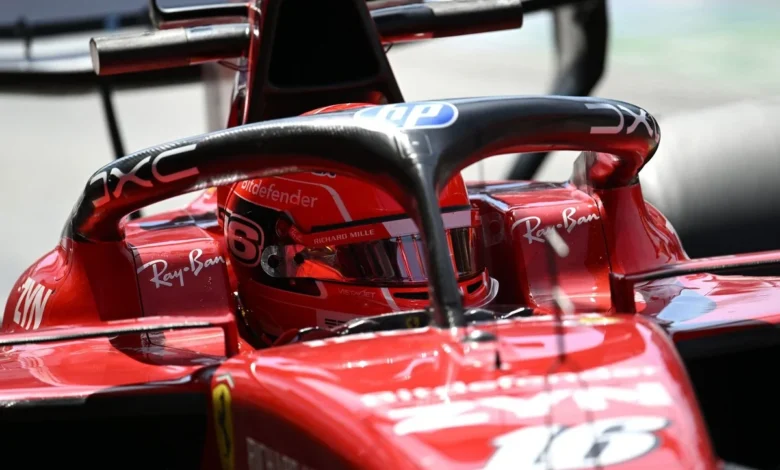
Ferrari team principal Fred Vasseur has confirmed that the Scuderia remains committed to the ongoing development of its SF-26 Formula 1 challenger, despite a mounting points deficit that has effectively relegated the Italian outfit to the role of challenger rather than title favorite in the 2026 campaign. As the season approaches its final act, Vasseur’s decision to continue upgrading the current car signals a strategic intent to balance immediate competitiveness with the long-term goal of refining the technical platform that will serve as the foundation for future seasons.
The current landscape of the Formula 1 Constructors’ Championship presents a stark reality for Ferrari. Following a challenging outing at the Spanish Grand Prix—highlighted by a terminal brake failure for Lewis Hamilton and a fourth-place finish for Charles Leclerc—the team finds itself trailing Mercedes by a significant margin of 145 points. Simultaneously, the drivers’ standings have become increasingly lopsided, with Lewis Hamilton sitting 101 points behind championship leader Kimi Antonelli. These figures underscore a season of inconsistency for the Maranello-based squad, which has struggled to translate strong race-day pace into the dominant qualifying performances required to challenge for the top step of the podium consistently.
The Strategic Dilemma: Balancing 2026 and 2027
In the modern era of Formula 1, dominated by strict budget caps and limited wind tunnel testing time, the allocation of resources is perhaps the most critical management decision a team principal can make. Every hour of CFD (Computational Fluid Dynamics) simulation and every hour of wind tunnel usage must be justified against a rigorous cost-benefit analysis. While many competitors have begun shifting their primary engineering focus toward the 2027 regulation cycle, Vasseur is adamant that Ferrari will not follow suit—at least not yet.
"We are not in the situation of 12 months ago," Vasseur explained, referencing the significant regulatory overhaul that defined the 2026 season transition. "Today, what we will develop, we will be able to carry it over on next year’s project. We will continue to work, but perhaps on different things, different aspects. The development that we do now, 80% will be carried over."
This philosophy highlights a critical shift in how teams approach the mid-to-late season. Rather than viewing the SF-26 as a "dead-end" project, Ferrari views it as an iterative testbed. By focusing on components that are modular and adaptable to the 2027 design, Ferrari aims to avoid the "year-zero" trap that has historically plagued teams that stop development too early.
Analyzing the Performance Gap: The Qualifying Conundrum
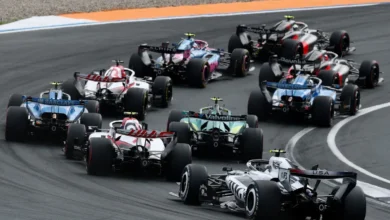
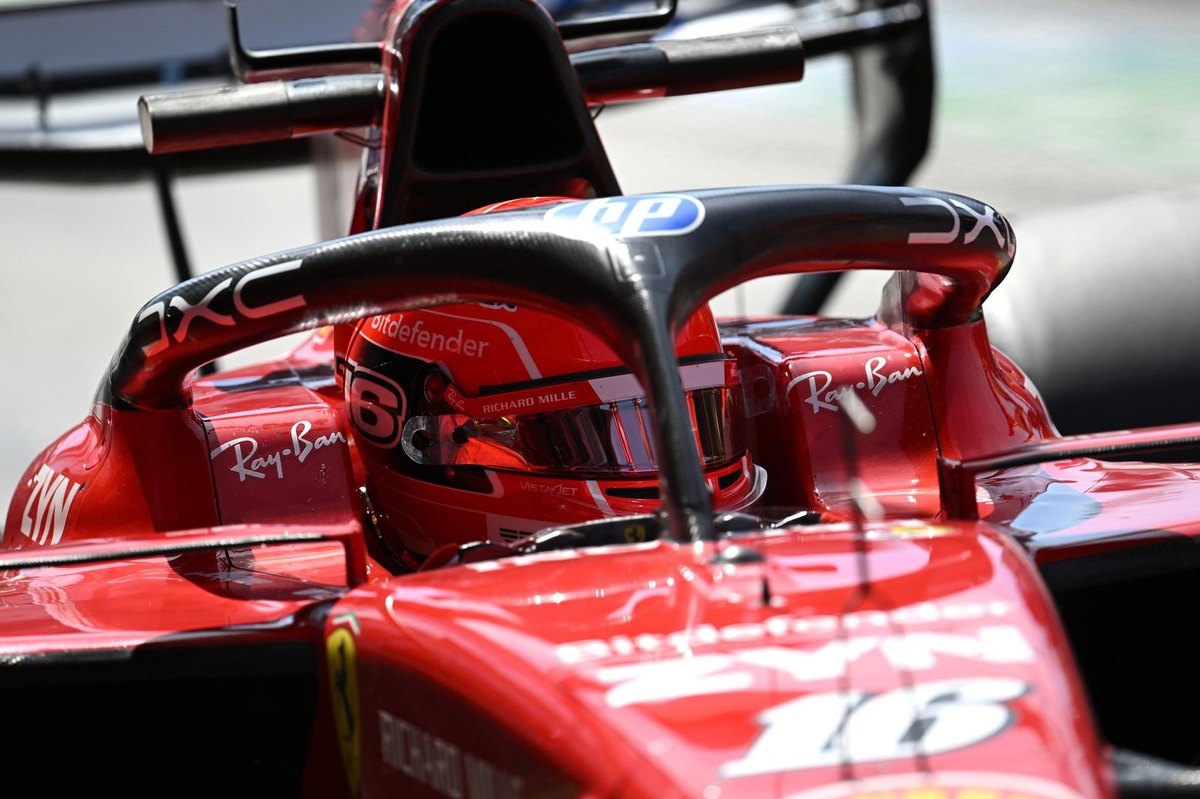
A detailed look at the performance data since the mid-season break reveals the specific area of concern for Ferrari: Saturday performance. Over the last four qualifying sessions, including the Zandvoort sprint format, neither Hamilton nor Leclerc has managed to secure a front-row start. The statistical average for the team over this period is fifth position on the grid.
The telemetry data shows that the SF-26 is currently losing an average of 0.198 seconds to pole position. While this might seem marginal to the casual observer, in the hyper-competitive midfield and front-running pack, it is the difference between dictating race strategy and being forced to react to it. Interestingly, the data indicates that Ferrari is currently quicker than Red Bull in qualifying, yet consistently slower than both McLaren and Mercedes.
Vasseur acknowledges the discrepancy between the car’s theoretical pace and its actual results. "This we need to improve, because I think when you have a look at the pace, during the race the pace is there," he noted. "For sure, we need to do a better job in qualifying. If you take Zandvoort and this one, the profile of the event is a little bit the same for us. We had a decent pace in qualifying, but we didn’t put everything together on the last attempt."
The Ferrari principal argues that the potential is present, but the execution is lacking. "If I have to put the focus of the team on something today, it would be the evolution of the pace during the qualifying—more than the raw pace, the evolution, the steps that you can do. We were there on run one of Q3; the potential is there. We just have to adapt everything further on."
A Season Defined by Resilience and Execution
The narrative of the 2026 season has been defined by the rapid ascent of Kimi Antonelli. The young Mercedes driver has demonstrated a level of consistency that has put the rest of the field on the back foot. When asked if the championship fight against Antonelli and Mercedes could be considered "game over," Vasseur maintained his characteristic stoicism.
"Two or three weeks ago I told you that I will take it race by race. I didn’t change," he stated, refusing to concede the title despite the mathematical reality. This measured approach serves as a defensive wall for the team, shielding his drivers from the pressure of an unattainable goal while keeping morale focused on incremental improvements.

For Ferrari, the priority remains the power unit and chassis integration. Having already utilized the two permitted ADUO engine upgrades, the team is now limited to marginal improvements on the internal combustion engine. Consequently, the focus has shifted entirely to aerodynamic efficiency and tire management—two areas where Ferrari has shown flashes of brilliance followed by bouts of tactical frustration.
Broader Implications for the Maranello Squad
The decision to continue development through the end of the season carries significant weight for the 2027 campaign. Should Ferrari succeed in refining its qualifying setup, it provides a dual benefit: it increases the likelihood of securing podiums and race wins in the remaining rounds of 2026, and it provides the engineering team with a more mature data set for the 2027 car.
Industry analysts suggest that the 80% carry-over figure mentioned by Vasseur is a calculated risk. If the 2027 regulations remain stable, this strategy could propel Ferrari to the front of the pack early next season. However, if they fall behind in the development of long-lead items for next year, they risk starting 2027 in the same position they are in now: chasing the leaders.
The pressure on the team is immense. With Lewis Hamilton—a seven-time world champion—at the helm, the expectations for performance are at an all-time high. The retirement in Spain was a blow not just to the points tally, but to the psychological momentum the team had been attempting to build. As the paddock prepares for the final stretch of the season, all eyes will be on the Maranello engineering department to see if they can translate Vasseur’s optimism into tangible results on the asphalt.
Ultimately, the remainder of the 2026 season for Ferrari is about more than just points; it is about establishing a culture of constant, iterative improvement. Whether or not they can close the 145-point gap to Mercedes remains to be seen, but by refusing to abandon the current car, Vasseur is signaling to the Tifosi and the grid alike that the Scuderia is playing a long-term game, one where every race, every qualifying session, and every lap is a building block for the future.