Why Elizabeth Smart Says There’s Still Reason to Have Hope in Nancy Guthrie Disappearance Case

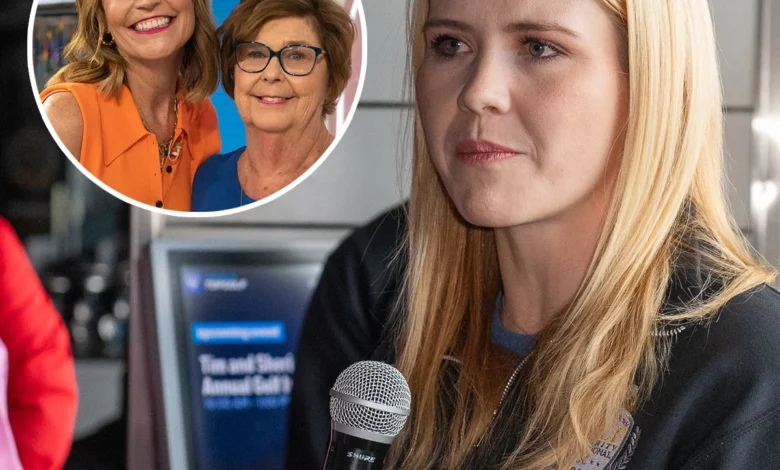
Elizabeth Smart, a beacon of resilience and a powerful advocate for survivors, is holding onto the belief that Nancy Guthrie, the mother of NBC News anchor Savannah Guthrie, might one day return home. Smart, who herself endured a harrowing nine-month kidnapping ordeal in 2002, expressed her deep empathy for the Guthrie family and shared her perspective on the ongoing search for Nancy, who has been missing for over 170 days.
"I would remind people that we don’t know all the details," Smart shared in an exclusive interview with E! News. "I certainly hope that the investigators have more details than we do, and I certainly hope that they’re making more progress." Her words underscore the inherent uncertainty in such cases and the need for continued diligence from law enforcement.
The 38-year-old activist, who has dedicated her life to advocating for victims and raising awareness about child abduction, emphasized the critical element of hope. "I want to remind people that there isn’t a body, so there is still reason to have hope that she is alive and that we shouldn’t give up until we find her," Smart stated, drawing a direct parallel to the importance of never abandoning the search for a missing person, regardless of the time elapsed.
Smart also issued a heartfelt plea for compassion and grace for the entire Guthrie family. "If anyone knows anything or seen anything," she urged, "or the smallest detail that might seem insignificant can make all the difference, just report it." This appeal highlights the vital role of public cooperation in solving complex cases, where even the smallest piece of information can prove crucial.
Background of the Nancy Guthrie Disappearance
Nancy Guthrie, 84, was last seen at her residence in Arizona on the evening of January 31st. Her family reported her missing the following day, initiating a widespread search and investigation. Authorities quickly developed suspicions of abduction, particularly after discovering surveillance footage depicting a masked individual at her doorstep. The presence of this unidentified figure added a chilling dimension to the initial reports, suggesting a deliberate and potentially violent act.
The investigation has involved local law enforcement and the FBI, who have released images of potential subjects and appealed to the public for any information. The prolonged nature of the disappearance has understandably placed immense strain on the Guthrie family and their supporters, including Savannah Guthrie, who has maintained a public presence while navigating this deeply personal crisis.
Elizabeth Smart’s New Endeavor: Amplifying Survivor Voices
Smart’s commitment to highlighting the humanity within true crime narratives is further exemplified by her new podcast, The Survivor Files with Elizabeth Smart. This project is designed to give survivors a platform to share their experiences in their own words, offering invaluable insights into the psychological and emotional toll of trauma, as well as the remarkable strength required to overcome it.
"It’s about resilience, hope and finding the inner strength to keep going when everything is against them," Smart explained about her podcast. "It’s important to hear stories from survivors’ perspective because—from an outside perspective—you don’t necessarily always understand why a victim chose to do something or why they made the decisions that they did."
By centering the narratives of survivors, Smart aims to foster greater understanding and empathy from the public. "But when you hear it from the victim’s perspective, it makes a lot more sense overall with the true crime genre," she continued. "I would hope that people learn a little bit more compassion and humanity, and recognize that people experience horrendous things." This approach seeks to move beyond sensationalism and connect with the profound human element of these often-tragic events.
Reclaiming Autonomy Through Strength and Resilience
Smart’s personal journey of healing and empowerment is also reflected in her newfound passion for bodybuilding. This pursuit has become a powerful tool for reclaiming her sense of self and shedding the lingering shame associated with her past trauma.
"It’s taught me to let go of the shame that I felt after everything that I experienced," said Smart, who is married to Matthew Gilmour and is a mother of three. "It taught me that my body is beautiful and I need to be ashamed of it, I can embrace it." This profound shift in self-perception underscores the transformative power of finding healthy outlets for emotional and physical strength.
The Survivor Files with Elizabeth Smart debuted on August 17th on iHeartRadio, offering listeners a compelling and intimate look into the lives of survivors.
Lessons from the Elizabeth Smart Case: A Timeline of Investigation and Discovery
The disappearance of Elizabeth Smart in 2002 was a case that captivated the nation and highlighted the vulnerabilities of even seemingly secure environments. The subsequent investigation, marked by intense scrutiny, frustrating dead ends, and moments of profound despair, ultimately led to her safe recovery. Examining key moments from her case provides a poignant backdrop to her current perspective on the Nancy Guthrie situation.
June 5, 2002: The Abduction
Elizabeth Smart, then 14 years old, was abducted from her family’s Salt Lake City home in the early morning hours. The circumstances of her disappearance—a window left ajar, the alarm system disarmed—initially led investigators to consider the possibility of an inside job, prompting an in-depth examination of her own family.
Initial Investigation: Family Under Suspicion
Lead investigators, including Police Captain Cory Lyman, acknowledged the statistical likelihood of perpetrators being known to the victim. "They looked like a happy, normal family," Lyman recalled in the Netflix documentary Kidnapped: Elizabeth Smart. "But statistically, more often than not, the perpetrator of this type of crime is a parent or a family member. So we started looking very hard at them." This involved extensive interviews and the seizure of 12 computers from the Smart residence. Despite the thoroughness of this inquiry, no suspicious findings emerged. Ed Smart, Elizabeth’s father, passed a polygraph test, and all relatives were eventually cleared.
The Strain on the Smart Family
The psychological toll on the Smart family was immense. Ed Smart described being "overwhelmed to the point that I was shaking, and I couldn’t stop shaking," leading to a brief, involuntary commitment to a psychiatric ward. This period underscored the extreme emotional distress that families endure during a child abduction crisis, compounded by the suspicion they faced.
Uncle Tom Smart: A Public Face and Unintended Distraction
Ed’s brother, Tom Smart, became a prominent figure in the early media coverage. His "jittery" demeanor and inconclusive polygraph results, coupled with public statements that were perceived as sympathetic to the abductor, led to speculation about his involvement. He later acknowledged in the Netflix documentary that his media appearances may have inadvertently fueled suspicion, stating, "Anybody who watches that interview will think, ‘Tom Smart is a crazy son of a b—ch, and maybe he did do it.’" His experience highlights the complex dynamics of public relations and family involvement during high-profile investigations.
A False Hope: Discovery of Another Victim’s Remains
During the initial search, authorities discovered the remains of another young female victim, burnt beyond recognition. This discovery brought a brief, agonizing possibility that the remains might be Elizabeth’s. "A girl’s body, burnt beyond description, so she could not be recognized," Ed Smart recounted, recalling the devastating impact of such news. While the remains were ultimately identified as another victim, the incident deeply affected the Smart family and underscored the grim realities investigators often face.
Mary Katherine Smart: The Young Witness
Elizabeth’s younger sister, Mary Katherine, who was nine at the time, was the only direct witness to the abduction. Her repeated interviews by authorities, coupled with efforts to shield her memories from external influence, led to a period of isolation. "I was on my own lonely island, if you will, wanting to know, trying to sneak and hear tidbits of things that happened, but people shutting me out," she recalled. The pressure on a young child to recall critical details, including attempts at hypnosis, demonstrated the extreme measures taken in the pursuit of answers.
Richard Ricci: A Prime Suspect and a Fatal Setback
Richard Ricci, a contractor who had previously worked at the Smart home, emerged as a prime suspect after jewelry belonging to Lois Smart was found in his possession. He was charged with burglary. Despite his denials, his inability to account for significant mileage on his Jeep shortly after Elizabeth’s disappearance raised further suspicions. Tragically, Ricci died of a brain aneurysm in jail on August 27, 2002, before the case could be fully resolved. "Our most likely suspect died," Lyman stated, describing the immense blow to the investigation. "Everything he knew was gone with him. And it left us at a dead end that was very difficult."
The Breakthrough: Emmanuel’s Identity Revealed
Months into the investigation, Mary Katherine Smart had a crucial realization. While flipping through a book, the name "Emmanuel" suddenly came to her. This was the alias used by Brian David Mitchell, a drifter who had previously done odd jobs for the Smart family. This pivotal recollection, though initially met with skepticism by some investigators due to its reliance on voice identification, proved to be the key. The Smart family’s decision to proceed with circulating a sketch of Emmanuel, despite police recommendations against it, led to a tip from Mitchell’s own family, ultimately providing more photos and confirming his identity.
March 12, 2003: Elizabeth’s Rescue
Brian David Mitchell, along with his wife Wanda Barzee, was apprehended in Sandy, Utah, on March 12, 2003, with Elizabeth Smart in their company. The timely recognition of Mitchell by law enforcement, facilitated by the public sharing of his image, led to Elizabeth’s safe return after 266 days of captivity.
The Aftermath: Justice and Continued Advocacy
Brian David Mitchell was convicted of kidnapping and transporting a minor across state lines for sexual activity and sentenced to life in prison without parole. Wanda Barzee pleaded guilty to related charges and, after serving a portion of her sentence, was released in 2018. Her subsequent re-arrest for violating sex offender registry rules in May 2025 highlighted the ongoing complexities of managing individuals with past offenses.
Elizabeth Smart, having endured unimaginable trauma, has channeled her experiences into powerful advocacy. Her work as a public speaker, author, and producer of films focusing on kidnapping victims underscores her dedication to ensuring that other families do not suffer the same fate. Her journey, from victim to survivor to advocate, is a testament to the enduring human spirit and the profound impact of resilience.
Broader Implications for Missing Persons Cases
The case of Nancy Guthrie, like that of Elizabeth Smart, underscores the critical importance of sustained public attention and diligent investigative efforts in missing persons cases. Elizabeth Smart’s message of hope, rooted in her own experience, serves as a powerful reminder that even in the face of prolonged uncertainty, the possibility of a positive outcome remains. Her advocacy for survivors and her dedication to amplifying their voices offer a path toward healing and understanding for those who have endured similar traumas. The ongoing search for Nancy Guthrie continues to resonate, fueled by the hope that, with continued efforts and public awareness, a resolution can be found.
Related posts: