James Gray Unpacks the Personal Roots and Hitchcockian Thrills of His Crime Drama Paper Tiger at the 2026 New York Film Festival

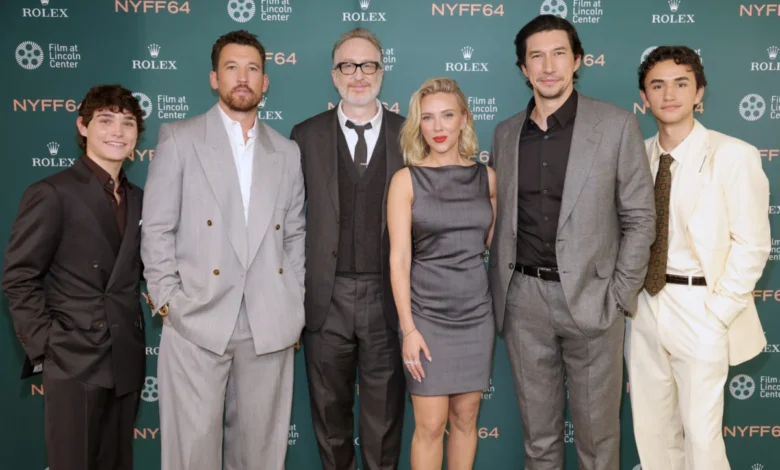
Acclaimed filmmaker James Gray returned to the festival circuit with his latest cinematic endeavor, Paper Tiger, which held its highly anticipated North American premiere at the 2026 New York Film Festival. Known for deeply personal, character-driven narratives that often excavate his own upbringing, Gray’s newest feature shifts away from the strict autobiographical framework of his previous film, Armageddon Time, into the murky, high-stakes world of 1980s organized crime. Starring a powerhouse ensemble that includes Adam Driver, Miles Teller, Scarlett Johansson, and young newcomer Roman Engel, the Neon-distributed thriller blends intense psychological pressure with the intricate dynamics of familial obligation.
As audiences and critics digest the film ahead of its theatrical rollout this November, Gray has opened up about the fragile intersection between real-life memory and genre storytelling, the mechanics of building cinematic suspense, and why an unresolved ending serves as a truer reflection of human existence.
Main Facts and the Narrative Premise of Paper Tiger
Set against the gritty backdrop of 1980s Queens, Paper Tiger revolves around a tight-knit family whose lives violently collide with the Russian mob. The catalyst for the descent is a high-risk moneymaking scheme pitched by the ambitious older brother, Gary, played by Adam Driver, to the family patriarch, Irwin, portrayed by Miles Teller. Caught in the escalating crossfire is Irwin’s wife, Hester, brought to life by Scarlett Johansson, alongside their younger son, played by Roman Engel.
While the premise sounds like classic pulp fiction, Gray insists the film operates on a much higher psychological plane. Unlike standard mob dramas that prioritize graphic violence and territorial disputes, Paper Tiger uses the criminal underworld as a pressure cooker to test the emotional bonds of its central characters. The financial entanglement serves primarily as an external mechanism to expose long-simmering domestic grievances, unspoken resentments, and the desperate lengths to which family members will go to protect—or inadvertently endanger—one another.
Shifting Away from Biography Toward Hitchcockian Intensity
The release of Paper Tiger invites immediate comparisons to Gray’s 2022 semi-autobiographical coming-of-age drama, Armageddon Time, which examined race, class, and education in 1980s Queens through a lens closely aligned with the director’s actual childhood experiences. However, during the post-screening discourse at the 2026 New York Film Festival, Gray was quick to clarify that his latest feature is neither a chronological continuation nor a strict factual retelling.
“This one is much different. I think that one was much more close to the facts of the case,” Gray remarked regarding the distinction between the two projects. While acknowledging that his brother will likely spot recognizable vignettes from their shared youth, the director emphasized that the film is not a documentary. Instead, Gray sought to pivot toward a different cinematic vocabulary—one defined by tension and dread.
“I didn’t think it was a sequel. I wanted to make something kind of a little bit… Hitchcockian,” Gray explained. “Pulpier is the wrong word, but a little bit more dramatically intense.”
By infusing the domestic space with the pervasive paranoia characteristic of classic suspense thrillers, Gray creates a claustrophobic atmosphere where everyday conversations carry life-or-death implications. The stylistic choice aligns with his broader artistic philosophy: utilizing genre conventions not for superficial thrills, but as a vehicle to explore profound emotional truths.
Directorial Vision and the Power of Interpersonal Relationships
Before the film’s high-profile festival debut, Gray articulated his fundamental thesis to industry press, stressing that the true core of Paper Tiger lies in human connection rather than the mechanics of the crime syndicate.
“I was trying to make a film in which the personal connection is everything, that love is everything,” Gray noted. He acknowledged that while audiences naturally gravitate toward suspense, pacing, and dramatic stakes, the ultimate objective is emotional resonance. “Through that of course you want people to feel suspense and intensity and things that we love in a good drama, you hope. But then in the end, dare I use the word catharsis, what connects us is what matters. It’s almost a cautionary tale.”
This thematic emphasis on authentic human behavior translated directly into how Gray directed his cast, particularly young actor Roman Engel. Tasked with playing the youngest son—a role that functions as a narrative proxy for the young Gray—Engel received remarkably straightforward guidance that avoided heavy-handed theatricality.
“He would mostly just try to tell me to be myself on set and don’t try to live someone else’s experience, try to live your own and do the actions you would do while whatever’s happening to you,” Engel shared with reporters regarding Gray’s on-set methodology. This naturalistic approach grounds the operatic mob elements in a recognizable domestic reality, ensuring that the emotional stakes remain palpable even as the plot spirals out of control.
Breaking Traditional Narrative Conventions with an Open Ending
One of the most discussed aspects of Paper Tiger following its festival premiere is its abrupt and ambiguous conclusion. The film reaches its narrative crescendo as Gary, Irwin, and Hester grapple with their respective personal crises, cutting to black before any of them learn the definitive fates of the others.
Rather than viewing this lack of closure as a narrative flaw, Gray defended the creative choice during a Friday night Q&A session at the festival, arguing that conventional cinematic resolutions often fail to mirror real life.
“I love the idea that the life of the movie goes on past the movie,” Gray stated. “I love the open ending. I love the idea that the film exists past the boundaries of the screen and the time. With all of the characters, I wanted to make sure that there was a completion to their openness in a way, how open their characters were, and that nobody has the whole picture, because that’s like life, and it’s very untraditional actually for movies. Usually, in a movie somebody has the whole story.”
By denying the audience a neat, tidy resolution, Gray forces viewers to contemplate the ongoing trajectories of Gary, Irwin, and Hester. This narrative strategy transforms the film from a passive viewing experience into an active psychological exercise, leaving lingering questions about survival, accountability, and the inescapable weight of family history.
Chronology, Distribution, and Industry Implications
The journey of Paper Tiger from conception to screen represents a major milestone in James Gray’s filmography, continuing his fruitful collaboration with prestige distribution partners. Following its high-profile selection as a centerpiece of the 2026 New York Film Festival, the film has generated considerable early Oscar buzz, particularly for the powerhouse lead performances of Adam Driver, Miles Teller, and Scarlett Johansson.
The release timeline mapped out by distributor Neon positions the film strategically for the upcoming awards season:
- Late 2025/Early 2026: Principal photography and initial post-production phases take place, building immense industry anticipation surrounding the star-studded cast.
- September/October 2026: Paper Tiger secures its North American premiere at the prestigious New York Film Festival, receiving positive early notices from critics praising its tonal shift and emotional depth.
- November 13, 2026: Neon initiates the rollout of Paper Tiger with a targeted, select-theater U.S. theatrical release.
- November 20, 2026: The studio expands the distribution footprint with a wider theatrical release across North America, allowing general audiences access ahead of the holiday corridor.
Broader Impact and Critical Reception
The arrival of Paper Tiger underscores a significant evolution in contemporary prestige filmmaking. In an era dominated by intellectual property franchises and high-concept blockbusters, Gray continues to champion mid-budget, character-driven adult dramas anchored by bankable movie stars. By merging the intimate texture of family memoirs with the propulsive dread of a crime thriller, the film bridges the gap between commercial accessibility and uncompromising artistic vision.
Furthermore, the casting of Driver, Teller, and Johansson represents a formidable alignment of modern acting talent, each bringing a distinct flavor of intensity to Gray’s meticulously constructed 1980s landscape. Early critical reception indicates that Paper Tiger successfully avoids the trap of nostalgia-baiting, instead utilizing the historical setting as a universal crucible for examining human vulnerability, flawed ambition, and the enduring bonds that tie families together even as their world collapses around them. As Neon prepares the film for its impending November theatrical launch, industry observers will be watching closely to see how mainstream audiences respond to Gray’s unyielding dedication to ambiguity, emotional catharsis, and cinematic truth.