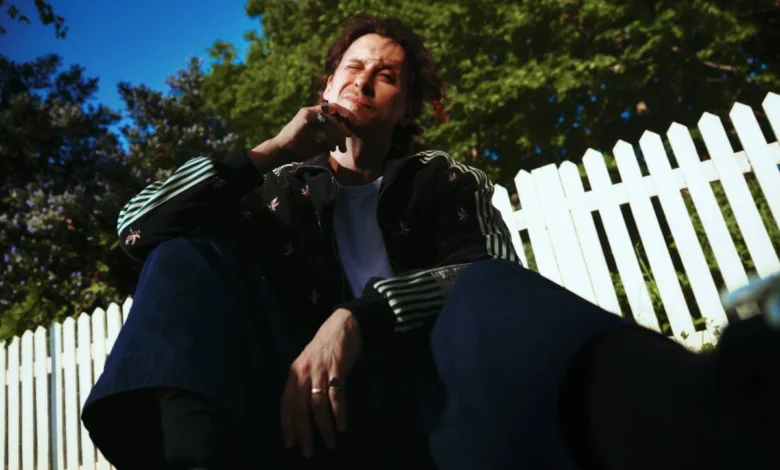
Edinburgh-born producer and DJ Barry Can’t Swim has unveiled his latest sonic offering, "Dance Dance Dance," a euphoric track that pays homage to the golden era of French touch. Released on July 24th, the single marks the artist’s second release this year with Atlantic Records, following the club-focused "Return To Bhibo" which arrived in May. "Dance Dance Dance" sees Barry, real name Joshua Mainnie, weaving together shimmering synthesizers, buoyant electronic beats, and a playful keytar solo, all underpinned by evocative French-language vocals, creating a soundscape that is both nostalgic and vibrantly contemporary.
A Shift in Sonic Landscape
While "Return To Bhibo" showcased Barry Can’t Swim’s emotionally charged and club-centric sound, "Dance Dance Dance" represents a deliberate pivot into more flamboyant and colorful territory. This new single captures a lighter, more overtly celebratory mood, drawing clear inspiration from the iconic sounds of French house music that dominated the late 1990s and early 2000s. The genre, characterized by its infectious disco samples, soulful vocals, and uplifting melodies, has long been a touchstone for electronic music producers. Barry Can’t Swim’s interpretation injects a modern sensibility, ensuring the track resonates with contemporary audiences while honoring its roots.
The sonic palette of "Dance Dance Dance" is rich and layered. The shimmering synths evoke a sense of ethereal joy, while the buoyant electronic beats provide an irresistible rhythm that compels movement. The inclusion of a keytar solo adds a distinctive, retro-futuristic flair, a nod to the playful and often experimental nature of early electronic dance music. The French-language vocals, expertly woven into the track’s fabric, add an undeniable charm and a touch of sophisticated allure, further cementing the French touch influence. This combination of elements creates a track that is both deeply immersive and outwardly exuberant.
A Flourishing Year for Barry Can’t Swim
The release of "Dance Dance Dance" caps a period of significant activity and visibility for Joshua Mainnie. His recent ventures have extended beyond the recording studio, demonstrating a growing presence in various facets of the music and cultural landscape. His engagement in the United States has been particularly notable. This included a participation in KidSuper’s SS27 runway show in Miami, a platform that highlights the intersection of fashion, art, and music. Following this, he hosted a surprise pop-up party in Brooklyn, underscoring his connection with diverse urban music scenes and his ability to create spontaneous, engaging events for his fans.
Further amplifying his profile, Mainnie had the distinct honor of carrying the official match ball onto the pitch ahead of Scotland’s World Cup game against Brazil in Miami. This high-profile moment, shared with Brazilian DJ Mochakk, underscored his growing international recognition. The collaboration with Mochakk didn’t end there; the pair later delivered a captivating back-to-back DJ set at Club Space in Miami, a renowned venue known for hosting some of the electronic music world’s most esteemed artists. These experiences highlight Barry Can’t Swim’s transition from a studio producer to a multifaceted artist with a significant public profile.
Building on a Strong Foundation
"Dance Dance Dance" arrives on the heels of a busy year that has seen Barry Can’t Swim solidify his reputation as a formidable talent in the electronic music scene. At the beginning of the year, he announced his involvement in the prestigious "Late Night Tales" compilation series, releasing his own curated mix alongside an accompanying single, "Chala (My Soul Is On A Loop)." This marked the first installment in the series in over five years, coinciding with its 25th-anniversary celebrations. The compilation featured a diverse range of artists, including O’Flynn, Factory Floor, This Mortal Coil, and Daniel Avery, alongside Mainnie’s own productions, showcasing his eclectic taste and curatorial skills.
His second studio album, "Loner," released in the previous year, further cemented his artistic vision. The album, which explored themes of introspection and personal growth, featured a string of successful singles such as "Still Riding," "The Person You’d Like To Be," "Different," and "Kimpton." "Loner" was a significant follow-up to his Mercury Prize-nominated debut album, "When Will We Land?" Speaking about "Loner" at the time of its release, Mainnie described it as "the most authentic expression I could offer of myself and my life over the past year," distinguishing it from his debut, which he characterized as a "collage of all the music I loved and was inspired by growing up." This evolution in his artistic statement suggests a maturing sound and a deeper exploration of his personal narrative within his music.
The Enduring Appeal of French Touch
The French touch movement, which Barry Can’t Swim so effectively channels in "Dance Dance Dance," emerged in the mid-1990s, primarily in France. Pioneers like Daft Punk, Cassius, Stardust, and Motorbass became synonymous with its signature sound. This genre was characterized by its innovative use of sampling, often drawing from disco, funk, and soul records of the 1970s and 1980s. The producers would meticulously chop, loop, and re-contextualize these samples, creating a fresh, often uplifting, and highly danceable sound.
Key elements of French touch include:
- Sample Manipulation: The art of taking existing audio fragments and transforming them into something entirely new.
- Filtered Disco Loops: Heavy use of low-pass filters to create a warm, groovy, and often hypnotic effect.
- Vocoders and Auto-Tune: Used not just for pitch correction but as a distinctive sonic effect, adding a robotic or ethereal quality to vocals.
- Upbeat Tempos and Infectious Melodies: Designed to evoke a sense of joy and encourage dancing.
- Influences from Disco and Funk: A clear lineage from the groove-based music of earlier decades.
The movement had a profound impact on global electronic dance music, influencing countless artists and contributing to the mainstream success of house music. Its enduring appeal lies in its ability to evoke positive emotions and its timeless, feel-good qualities. Barry Can’t Swim’s embrace of these elements in "Dance Dance Dance" taps into this rich heritage, offering a modern rendition that feels both familiar and excitingly new.
Broader Implications and Future Trajectory
The release of "Dance Dance Dance" signifies more than just a new single; it points towards a dynamic phase in Barry Can’t Swim’s career. His willingness to explore different sonic textures and moods, moving from the introspective to the overtly celebratory, suggests an artist who is not afraid to evolve and surprise his audience. The track’s French touch inspiration also highlights a global awareness and appreciation for diverse electronic music traditions.
The integration of French-language vocals could also be interpreted as a strategic move to broaden his international appeal, particularly within European markets where French house music has a deeply ingrained cultural significance. Furthermore, his increasing presence at high-profile events and fashion shows indicates a growing recognition of his artistry beyond traditional music circles, positioning him as a cultural influencer.
As Barry Can’t Swim continues to release music and engage with a wider audience through live performances and curated projects like the "Late Night Tales" compilation, his trajectory appears to be one of consistent growth and artistic exploration. "Dance Dance Dance" serves as a vibrant testament to his versatility and his ability to craft infectious, emotionally resonant electronic music that bridges genres and eras. The track’s immediate impact suggests it will be a staple in summer playlists and dance floors alike, further solidifying Barry Can’t Swim’s place as a significant voice in contemporary electronic music. The artist’s commitment to pushing creative boundaries while honoring musical heritage bodes well for his future endeavors, promising a continued stream of innovative and engaging productions.
Related posts: