OpenAI Unveils Micro Keypad, Marking Cautious Entry into Hardware Amidst Legal Challenges and Mixed Industry Reception

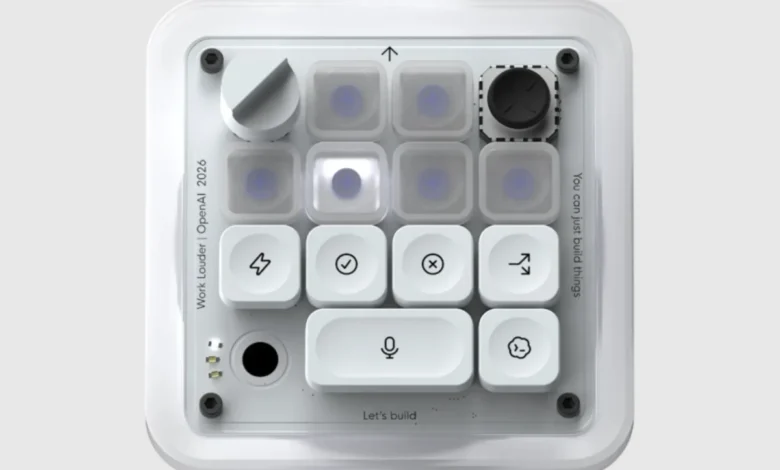
OpenAI, the pioneering artificial intelligence research and deployment company, last week officially launched its inaugural piece of hardware: Micro, a compact, specialized keypad designed to enhance user interaction with its flagship AI model, ChatGPT. Developed in collaboration with specialty keyboard designer Work Louder, Micro represents an intriguing, albeit perhaps puzzling, foray into the physical product market for a company predominantly known for its software innovations. Positioned as an artisanal workplace novelty, it caters to a niche segment of tech enthusiasts while leaving a broader audience contemplating its utility and necessity. This move signals a potential strategic shift for OpenAI, hinting at ambitions beyond pure software, yet it arrives amidst significant external pressures, including a high-profile legal battle with tech titan Apple and the emergence of details regarding other prospective hardware ventures.
OpenAI’s Strategic Pivot to Hardware
For years, OpenAI has been at the forefront of AI research, pushing the boundaries of what large language models and generative AI can achieve. Its launch of ChatGPT in late 2022 democratized access to advanced AI, catapulting the company into global prominence and sparking an AI arms race. However, the decision to enter the highly competitive and capital-intensive hardware market marks a notable evolution in OpenAI’s corporate strategy. This pivot could be interpreted as an effort to control the end-to-end user experience, ensuring seamless integration of its AI capabilities into physical devices, much like Apple’s vertically integrated ecosystem. By offering dedicated hardware, OpenAI might aim to create a more intuitive, efficient, and proprietary interface for its AI agents, potentially unlocking new use cases and revenue streams beyond its API services and subscription models.
The broader tech industry has seen a consistent trend of major software players eventually venturing into hardware to solidify their market positions and expand their ecosystems. Google has its Pixel phones and Nest devices, Amazon has Echo and Kindle, and Microsoft has Surface. For OpenAI, a successful hardware strategy could mean deeper user engagement, greater data collection opportunities (with appropriate privacy safeguards), and a distinct competitive advantage in a rapidly saturating AI market. The Micro keypad, while seemingly small in scope, could be a foundational experiment or a test balloon to gauge market appetite and refine its approach to physical products. It positions OpenAI not just as an AI developer but as a potential architect of the AI-powered future, where interaction with intelligent agents is embedded directly into daily tools.
Micro: Design, Functionality, and User Experience
The Micro keypad, a collaboration with Work Louder, immediately strikes users with its robust build quality. Early reviewers noted its substantial feel, suggesting it could easily serve a secondary purpose as a premium paperweight if its primary AI-accessory function doesn’t resonate universally. This durability speaks to a certain level of craftsmanship, aligning with its "artisanal" designation. A more striking observation, widely echoed across tech commentaries, concerns its packaging: an immaculately white box with a sleek, minimalist aesthetic that bears a striking resemblance to Apple’s signature product presentation. This "Apple-coded" design choice is more than just a stylistic preference; it subtly hints at OpenAI’s aspirations and perhaps even its perceived lineage, especially in light of recent personnel movements and legal developments.
In terms of layout, Micro features twelve tactile keys. At the top, six frosted "agent" keys are designed for customization, allowing users to assign specific tasks or personas within ChatGPT or its agentic coding tool, Codex. Below these are six "command" keys, intended for controlling the active programs or agents. Connectivity options are standard, offering both a Bluetooth wireless connection for flexibility and a USB cable for a stable, wired link. This dual approach caters to different user preferences and workstation setups.
One of Micro’s most touted features is its dedicated voice dictation button. This enables users to simply hold down the button, speak their commands or queries directly to ChatGPT, and then tap a "send" button to submit their request. This hands-free input method is designed to streamline interactions, potentially offering a significant efficiency boost for users who frequently engage with AI models for drafting, coding, or brainstorming. Customization is handled intuitively within ChatGPT itself, where a dedicated Micro tab allows users to adjust key brightness and reassign specific commands or projects to individual keys, offering a degree of personalization for varied workflows.
A key aspect of Micro’s operational feedback system is its color-coded buttons, which indicate the status of an AI agent: white for idle, blue for thinking, green for task completion, and red for an error. While innovative, this system, alongside the need to memorize which projects are assigned to which keys, introduces a learning curve. For new users, understanding and internalizing these visual cues and custom key assignments requires dedicated time and effort, raising questions about immediate usability and seamless integration into existing workflows.
The Shadow of Legal Drama and Expanding Hardware Ambitions
OpenAI’s entry into hardware has not been without controversy. Just weeks prior to Micro’s launch, Apple initiated a lawsuit against the AI lab, accusing it of trade secret theft. This legal action, details of which are still unfolding, promises to be a protracted and complex battle. The specifics of Apple’s claims reportedly revolve around intellectual property related to AI development and possibly hardware design, adding a layer of intrigue to OpenAI’s hardware aspirations. Such a lawsuit from a company renowned for its rigorous protection of intellectual property could have significant ramifications for OpenAI, potentially impacting its ability to recruit talent, secure partnerships, and develop future products without legal encumbrances. It also highlights the escalating legal landscape surrounding AI, where the lines between inspiration, innovation, and infringement are increasingly blurred.

Further fueling speculation about OpenAI’s broader hardware roadmap is the concurrent news of another smart home product reportedly in development. This device, described as a "screenless speaker" designed to pair with ChatGPT, has drawn particular attention due to reports that it is being developed by former Apple engineers. This detail not only reinforces the "Apple-coded" aesthetic observed in Micro’s packaging but also suggests a deliberate strategy by OpenAI to leverage talent with deep experience in consumer electronics and hardware design from one of the industry’s most successful players. The potential for a smart home device places OpenAI in direct competition with established ecosystems from Amazon (Echo), Google (Home), and Apple (HomePod), underscoring a much grander vision than just a simple keypad. Until these broader hardware ambitions materialize and the legal complexities are resolved, Micro remains the most tangible expression of OpenAI’s physical product strategy.
Market Reception: A Niche Product for Power Users?
The initial reception for Micro has been notably bifurcated, largely aligning with the observation that it’s a product for "tech enthusiasts" rather than a mass-market device. While the novelty factor and artisanal design appeal to a segment of early adopters, the core target audience — hard-core coders and AI developers — has offered a more critical assessment. Reviews on platforms like Reddit have been largely negative, with one user dismissively calling it "a prank and not a real product," and others asserting that "serious coders won’t touch it." This strong negative sentiment from the very community Micro aims to serve raises questions about its practical value proposition and integration into professional development workflows.
The independent tech outlet Aftermath delivered an even harsher critique, specifically targeting the $230 price tag as difficult to justify, especially when compared to a plethora of cheaper DIY or off-the-shelf macro pad alternatives. The review’s blunt title, "OpenAI’s expensive macropad feels engineered to piss me off specifically," encapsulates the frustration felt by some users regarding what they perceive as an overpriced and potentially unnecessary accessory. The market for specialized macro pads is not new; dedicated devices for streaming, video editing, or complex software operations have existed for years, often at lower price points and with extensive customization options. Micro’s challenge is to demonstrate a unique and compelling value that transcends these existing solutions.
The learning curve associated with Micro further contributes to its niche appeal. While the reviewer in the original article eventually found the device "pretty fun" and "considerably more efficient and enjoyable" after figuring out how to program it to their liking, this initial investment of time and effort is a significant barrier. The fundamental question for many potential users remains: "Why would I spend a week learning how to program and operate this thing when I already know how to use my computer’s mouse and keyboard?" This highlights the immense challenge for any new input device to displace deeply ingrained habits and established, highly efficient interaction methods.
Ultimately, the utility and enjoyment derived from Micro appear to be directly proportional to a user’s reliance on ChatGPT. For individuals who infrequently use AI, the $230 investment and the learning curve are likely insurmountable obstacles. However, for "ChatGPT power users" who are willing to spend the money and appreciate vintage-looking hardware with satisfyingly clicky buttons, Micro could indeed enhance their daily workflow and potentially even "brighten their day a little." This suggests Micro is not designed for universal adoption but rather for a dedicated segment of early adopters and AI enthusiasts who are keen to experiment with new ways of interacting with their digital tools.
Broader Implications and the Future of AI Hardware
OpenAI’s Micro launch, irrespective of its immediate commercial success, carries significant implications for the burgeoning field of AI hardware. It signifies a tangible step by a leading AI company into a domain previously dominated by traditional consumer electronics giants. This move could catalyze further innovation in dedicated AI accessories, prompting other AI developers to explore similar avenues. The market for AI-specific peripherals is still nascent, but as AI models become more integrated into professional and personal lives, there will be a growing demand for specialized tools that streamline interaction and maximize efficiency.
The strategic rationale behind Micro could be multifaceted. It might serve as a research and development platform, allowing OpenAI to gather invaluable user data on how people interact physically with AI agents. This data could inform the design of future, more ambitious hardware products, including the rumored smart home device. Furthermore, by introducing hardware, OpenAI is subtly shifting the narrative from AI as purely a cloud-based service to AI as an omnipresent, tangible entity that can be interacted with directly through dedicated interfaces. This aligns with a broader industry trend towards edge AI, where AI processing is increasingly happening on local devices rather than solely in remote data centers, offering benefits in terms of speed, privacy, and reliability.
However, the challenges are considerable. Beyond the price sensitivity and learning curve, the rapid pace of AI software development means that hardware designed for a specific set of AI capabilities might quickly become outdated. The ability to update firmware and adapt to new AI models will be crucial for the longevity of such devices. Moreover, establishing a robust supply chain, manufacturing capabilities, and distribution networks for hardware is a vastly different undertaking from software deployment, requiring significant investment and expertise.
In conclusion, OpenAI’s Micro keypad is more than just a peripheral; it’s a statement. It represents OpenAI’s bold, if cautious, entry into the hardware market, signaling a long-term vision that extends beyond foundational AI models to creating integrated AI experiences. While its immediate appeal may be limited to a specific niche of power users and enthusiasts, and its launch is overshadowed by a significant legal battle, Micro serves as an intriguing harbinger of what could be a new era of dedicated AI hardware, shaped by the very companies that are building the intelligence itself. The "Apple-coded" aesthetic and the alleged involvement of former Apple engineers in future projects suggest a high level of ambition, aiming to not just compete, but potentially redefine the standards of AI interaction in the physical world.