WHO Director-General Concludes High-Level Visit to Jordan Highlighting Universal Health Coverage, Refugee Support, and Humanitarian Partnerships

World Health Organization (WHO) Director-General Dr. Tedros Adhanom Ghebreyesus successfully wrapped up the first day of his high-profile, two-day state visit to the Hashemite Kingdom of Jordan today, focusing heavily on universal health coverage (UHC), mental health integration, and vital humanitarian health initiatives across the Middle East. The visit serves to underscore the deep, enduring partnership between the global health agency and the Jordanian government, particularly as the nation continues to shoulder immense regional pressures regarding refugee care, medical evacuations, and emergency response operations.
The centerpiece of Dr. Tedros’s opening day schedule was an official audience with His Majesty King Abdullah II. The high-level dialogue underscored Jordan’s exemplary leadership in positioning healthcare as both a vital national interest and a global priority. Discussions between the WHO chief and the Jordanian monarch centered on bolstering resilience within national health systems, scaling up equitable access to essential medical services, and securing sustained international backing for ongoing emergency healthcare operations across the region. Special emphasis was placed on the pressing medical needs of the Palestinian population, patients successfully evacuated from the Gaza Strip for specialized treatment in Jordan, and the millions of displaced refugees currently hosted within the country’s borders.
Following the royal audience, Dr. Tedros expressed profound gratitude for the nation’s unwavering humanitarian stance. "I wish to express my appreciation to His Majesty King Abdullah II for his commitment to advancing universal health coverage," Dr. Tedros stated. "I also extend my thanks to His Majesty and the people of Jordan for their solidarity and generosity in providing health services to more than three million refugees, primarily from Gaza and Syria, who are living in the country."
The WHO Director-General further commended Jordan’s expansive humanitarian footprint, specifically highlighting His Majesty’s Medical Corridor initiative. This critical operational artery has enabled the safe transit and delivery of intensive, life-saving medical care to critically ill and injured children evacuated directly from conflict zones in Gaza. Through these ongoing efforts, Jordan continues to demonstrate to the global community what it means to place humanitarian principles and public health at the very forefront of governance.
Chronology and Key Engagements of Day One
The first day of the state visit was characterized by a rigorous itinerary spanning high-level diplomatic conferences, grassroots clinical assessments, and strategic partnership roundtables.
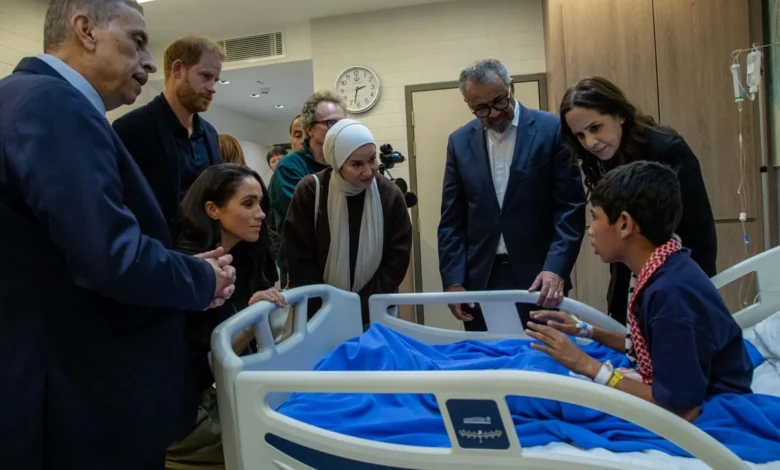
In the morning, Dr. Tedros traveled to a specialized, WHO-supported medical facility actively providing complex clinical care to children evacuated from the Gaza Strip. During the hospital tour, the WHO leader interacted directly with young patients, their families, and the multidisciplinary teams of frontline health workers. These medical professionals are currently managing severe trauma injuries, advanced pediatric oncology cases, and other critical health conditions under immense pressure. The visit forcefully underscored the irreplaceable value of the medical evacuation corridor traversing Jordan, while emphasizing the urgent requirement for sustained international financial and logistical backing to ensure continuity of care.
By mid-afternoon, Dr. Tedros convened a strategic, high-level consultation involving key health sector stakeholders, donor government representatives, United Nations agencies, and prominent international philanthropic organizations. The primary objective of the roundtable was to align financing priorities aimed at reinforcing Jordan’s domestic health infrastructure. Discussions also addressed the scaling up of specialized mental health services and the provision of long-term international burden-sharing for host nations accommodating large-scale refugee populations. Dr. Tedros welcomed the robust collaboration demonstrated by international partners and reiterated the necessity of continued strategic investment in regional health security.
Later in the day, the WHO Director-General held bilateral talks with Jordan’s Minister of Health. The closed-door session concentrated on structural reforms designed to advance universal health coverage across the kingdom. Jordan has increasingly established itself as an international model for integrating primary healthcare frameworks, particularly through the successful institutionalization of mental healthcare into routine clinical settings. This progressive integration is closely supported by the WHO Director-General’s Special Initiative for Mental Health, which aims to bridge treatment gaps in diverse community and emergency environments.
The Involvement of Archewell Philanthropies and Global Mental Health Advocacy
A notable dimension of the state visit was the participation of Prince Harry, Duke of Sussex, and Meghan, Duchess of Sussex. The royal couple accompanied Dr. Tedros on several core engagements in their professional capacities as the founders of Archewell Philanthropies and long-standing strategic partners of the World Health Organization.
Archewell Philanthropies has a documented history of supporting core WHO initiatives, spanning from the equitable global distribution of COVID-19 vaccines to complex emergency medical evacuation programs and community-level mental health interventions. Prince Harry, acting as a prominent global advocate for WHO mental health campaigns, utilized the platform to stress the critical necessity of investing in psychological resilience across crisis-affected populations, with targeted outreach directed toward men, adolescents, and children.
Reflecting on the collaborative mission, Dr. Tedros noted, "I want to thank our partners, including Prince Harry, Duke of Sussex and Meghan, Duchess of Sussex, whose commitment to mental health and humanitarian action has helped bring visibility, resources and hope to some of the world’s most vulnerable communities. Their collaboration is helping to advance WHO’s mission to ensure health for all."
Adding his perspective on the ground in Jordan, Prince Harry remarked: "It is an honour to join the Director-General of the World Health Organization in Jordan, a country that is leading by example in compassion, resilience and innovation. Through our work with Archewell Philanthropies, my wife and I have seen first-hand the impact of WHO’s efforts to support mental health and deliver life-saving care in emergencies. We remain deeply committed to advancing awareness, reducing stigma and expanding access to mental health support for all those affected by conflict and crisis. Mental health is fundamental to recovery, dignity and long-term peace, and we are proud to stand with WHO and partners around the world to make it a global priority."
Background Context: Jordan’s Regional Role and Public Health Landscape
To fully understand the gravity of Dr. Tedros’s state visit, it is essential to examine Jordan’s unique geopolitical and socioeconomic position within the Middle East. Despite facing chronic water scarcity, economic vulnerabilities, and constrained national resources, Jordan has historically maintained an open-door policy for populations displaced by conflict. The kingdom hosts roughly 1.3 million Syrian refugees, hundreds of thousands of refugees of other nationalities, and plays a pivotal transit and treatment role for Palestinians affected by the ongoing hostilities in Gaza.
This demographic reality places an extraordinary burden on Jordan’s public health infrastructure. Hospitals and primary care clinics must operate at or above capacity to absorb external populations without compromising the quality of care delivered to Jordanian citizens. The WHO has consistently partnered with the Ministry of Health to upgrade infrastructure, procure essential pharmaceuticals, train healthcare personnel, and sustain disease surveillance networks capable of preventing outbreaks in densely populated refugee settlements.
Furthermore, the integration of mental health services into primary care represents a visionary policy shift. Historically, psychiatric care in the Middle East has suffered from severe social stigma, institutionalization models, and a distinct lack of trained community-level practitioners. By embedding mental health screenings and psychological first aid into routine primary healthcare visits, Jordan is actively dismantling barriers to treatment, ensuring that trauma survivors, refugees, and vulnerable youth receive holistic care before acute conditions manifest into long-term disabilities.
Anticipated Itinerary for Day Two
As the state visit transitions into its second and final day, Dr. Tedros’s schedule remains dense with high-impact site visits and stakeholder consultations.
The WHO Director-General is scheduled to tour Jordan’s National Center for Rehabilitation of Addicts. Supported technically and operationally by the WHO, the facility represents a comprehensive clinical model that synthesizes medical treatment, psychological counseling, and social reintegration services for individuals struggling with substance use disorders—a critical component of comprehensive public health that frequently intersects with trauma and displacement.
Following this engagement, Dr. Tedros will participate in community-level dialogues with local leaders and prominent women’s rights and development coalitions, including representatives from the Jordanian Hashemite Fund for Human Development (JOHUD). These grassroots interactions are designed to evaluate how community empowerment initiatives intersect with maternal and child health, local resilience, and social welfare programs.
The itinerary will also feature an official visit to the renowned King Hussein Cancer Center (KHCC). Recognized globally as a center of excellence in oncology, KHCC plays an indispensable regional role in advanced cancer treatment, clinical research, and specialized training. Discussions at the center are expected to center on expanding regional access to advanced oncology care, fostering cross-border research collaborations, and strengthening referral pathways for cancer patients from conflict-affected neighboring territories who cannot access specialized oncology care locally.
The state visit will officially conclude with final bilateral briefings involving international humanitarian partners and donor agencies. These closing sessions aim to institutionalize the commitments made during the two-day mission, solidifying Jordan’s status as an indispensable operational hub for medical evacuations, emergency response logistics, and long-term health system resilience across the Eastern Mediterranean region.
Broader Implications and Analytical Outlook
Public health analysts and international relations experts have widely praised the timing and strategic focus of Dr. Tedros’s visit to Amman. In an era marked by compounding global crises—ranging from protracted armed conflicts and climate-induced displacements to systemic economic downturns—the strain on international humanitarian financing has reached critical thresholds.
By directly engaging with King Abdullah II, international donors, and philanthropic partners, the WHO is attempting to transition the discourse from short-term, reactive emergency aid to sustainable, systemic health financing. The challenges facing Jordan are not merely temporary logistical hurdles; they represent a structural reality that requires multi-year international burden-sharing.
The emphasis on mental health is viewed by experts as a particularly forward-looking intervention. In regions marred by intergenerational trauma, ongoing warfare, and systemic displacement, untreated post-traumatic stress disorder (PTSD), depression, and anxiety disorders can severely undermine social cohesion, economic productivity, and peaceful recovery. By championing the integration of psychological support into primary healthcare systems, Jordan and the WHO are establishing a replicable blueprint for post-crisis recovery that other nations facing similar geopolitical pressures may adopt.
Ultimately, the WHO Director-General’s mission to Jordan serves as a powerful reminder of the intersection between political will and public health. As the international community grapples with complex humanitarian emergencies worldwide, the Jordanian model demonstrates that even nations with limited natural resources can achieve remarkable resilience when guided by robust institutional frameworks, compassionate leadership, and unwavering international partnerships.
Related posts: