International Space Station astronaut gives out of this world tribute to honor Star Trek’s 60th anniversary

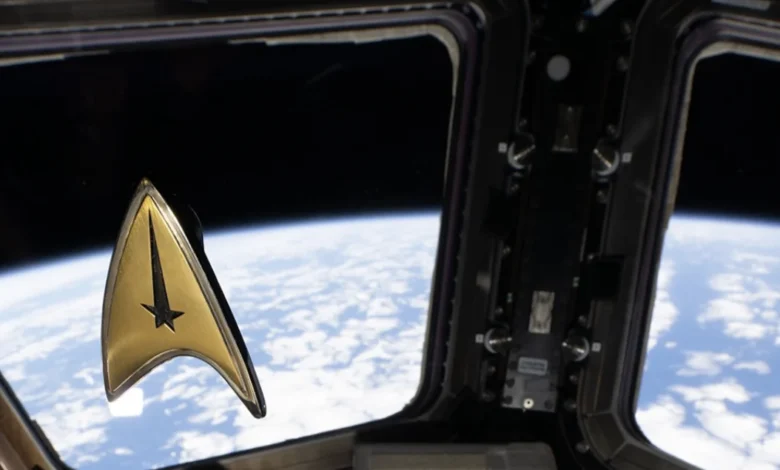
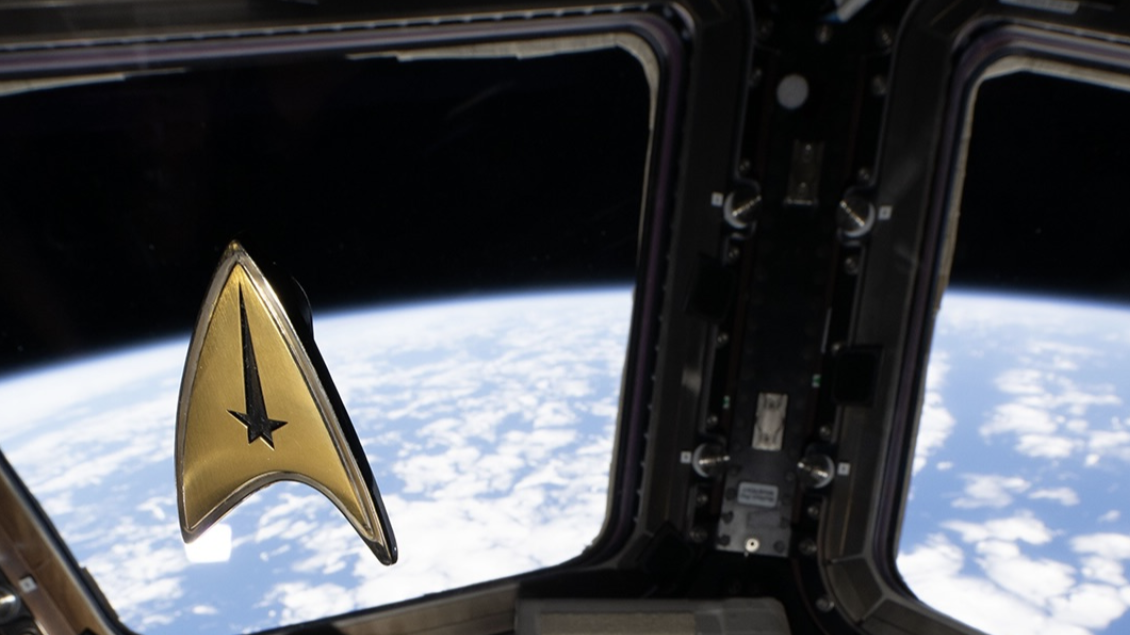
The convergence of science fiction and real-world aerospace achievement reached a symbolic milestone this month as European Space Agency (ESA) astronaut Sophie Adenot showcased a Starfleet delta badge aboard the International Space Station (ISS). The gesture, timed to coincide with the broader lead-up to the 60th anniversary of the Star Trek franchise, serves as more than a piece of pop-culture memorabilia; it represents the enduring influence of Gene Roddenberry’s vision on the generations of engineers, scientists, and explorers who currently maintain a continuous human presence in low Earth orbit.
A Legacy of Exploration at 250 Miles Up
The badge, featured in the modern iteration of the franchise, Star Trek: Strange New Worlds, was captured in high-definition photography floating weightlessly in front of the station’s Cupola module. The imagery—a golden delta emblem set against the curvature of the Earth and the vast darkness of space—encapsulates the thematic bridge between the fictional USS Enterprise and the multi-national crews of the ISS.
Sophie Adenot, a member of the Crew-12 mission who arrived at the station on February 13, 2025, serves as a flight engineer for Expedition 75. Her mission, which is approaching its conclusion as the station prepares for the arrival of the Crew-13 rotation, has been characterized by intensive research in biology, materials science, and human physiology. By wearing the insignia of Starfleet, Adenot has highlighted the role of cultural inspiration in the pursuit of scientific advancement.
Chronology of a Cultural Phenomenon
To understand the significance of this moment, one must look back to the inception of the Star Trek universe. The franchise premiered on September 8, 1966, during a period defined by the height of the Space Race and significant social upheaval in the United States.
- 1966: Star Trek: The Original Series debuts, introducing a diverse bridge crew that challenged prevailing social norms of the era.
- 1976: Gene Roddenberry articulates the "Star Trek Philosophy," emphasizing the importance of diversity and the necessity of human maturity before expansion into the cosmos.
- 1998: The International Space Station construction begins with the launch of the Zarya module, marking the start of a decades-long collaborative effort between space agencies.
- 2023–2025: Various global celebrations begin in anticipation of the franchise’s 60th anniversary in 2026, culminating in collaborative efforts between production studios and space agencies.
- February 2025: Astronaut Sophie Adenot carries the Starfleet emblem to the ISS, physically uniting the fictional and real-world milestones of space exploration.
Scientific and Cultural Symbiosis
The influence of Star Trek on modern spaceflight is well-documented within the aerospace community. Many technologies that are now standard in modern spacecraft—such as touch-screen interfaces, voice-command systems, and tablet-like computers—were popularized by the aesthetic of the series long before they became engineering realities.
However, the impact of the franchise extends beyond hardware. It has fostered a "techno-optimistic" culture among the workforce at organizations like NASA, the ESA, and SpaceX. According to internal feedback from several space advocacy groups, the show’s emphasis on "international cooperation" provided a conceptual framework that influenced the design of the ISS, which relies on the interdependence of the United States, Russia, Europe, Japan, and Canada.
In her remarks from the Columbus laboratory module, Adenot noted the parallels between the mission of the ISS and the narrative arc of Star Trek. "For me, exploration and science are about curiosity and cooperation, daring to go a little farther together, learning from what we discover and build, and turning that knowledge into a better future for everyone," Adenot stated in a video release.
Official Responses and Institutional Alignment
The European Space Agency has leaned into this association, releasing official statements that bridge the gap between fictional narrative and institutional mission. In an official social media communication, the ESA stated, "Science fiction imagines the future. We build it."
This alignment is part of a broader strategy to engage the public with the complexities of orbital research. By utilizing recognizable symbols like the Starfleet badge, agencies can communicate the abstract benefits of space research to a demographic that might otherwise feel detached from high-level physics or orbital mechanics. The imagery of the badge floating in the Cupola serves as a visual metaphor for the transition of space from a realm of military and nationalistic competition to one of collaborative scientific inquiry.
Fact-Based Analysis: The Implications of Inspiration
While the presence of a Starfleet badge in space may appear to be a simple public relations exercise, it holds deeper implications for the future of space exploration. As humanity looks toward potential missions to Mars and the permanent establishment of lunar bases, the "soft power" of space exploration becomes increasingly critical.
- Workforce Development: The "Star Trek effect" continues to inspire students to pursue STEM (Science, Technology, Engineering, and Mathematics) fields. With the global space economy projected to reach $1.8 trillion by 2035, the need for a motivated, inspired workforce is greater than ever.
- Diplomatic Frameworks: The fictional model of the "United Federation of Planets" acts as an aspirational template for the Artemis Accords and other international treaties governing lunar and planetary resource extraction.
- Public Support: Sustained funding for space agencies is often tied to public perception. Connecting the ISS mission to a beloved 60-year-old cultural touchstone helps maintain the political capital necessary for long-term budget appropriations.
The Philosophy of Diversity in Orbit
The late Gene Roddenberry, when discussing the philosophy of the show in 1976, argued that the primary challenge for humanity was not the development of warp drive or advanced weaponry, but the development of empathy. "The whole show was an attempt to say that humanity will reach maturity and wisdom on the day that it begins not just to tolerate, but to take a special delight in differences in ideas and differences in life forms," he noted.
The ISS, which currently houses a rotating international crew, is perhaps the most accurate real-world implementation of this philosophy. Astronauts must live in confined, high-stress environments where differences in culture, language, and background must be navigated with extreme precision to ensure mission success. The presence of the Starfleet badge is a nod to this reality: that the "final frontier" is not just a place to be conquered, but a context in which humanity must evolve to survive.
Looking Toward the Future
As the ISS program moves closer to its projected retirement in the early 2030s, the symbolic importance of these gestures grows. The transition from the ISS to private, commercial space stations will require a new generation of explorers who are as culturally literate as they are technically proficient.
Sophie Adenot’s mission, and her decision to bring a piece of science fiction history to the station, marks a moment of reflection for the global space community. As we approach the 60th anniversary of the franchise in 2026, the lines between the "Star Trek future" and the reality of 21st-century spaceflight continue to blur. Whether through the design of new docking mechanisms or the spirit of international collaboration that characterizes the current expedition, the goal remains the same as it was in 1966: to explore, to discover, and to do it together.