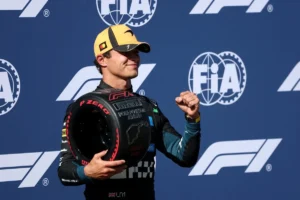
Lando Norris secures a stunning pole position at the Spanish Grand Prix with a masterclass qualifying performance

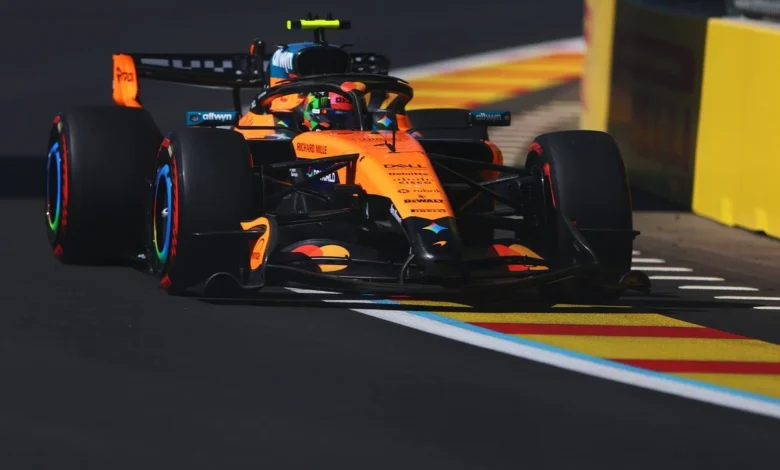
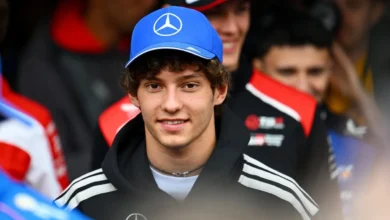
The Circuit de Barcelona-Catalunya, a venue renowned for its technical demand and punishing reliance on aerodynamic efficiency, played host to one of the most remarkable qualifying sessions in recent Formula 1 history. McLaren’s Lando Norris, defying the prevailing weekend narrative that had seen the papaya-colored cars struggling for outright pace, clinched pole position for the Spanish Grand Prix by a razor-thin margin of 0.011 seconds over Mercedes’ rising star Kimi Antonelli.
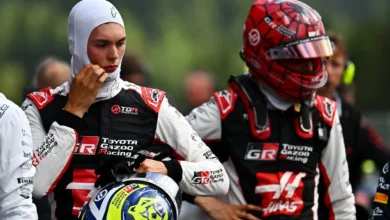
For much of the weekend, the hierarchy appeared firmly established. Mercedes had dominated the practice sessions, showing a level of composure and speed that left Ferrari and Red Bull Racing fighting for the scraps of the front-running pace. McLaren, meanwhile, seemed to be laboring, consistently finding themselves a few tenths of a second off the pace of the leaders during the opening segments of qualifying.
A Session Defined by Incremental Gains
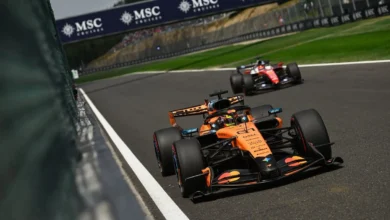
The road to pole position was far from linear for the British driver. In the opening phases of the qualifying hour, McLaren struggled to find the setup window that would allow them to compete with the sheer velocity of the Mercedes and Ferrari entries. During Q1 and Q2, the Silver Arrows and the RB20s dictated the tempo, leaving the McLaren garage to contemplate a mid-pack start.
As the field transitioned into the high-stakes environment of Q3, the pressure to deliver a singular, perfect lap intensified. On his initial flying lap, Norris found himself languishing in sixth position, a staggering 0.446 seconds adrift of Lewis Hamilton, who appeared to have secured a stranglehold on the top spot. The deficit underscored the difficulty McLaren had faced in balancing low-speed traction with high-speed cornering stability throughout the weekend.

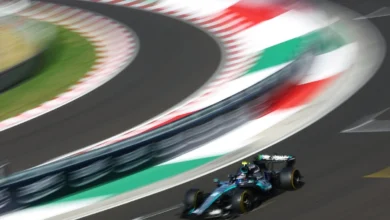
The decisive moment arrived during the final seconds of Q3. In an extraordinary display of driving, Norris shaved 0.701 seconds off his previous effort. The lap was a paradox of precision and volatility; while the majority of the circuit was navigated with near-perfect technical accuracy, the final corner saw the car twitch, with the rear end threatening to break away entirely.
The Moment of Uncertainty
The radio exchange immediately following the checkered flag captured the high-stress nature of the sport. Norris, convinced he had squandered his chance, was heard venting his frustration, telling race engineer Will Joseph, “Sorry, I fucked up, man.” His skepticism persisted even as Joseph attempted to provide reassurance, waiting for the remaining cars to complete their laps. When the news of his pole position finally trickled through, Norris’s reaction was one of pure disbelief, bordering on confusion.
“By the last corner, I just had a little moment,” Norris reflected later. “I think I got a bit excited in the car, and I just overpushed the entry. Honestly, I thought I was in the wall. Luckily, it is a short run to Turn 1, which saved the overall time.”
Technical Analysis: Precision Amidst Wear
Andrea Stella, the McLaren team principal, provided a candid assessment of the feat. Stella, who has witnessed decades of telemetry across hundreds of Grands Prix, described the effort as one of the most impressive laps he has ever seen.
“We were not performing to the level of scoring a pole position,” Stella admitted. “At no stage during the weekend did we demonstrate that the car was at the level of being the best. We were lacking significantly in the first sector, specifically in the low-speed corners and in how we handled the kerbing. It was a very difficult car to nail.”

According to Stella, the error in the final corner was a direct consequence of the extraordinary speed Norris had carried through the rest of the lap. The tires, having reached the end of their optimal performance window, were unable to sustain the immense energy the car was generating.
“The lap was coming in one second faster than any other lap, so there was a lot more extracted from the tires,” Stella explained. “Lando did not take into account that the tires were tired and entered the corner with the same impetus he had used elsewhere. He paid the price for his own aggression, losing three-tenths of a second in that one corner alone. Without that, it would have been a dominant pole.”
Comparative Performance and Team Dynamics
The contrast within the McLaren garage was stark. While Norris found the elusive limits of the MCL38, his teammate Oscar Piastri finished the session in seventh place, 0.470 seconds behind. This gap highlights the difficulty of the circuit and the necessity of finding a perfect balance, something that only the most dialed-in drivers were able to achieve under the extreme pressure of the final Q3 runs.
The performance of Kimi Antonelli, who missed pole by the narrowest of margins, signals a significant shift in the competitive landscape. As a young talent pushing a Mercedes that has clearly regained its championship-contending form, Antonelli’s ability to remain within 0.011 seconds of Norris suggests that the upcoming race will be a multi-team battle, with Mercedes, McLaren, and potentially Ferrari all capable of securing the top step of the podium.
Broader Implications for the Season
The result at the Spanish Grand Prix serves as a pivotal marker in the 2026 season. For McLaren, it proves that their car is capable of overcoming significant setup challenges through sheer driver effort and tactical execution. For Norris, securing pole position from a seemingly compromised position validates his status as a championship contender capable of extracting performance when the data suggests it should not be possible.

The race itself will be defined by tire management—a factor that Stella identified as the primary challenge for Sunday. With the rear tires having reached their thermal limit during the qualifying effort, the race pace will likely be dictated by which driver can manage the degradation over the long stints. The short run to Turn 1, which Norris noted as a relief following his final corner slide, will be the first major flashpoint of the Grand Prix.
As the paddock prepares for the race, the consensus is that the grid is more competitive than it has been in years. The technical precision required to navigate the Circuit de Barcelona-Catalunya has exposed the fine margins between the top teams. For McLaren, the challenge now shifts from finding the speed to maintaining it, as they look to defend their hard-won starting position against a hungry field eager to capitalize on any further slip-ups.
This weekend in Spain has not only reshuffled the hierarchy but has also provided a masterclass in how individual skill can compensate for technical shortcomings. As the lights go out on Sunday, the focus will turn from the telemetry charts and the “meter-by-meter” execution of the qualifying lap to the brutal reality of wheel-to-wheel racing. With the field separated by such minuscule margins, the Spanish Grand Prix promises to be a race where the smallest error—or the smallest moment of brilliance—will decide the outcome.
Related posts: