WHO Director-General Highlights Vital Role of Philanthropy in Global Health Architecture at Singapore Summit

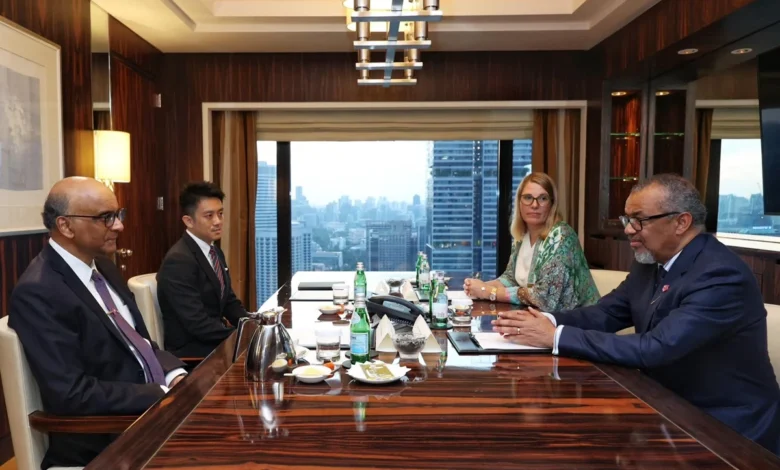
Philanthropic partnerships have increasingly become a cornerstone of international public health strategy, serving as a catalyst for systemic transformation, pandemic preparedness, and equitable healthcare access across the globe. This critical nexus between private giving and multilateral public health governance took center stage during the recent Philanthropy Asia Summit, held in Singapore from May 5 to May 7, 2025. Addressing international delegates, policy-makers, and philanthropic leaders, World Health Organization (WHO) Director-General Dr. Tedros Adhanom Ghebreyesus delivered a compelling address emphasizing that private philanthropic engagement is no longer merely supplemental, but fundamentally indispensable to achieving global health security and universal health coverage in an era defined by compounding geopolitical, economic, and environmental crises.
The high-level gathering, hosted by the Temasek Foundation and the Philanthropy Asia Alliance, served as a vital platform for aligning private sector capital with public health mandates. Against the backdrop of a rapidly shifting global health landscape—marked by the lingering vulnerabilities exposed by past pandemics, the accelerating impacts of climate change on human health, and persistent systemic inequalities—Dr. Tedros articulated a vision of collaborative multilateralism. His remarks underscored how strategic philanthropic investments can bridge critical financing gaps, foster country-level self-reliance, and accelerate progress toward the WHO’s overarching objective: realizing the highest attainable standard of health as a fundamental human right for all people, rather than a privilege reserved for the fortunate few.
Main Facts and Core Takeaways
At the heart of the discourse in Singapore was the evolving role of philanthropic foundations and high-net-worth donors in shaping the architecture of global health. Traditional financing models, largely reliant on assessed and voluntary contributions from sovereign member states, have faced mounting fiscal constraints in recent years. Economic slowdowns, shifting domestic political priorities, and competing demands for international development aid have strained public budgets, making it imperative for organizations like the WHO to diversify their funding streams.
Dr. Tedros specifically acknowledged the leadership of Singapore and the Temasek Foundation, noting that they were among the pioneering entities to pledge substantial support to the WHO’s ongoing Investment Round. This innovative financing mechanism is designed to secure predictable, flexible, and sustainable resources, enabling the organization to execute its Fourteenth General Programme of Work effectively. By expanding its donor base to include strategic philanthropic partners, the WHO aims to insulate its critical health operations from budgetary volatility while maximizing the impact of every dollar invested.
Furthermore, the Summit highlighted how philanthropic contributions extend far beyond financial capital. Private foundations often bring operational agility, entrepreneurial risk tolerance, and specialized expertise that traditional bureaucratic structures may lack. Whether accelerating vaccine research and distribution, strengthening primary healthcare delivery in low- and middle-income countries, or deploying rapid-response networks during health emergencies, philanthropic partners play an invaluable role in complementing and amplifying the efforts of governments and international agencies.
Chronology and Background of the Event
The convergence of global health governance and Asian philanthropy at the May 2025 Summit represents the culmination of a multi-year strategic pivot within the international development community. Over the past decade, Asia has emerged not only as an economic powerhouse but also as a burgeoning epicenter for strategic philanthropy, with family offices, corporate foundations, and regional alliances increasingly directing their resources toward cross-border social and environmental challenges.
The genesis of the Philanthropy Asia Summit lies in the growing recognition that regional challenges—ranging from tropical disease burdens to climate-induced health crises—require coordinated, multi-stakeholder interventions. Over successive annual iterations, the Summit has evolved from a regional dialogue into a premier international forum, drawing global leaders, scientists, and civil society advocates to Singapore.
In the lead-up to the May 2025 gathering, the global health community had been intensely focused on restructuring international health financing. The launch of the WHO’s Investment Round marked a critical milestone in this timeline, seeking to secure sustainable funding for the organization’s strategic priorities spanning 2025 through 2028. Within this chronological framework, Singapore’s early endorsement and financial commitment at the Summit provided a vital psychological and financial boost to the campaign, setting a benchmark for other regional and international donors. During the three-day event, participants engaged in rigorous plenary sessions, thematic deep-dives, and bilateral consultations, culminating in renewed commitments toward pandemic prevention, preparedness, and response (PPPR) and universal health coverage (UHC) initiatives across the Asia-Pacific region and beyond.
Supporting Data and the Economics of Health Philanthropy
To understand the profound impact of philanthropic engagement in global health, one must examine the macroeconomic realities governing modern health systems. According to recent public health financing data, public domestic expenditures remain the primary driver of health systems in most nations; however, low-income countries continue to face a staggering per capita health spending deficit. The World Health Organization estimates that scaling up primary health care in low- and lower-middle-income countries requires sustained investments amounting to hundreds of billions of dollars annually.
While official development assistance (ODA) provides a crucial cushion, philanthropic contributions have demonstrated a unique capacity to target high-yield, catalytic interventions. Historical data from major global health initiatives indicates that private philanthropic organizations—such as the Bill & Melinda Gates Foundation, Bloomberg Philanthropies, the Wellcome Trust, and regional entities like the Temasek Foundation—have collectively injected tens of billions of dollars into global health over the past two decades.
Crucially, philanthropic capital often functions as "smart money." Because private donors are typically less constrained by rigid fiscal year cycles and bureaucratic procurement rules than sovereign governments, they can deploy funds rapidly during acute crises, such as disease outbreaks or natural disasters. Moreover, philanthropic funding heavily subsidizes research and development (R&D) for neglected tropical diseases, orphan drugs, and innovative diagnostic tools. Market-driven pharmaceutical R&D frequently overlooks these areas due to low commercial return on investment; philanthropic grants absorb the initial financial risk, incentivizing academic institutions and biotech innovators to develop life-saving interventions for vulnerable populations.
Official Responses and Stakeholder Perspectives
The strategic alignment between multilateral health agencies and philanthropic actors has generated widespread discussion across the global health ecosystem. Leaders attending the Singapore Summit echoed Dr. Tedros’s sentiments regarding the necessity of cross-sectoral collaboration.
Highlighting Singapore’s enduring commitment to global public health, His Excellency President Tharman Shanmugaratnam emphasized the moral and strategic imperative of investing in resilient health systems. In discussions during the Summit, Singaporean officials underscored that global health security is indivisible; an outbreak or health vulnerability anywhere constitutes a potential threat everywhere. By positioning Singapore as a trusted neutral hub for multilateral dialogue and philanthropic innovation, the nation’s leadership has continually reinforced its dedication to supporting the WHO’s normative and operational mandates.
Representatives from the Temasek Foundation and the Philanthropy Asia Alliance also articulated their strategic vision during the event. Speaking on behalf of regional philanthropic networks, organizers stressed that modern philanthropy must evolve from traditional charity into proactive, systems-level impact investing. This entails empowering local communities, fostering indigenous research and manufacturing capabilities—such as regional vaccine production hubs—and ensuring that technological advancements in medicine are equitably distributed rather than concentrated exclusively in wealthy nations.
Civil society organizations and global health advocates have generally welcomed the increasing engagement of philanthropic actors, viewing them as essential allies in holding governments accountable and driving innovation. However, academic analysts and public health watchdogs have also emphasized the importance of transparency, alignment with national health priorities, and adherence to WHO normative guidance. Ensuring that private funding supports nationally led health plans—rather than creating fragmented, donor-driven vertical programs—remains a central governance priority for the international community.
Broader Impact and Implications for Global Health Equity
The implications of the partnerships forged at the Philanthropy Asia Summit extend far beyond immediate financial commitments. As the global community navigates the Fourteenth General Programme of Work, the WHO’s strategic roadmap relies heavily on leveraging diverse stakeholder strengths to maximize public health impact.
One of the most significant implications of increased philanthropic participation is its potential to accelerate progress toward Universal Health Coverage (UHC). By channeling resources into primary healthcare strengthening—focusing on community health worker training, digital health infrastructure, and resilient supply chains—philanthropic investments help build the foundational shock absorbers that societies need to withstand future pandemics and climate shocks. Furthermore, strategic advocacy supported by philanthropic networks plays a vital role in keeping health equity at the forefront of the global political agenda, countering isolationist tendencies, and fostering international solidarity.
In conclusion, the convergence of multilateral health governance and dynamic regional philanthropy, as witnessed in Singapore in May 2025, marks a pivotal chapter in the evolution of international public health. By combining the normative authority and global reach of the World Health Organization with the agility, capital, and innovation of philanthropic partners, the global community is better equipped to confront the complex health challenges of the 21st century. As Dr. Tedros emphasized throughout his address, realizing the vision of health as a universal human right requires an unprecedented level of collective resolve, financial innovation, and enduring partnership across all sectors of society.
Related posts: