Harnessing the Tumor’s Own Microbes: UIC Researchers Unveil Novel Bacterial Protein Therapy Targeting Cancer’s Energy Supply

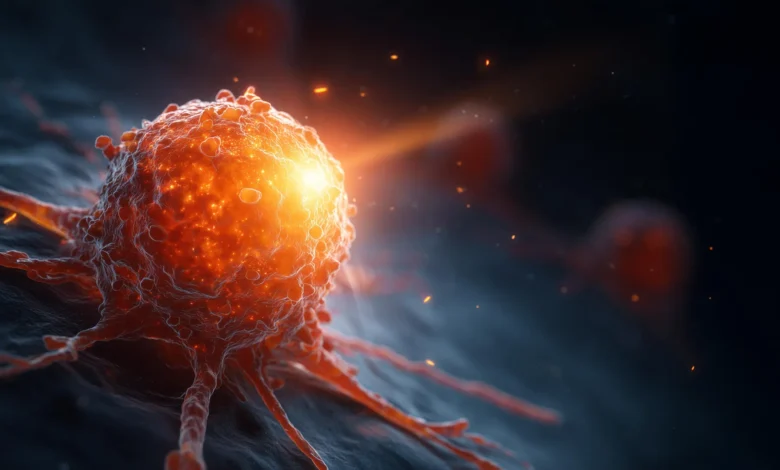
Researchers at the University of Illinois Chicago (UIC) have unveiled a groundbreaking experimental cancer treatment derived from bacteria that naturally inhabit the tumor microenvironment. This innovative therapy, built upon a fragment of a bacterial protein, has demonstrated significant promise in preclinical studies, particularly when combined with radiation treatment for prostate cancer. The approach targets the very energy production mechanisms within cancer cells, effectively starving them of the fuel required for unchecked proliferation.
The core of this novel therapy is a small peptide fragment of a bacterial protein named aurB. Findings published in the esteemed journal Signal Transduction and Targeted Therapy detail how aurB functions by disrupting the energy-generating processes within the mitochondria of tumor cells. Mitochondria, often referred to as the "powerhouses" of the cell, are crucial for cellular survival and function. Cancer cells, known for their aggressive and rapid growth, often exhibit altered mitochondrial numbers and heightened activity to meet their substantial energy demands. This makes them an attractive and logical target for therapeutic intervention.
"The mitochondria are very important for a cell to survive; they are the energy factories," explained Tohru Yamada, the senior author of the study and an associate professor in the departments of surgery and biomedical engineering at UIC, who is also affiliated with the University of Illinois Cancer Center. "Many cancer cells exhibit altered mitochondrial number and activity, because a cancer cell has to grow aggressively and rapidly. Therefore, the mitochondria would be an ideal target for cancer therapy."
The Genesis of a Bacterial Approach: Beyond p53 Limitations
The concept of leveraging naturally occurring compounds from tumor-dwelling bacteria is not entirely new. For years, scientists have recognized the complex ecosystems within tumors, known as the tumor microenvironment, and have begun to explore the potential of these resident microorganisms to yield therapeutic agents.
Yamada’s laboratory had previously identified a bacterial protein belonging to the cupredoxin family, which showed potential in suppressing tumor growth. Cupredoxins are a class of copper-containing proteins involved in electron transfer processes within cells. Building upon this discovery, the team developed a peptide-based drug and subjected it to rigorous testing, including clinical trials in adult patients and studies focusing on pediatric brain cancers.
However, a significant limitation of this earlier peptide therapy was its reliance on the p53 gene. The p53 gene is a critical tumor suppressor, and its function is frequently compromised through mutations in various cancer types. The variability in p53 mutations among patients meant that the effectiveness of the peptide could differ significantly, leading to a less predictable and universally applicable treatment.
"We wanted to have an anti-cancer agent that doesn’t use the p53 function," Yamada stated, highlighting the motivation to develop a therapeutic strategy that bypassed this common genetic vulnerability in cancer.
Targeting the Energy Hub: AurB’s Mechanism of Action
To overcome the limitations of p53-dependent therapies, the researchers embarked on a mission to find a bacterial protein that could exert its anti-cancer effects by targeting mitochondria, rather than relying on the p53 pathway. This quest led them to another cupredoxin protein with a distinct mechanism.
The current study involved a comprehensive analysis of tumor samples obtained from breast cancer patients. Utilizing advanced DNA sequencing techniques, the researchers meticulously identified the bacterial species residing within these tumors. Among the identified bacteria, one species garnered particular interest due to its possession of a cupredoxin protein known as auracyanin. This protein was found to perform a function analogous to the previously studied cupredoxin, but with a crucial difference in its target.
Based on the structural and functional insights gained from auracyanin, the research team designed a novel peptide, which they christened aurB. Laboratory experiments provided compelling evidence that aurB possesses the ability to penetrate the mitochondria of tumor cells. Once inside, it selectively binds to ATP synthase, a pivotal protein complex responsible for the synthesis of adenosine triphosphate (ATP), the universal energy currency of cells. By interfering with ATP synthase, aurB effectively cripples the tumor cells’ ability to produce energy, thereby inhibiting their growth and proliferation.
Striking Results in Preclinical Prostate Cancer Models
The efficacy of aurB was rigorously evaluated in various preclinical settings. This included testing in cancer cell lines that lacked functional p53, demonstrating its independence from this critical gene. Furthermore, the peptide was tested in sophisticated mouse models of hormone therapy-resistant prostate cancer, a particularly challenging form of the disease.
In a significant finding, when aurB was administered in conjunction with radiation therapy – a standard and widely utilized treatment for prostate cancer – it produced a substantial and encouraging reduction in tumor growth. Crucially, this therapeutic synergy was achieved without evidence of significant toxicity, a vital consideration for any new cancer treatment.
"The combination significantly enhanced the activity of the peptide and the tumor became much smaller," remarked Yamada. "This approach is promising. Using a well-established tibial bone metastatic model, we demonstrated significant inhibition of tumor growth, preclinically." The use of a metastatic model is particularly noteworthy, as it simulates the spread of cancer, a key factor in disease severity and patient prognosis. The ability of aurB to inhibit tumor growth in such a context suggests its potential to combat advanced stages of cancer.
A Promising Future: Patenting and Clinical Trials on the Horizon
The potential of this novel bacterial therapy has not gone unnoticed by the scientific and commercial sectors. UIC has taken steps to protect this intellectual property by patenting aurB, with support from the university’s Office of Technology Management. This patenting process is a crucial step in translating laboratory discoveries into viable clinical treatments.
The researchers are now actively exploring opportunities to advance aurB into human clinical trials. This transition from preclinical studies to human testing is a rigorous and lengthy process, involving multiple phases designed to assess safety, dosage, and efficacy in cancer patients. The successful completion of these trials would pave the way for aurB to become a new therapeutic option for cancer patients.
Beyond the immediate promise of aurB, Dr. Yamada believes that auracyanin may represent just the tip of the iceberg. The vast diversity of bacterial proteins remains largely unexplored, and many of these could hold the key to developing future generations of cancer therapies. The tumor microenvironment, a complex and dynamic ecosystem, likely harbors a treasure trove of bioactive molecules with untapped therapeutic potential.
"There are many other bacterial proteins that could be source of cancer drugs," Yamada emphasized. "We simply haven’t tried them yet." This statement underscores the immense potential for further discoveries in this field, opening new avenues for research and development in the fight against cancer.
The collaborative nature of scientific research is evident in this study. Yamada’s work was supported by colleagues from the College of Medicine and UI Health. Specific contributions were acknowledged from members of the Department of Surgery, including Drs. Martin Borhani, Aslam Ejaz, Ajay Rana, Enrico Benedetti, and Tapas K. Das Gupta, whose expertise was instrumental to the project’s success. Additional UIC authors who contributed to the study include Dr. Samer A. Naffouje, Duy Binh Tran, Konstantin Christov, Albert Green, Ngoc Hai Trieu Phong, and Dr. Tapas K. Das Gupta from the College of Medicine, along with Weiguo Li from the College of Engineering. This multidisciplinary effort highlights the complex nature of developing novel therapeutics and the importance of diverse expertise.
Broader Implications and Future Directions
The development of aurB represents a significant paradigm shift in cancer therapy, moving away from solely targeting human cellular pathways to leveraging the inherent biological machinery of microbial inhabitants within tumors. This approach holds several key advantages:
- Novel Mechanism of Action: By targeting mitochondrial ATP production, aurB offers a distinct mechanism that could be effective against cancers resistant to conventional therapies, including those that have developed resistance to p53-dependent treatments.
- Reduced Off-Target Effects: The specific targeting of tumor cell mitochondria, particularly those with altered energy metabolism, could potentially lead to fewer side effects compared to therapies that broadly impact healthy cells.
- Exploration of the Microbiome: This research opens up a vast frontier for exploring the therapeutic potential of the human microbiome, not just in the context of cancer but also for a wide range of diseases. The intricate symbiotic relationships between humans and their microbial inhabitants are increasingly recognized for their profound impact on health.
- Synergistic Therapies: The demonstrated synergy between aurB and radiation therapy suggests that this bacterial protein could be a valuable addition to existing treatment regimens, potentially enhancing their effectiveness and improving patient outcomes.
The journey from a laboratory discovery to a clinically approved treatment is arduous and often spans many years. However, the promising preclinical data and the patenting of aurB signal a strong commitment to advancing this therapy. The ongoing exploration of other bacterial proteins further solidifies UIC’s position at the forefront of innovative cancer research. As our understanding of the tumor microenvironment deepens, therapies derived from these complex biological interactions are poised to play an increasingly vital role in the future of oncology. The prospect of harnessing the power of microbes that have co-evolved with cancer itself offers a beacon of hope for developing more effective and targeted cancer treatments.