Trump is Proposing a US Space Academy: If Created It Could Blur the Lines Between NASA and the Military


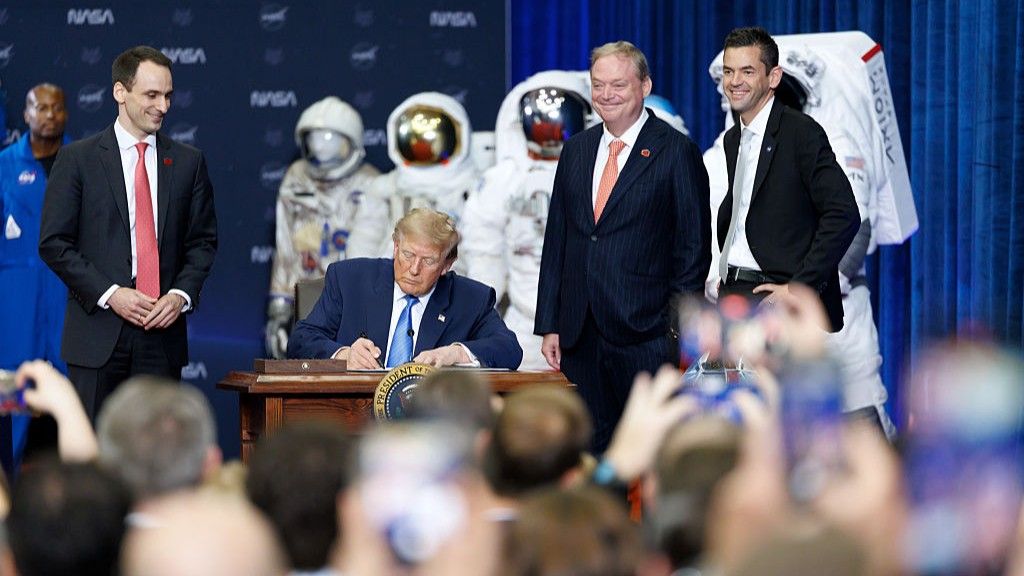
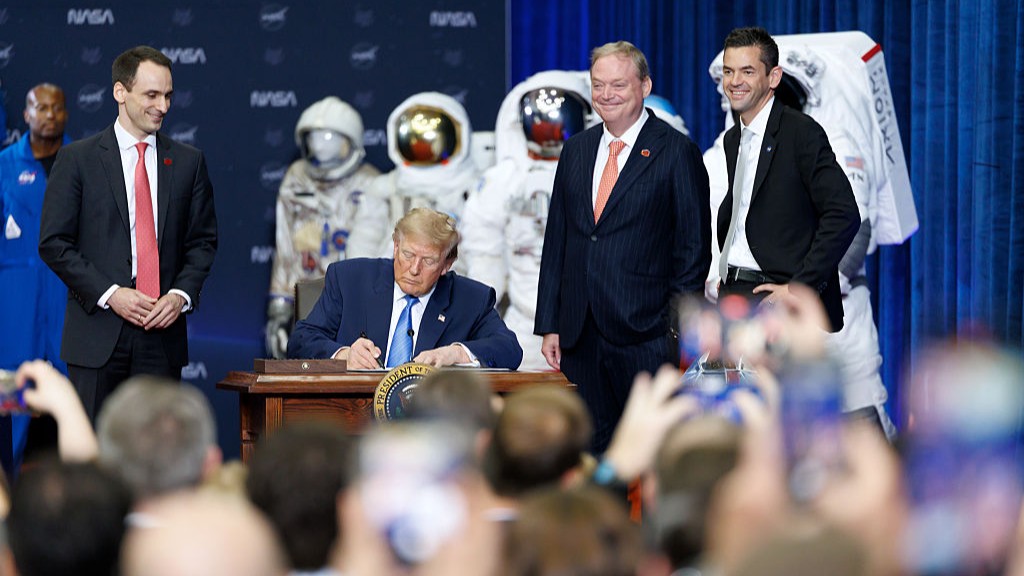
On August 28, 2026, President Donald Trump visited the Johnson Space Center in Houston, Texas, to announce a bold shift in American aerospace policy. During the event, the President signed an executive order initiating the formal study and potential establishment of the United States Space Academy. This proposed institution is envisioned as a premier training ground for future leaders in the civilian space sector, the burgeoning commercial industry, and the United States Space Force. However, the proposal has ignited an immediate debate among policymakers, defense analysts, and space experts regarding the long-standing separation between civilian scientific exploration and national security objectives.
A Chronology of Modern Space Policy Shifts
The call for a dedicated space academy marks the latest in a series of ambitious space-focused initiatives undertaken during the Trump administration. Since 2017, the U.S. government has prioritized a "Return to the Moon" strategy, officially codified through the Artemis program. This international effort, which seeks to establish a sustainable human presence on the lunar surface, serves as a cornerstone for future missions to Mars and beyond.
In 2018, the administration pivoted toward a more assertive posture regarding orbital security, floating the concept of a military branch specifically dedicated to space dominance. By December 2019, this vision became a reality with the formal establishment of the United States Space Force—the first new military branch created in over seven decades. The 2026 proposal for a Space Academy serves as an institutional extension of this momentum, suggesting that the United States is shifting from a policy of mere exploration to one of comprehensive space-domain mastery.
The Anatomy of the Executive Order
The executive order signed in Houston does not immediately break ground on a campus. Instead, it creates a high-level commission tasked with evaluating the feasibility, mission, and operational structure of the proposed academy. The commission is mandated to deliver a comprehensive report to the White House within 120 days.
This commission is led by NASA Administrator Jared Isaacman and includes a cross-section of the U.S. national security apparatus, including the Secretary of Defense, the National Security Advisor, and the Director of the Office of Management and Budget. The stated goal is to develop a "professional corps of civically grounded leaders" capable of navigating the complex intersection of private industry, government research, and national defense. As currently described, the institution would be the first federal academy under NASA’s purview, distinct from the military service academies like West Point or the Naval Academy, which are primarily designed to commission military officers.
Data and Financial Realities
The logistical and financial hurdles facing the proposed academy are substantial. While historical data on the precise operational costs of existing service academies vary, estimates from legislative analysts suggest that maintaining a single military service academy typically requires roughly $1 billion in annual funding. Scaling a new institution from the ground up would likely require an initial capital expenditure significantly higher than that, alongside recurring operational costs.
Budgetary constraints pose a significant risk to the project. Unlike mandatory spending obligations, NASA’s funding is subject to the annual congressional appropriations process. Historically, NASA has often faced budgetary volatility, making it a target for fiscal hawks during periods of deficit reduction. Relying on NASA’s budget to fund a massive educational institution could theoretically divert resources away from core scientific endeavors, such as the James Webb Space Telescope’s successors, Earth observation missions, or deep-space exploration technology.
The Civilian-Military Divide: A Historical Perspective
Since the creation of NASA via the National Aeronautics and Space Act of 1958, American space policy has been predicated on a clear, if sometimes porous, separation between civilian exploration and military operations. This distinction was designed to project "soft power" and ensure that international scientific collaboration—such as the International Space Station—remained insulated from the geopolitical tensions that characterize defense-related activities.
Critics of the proposed academy argue that blending these missions under a single educational umbrella risks damaging that delicate balance. If a NASA-led academy begins to prioritize military-adjacent curricula or requires service commitments to the Space Force, it could undermine the perception of NASA as a neutral scientific agency. This could complicate international partnerships, particularly with nations that view the U.S. space program as increasingly militarized.
Official Responses and Legislative Challenges
While the administration champions the academy as a necessity for the future of the space economy, reactions from Capitol Hill and the scientific community have been cautious. Former NASA officials have expressed concerns regarding the "mission creep" that such an institution might entail. If the Academy becomes a primary pipeline for Space Force personnel, the civilian identity of the institution will likely be overshadowed by military rigor and protocols.
Furthermore, the legislative path forward is anything but guaranteed. Congress holds the "power of the purse," and any formal establishment of a federal agency or academy requires an act of Congress. Lawmakers will need to determine if the benefits of a dedicated space-centric education outweigh the cost and potential geopolitical downsides. There is also the question of redundancy: the United States already hosts world-class aerospace engineering programs at universities like MIT, Georgia Tech, and the University of Colorado, as well as specialized training at the Air Force Institute of Technology.
Broader Implications and Strategic Importance
The rapid proliferation of satellite technology—from SpaceX’s Starlink to the critical reliance on the Global Positioning System (GPS)—has transformed space into a vital economic theater. As the environment becomes more crowded, the demand for personnel trained in space traffic management, cybersecurity for orbital assets, and the unique legal framework of space law is growing exponentially.
From a strategic standpoint, a dedicated academy could standardize training for this new workforce. If the U.S. intends to remain the global leader in space, it must address the shortage of skilled professionals capable of operating in a domain where the margin for error is zero. However, the challenge lies in defining the academy’s scope. If the curriculum remains focused on engineering, physics, and international policy, it could become an invaluable asset. If it becomes a vehicle for military training, it may inadvertently accelerate the "militarization of space" narrative, potentially triggering an arms race in orbit.
Conclusion
The proposal for a United States Space Academy captures the zeitgeist of an era where space is no longer just a frontier for exploration, but a domain for national competition and economic necessity. While the vision of a "Starfleet Academy" for the modern age resonates with the public, the reality is far more complex. The commission tasked with the 120-day review will have to navigate a minefield of policy, funding, and diplomatic considerations.
Ultimately, the success of such an institution will depend on its ability to define its primary objective. If it can foster a culture that respects the separation of science and defense while meeting the urgent workforce needs of the 21st century, it could become a transformative institution. If, however, it remains ambiguous in its mission, it risks becoming a source of institutional friction that could complicate American space policy for decades to come. The decision now rests on whether Congress is willing to provide the substantial resources required to turn an executive vision into a functional reality.