Global Hunger Trends Show Uneven Progress as Africa and Western Asia Face Escalating Food Insecurity

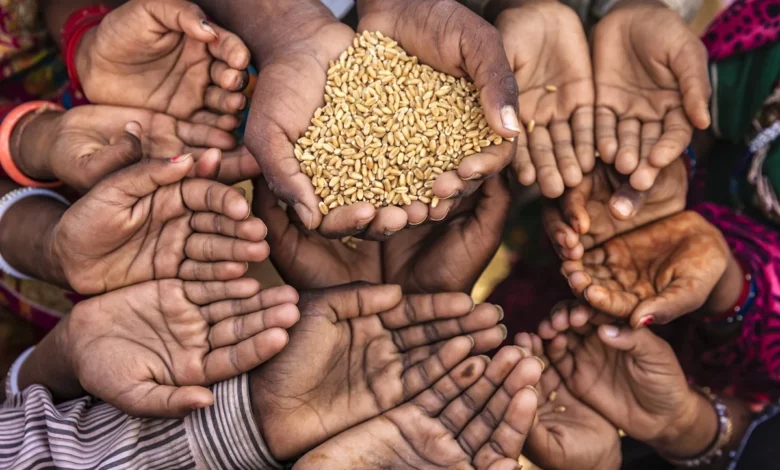
The landscape of global food security remains a fractured mosaic of marginal recovery and deepening crisis. According to the 2025 edition of The State of Food Security and Nutrition in the World (SOFI), an annual report spearheaded by five specialized United Nations agencies, global hunger has experienced a slight decline, yet this aggregate progress masks a harrowing reality for millions of people across Africa and western Asia. While the world saw a modest reduction in the total number of undernourished individuals last year, the persistence of localized food crises, driven by a volatile mix of climate change, armed conflict, and post-pandemic economic fallout, continues to threaten the international community’s commitment to achieving Zero Hunger by 2030.
The report, released by the Food and Agriculture Organization (FAO) in coordination with the International Fund for Agricultural Development (IFAD), the World Food Programme (WFP), UNICEF, and the World Health Organization (WHO), indicates that approximately 673 million people—roughly 8.2 percent of the global population—suffered from chronic hunger in 2024. This figure represents a slight improvement from the 8.5 percent recorded in 2023 and the 8.7 percent peak in 2022. However, the raw data reveals that between 638 and 720 million people remain trapped in a cycle of food scarcity, a number that the United Nations warns is significantly higher than the pre-pandemic levels of 2019.
A Chronology of Global Food Instability
To understand the current state of nutrition, one must look at the timeline of events that have destabilized global food systems since the turn of the decade. In 2020, the onset of the COVID-19 pandemic shattered global supply chains, causing an immediate spike in poverty and hunger. This was followed by a period of extreme inflationary pressure between 2021 and 2023.
The year 2021 marked the beginning of a sharp escalation in food prices, driven by the world’s policy responses to the pandemic, including massive liquidity injections that eventually fueled inflationary cycles. By early 2023, median global food price inflation reached 13.6 percent, up from 2.3 percent in December 2020. However, this global average hides the extreme vulnerability of low-income nations, where inflation for basic foodstuffs peaked at an staggering 30 percent in May 2023.
Concurrent with these economic stressors, the escalation of the conflict in Ukraine in 2022 disrupted the export of essential grains and fertilizers, upon which many nations in Africa and the Middle East are heavily dependent. Compounding these man-made crises, 2023 and 2024 saw some of the most intense extreme weather events on record—including severe droughts in the Horn of Africa and floods in parts of Asia—further decimating local agricultural yields and accelerating the transition from food insecurity to famine conditions in the most vulnerable regions.
Regional Divergence: The Widening Gap
The SOFI 2025 report highlights a stark regional divergence in the fight against hunger. Asia, which historically has held the highest concentration of hungry individuals, showed signs of resilience, with undernourishment rates falling from 7.9 percent in 2022 to 6.7 percent in 2024. Similarly, Latin America and the Caribbean experienced a positive trajectory, with the prevalence of undernourishment dropping to 5.1 percent—representing 34 million people—a notable recovery from the 2020 peak of 6.1 percent.
In contrast, the situation in Africa has deteriorated significantly. The continent now bears the brunt of the global hunger crisis, with the proportion of the population facing hunger surpassing 20 percent in 2024, affecting 307 million people. Western Asia mirrors this grim trend, with an estimated 12.7 percent of its population, or more than 39 million people, suffering from acute food insecurity. These figures are not merely statistical fluctuations; they represent a breakdown in the basic rights of populations in regions already strained by political instability and climate-induced resource scarcity.
The Economic Burden of a Healthy Diet
One of the most concerning metrics provided in the 2025 report is the affordability of a healthy diet. Globally, the number of people unable to afford a nutrient-dense diet has decreased to 2.6 billion, down from 2.76 billion in 2019. While this suggests a slight improvement in global purchasing power, the data within low-income countries tells a contradictory story.

In low-income nations, the number of people who could not afford a healthy diet rose to 545 million in 2024, up from 464 million five years prior. This suggests that the cost-of-living crisis has disproportionately eroded the welfare of the world’s poorest, effectively pricing them out of the basic nutrition required for physical and cognitive development. In lower-middle-income nations, excluding India, the count of those unable to afford healthy food increased by nearly 80 million over the same period, signaling a systemic failure in current social protection mechanisms.
Official Responses and Institutional Strategy
Addressing the UN findings, FAO Director-General QU Dongyu emphasized that while the global reduction in the hunger rate is a positive signal, it is fundamentally uneven. "We must recognize that progress is uneven," QU stated. "SOFI 2025 serves as a critical reminder that we need to intensify efforts to ensure that everyone has access to sufficient, safe, and nutritious food. We must work collaboratively and innovatively with governments, organizations, and communities to address the specific challenges faced by vulnerable populations."
The urgency is echoed by the World Health Organization. Dr. Tedros Adhanom Ghebreyesus, Director-General of the WHO, noted that while there has been commendable progress in reducing childhood stunting and supporting breastfeeding initiatives, the absolute number of people burdened by food insecurity remains unacceptably high. "There is still much to be done to relieve millions of people from the burdens of food insecurity and malnutrition," he said.
From an economic perspective, IFAD President Alvaro Lario has called for a radical shift in investment strategy. "In times of rising food prices and disrupted global value chains, we must step up our investments in rural and agricultural transformation," Lario remarked. He identified three pillars for policy response:
- Monetary Discipline: Implementing transparent and credible policies to contain inflationary pressures that hit food prices.
- Targeted Fiscal Measures: Utilizing time-bound social protection programs to shield the most vulnerable households from sudden price shocks.
- Infrastructure Investment: Investing in agrifood research, market information systems, and transportation infrastructure to boost local productivity and resilience.
The Human Cost: Children at Risk
Perhaps the most alarming statistic in the report is the impact on children. UNICEF Executive Director Catherine Russell highlighted that more than 190 million children under the age of five are affected by undernutrition. The long-term implications for these individuals are profound, as undernutrition during critical developmental years can lead to permanent physical and mental stunting.
"Every child deserves the chance to grow and thrive," Russell stated. "Undernutrition robs them of the chance to live to their fullest potential. We must work in collaboration with governments, the private sector, and communities to ensure that vulnerable families have access to food that is affordable and provides the nutrition necessary for development."
Projections and Future Implications
Looking toward 2030, the outlook remains precarious. Current projections estimate that 512 million people could still face chronic undernourishment by the end of the decade, with nearly 60 percent of that population located in Africa. This reality underscores the immense difficulty of reaching the Sustainable Development Goal (SDG) of Zero Hunger.
The implications of failing to meet these goals extend far beyond individual health. As the report indicates, investments in agriculture are not merely for food security; they are a prerequisite for global stability. Persistent hunger acts as a catalyst for civil unrest, mass migration, and regional conflict. The nexus between climate change, economic policy, and food distribution requires a coordinated international response that moves beyond emergency food aid and toward sustainable, local agricultural development.
As the international community reflects on the SOFI 2025 findings, the consensus among the UN agencies is clear: the era of incremental change is insufficient. Without a fundamental restructuring of how food is produced, subsidized, and distributed—particularly in low-income regions—the progress made in other parts of the world will continue to be offset by the deepening crises in the most fragile corners of the globe. The challenge for the next five years will be whether governments can move from rhetoric to the implementation of structural reforms that prioritize the nutritional needs of the most vulnerable over the volatility of global markets.
Related posts: