Methane, a colorless and odorless hydrocarbon, has emerged as a central focus of international climate policy due to its extraordinary potency and its role as the second-largest contributor to global heating. While carbon dioxide (CO2) remains the primary driver of long-term climate change, methane (CH4) is significantly more effective at trapping heat in the short term. Over a 20-year period, methane is roughly 86 times more powerful than CO2 on a per-mass basis, and even over a century, it remains 28 times more potent. As of 2023, atmospheric concentrations of methane reached a record 1,934 parts per billion (ppb), representing a 265 percent increase over pre-industrial levels. With human activities responsible for approximately 60 percent of these emissions, the international community faces an urgent mandate to curb methane output to prevent the most catastrophic outcomes of the climate crisis.
The Dual Nature of Methane: Formation and Characteristics
Methane is a simple molecule consisting of one carbon atom and four hydrogen atoms. It is the primary component of natural gas, which currently facilitates approximately 25 percent of global electricity generation. The gas is produced through two distinct pathways: geological and biological. Geologically, methane forms over millions of years as heat and pressure act upon organic matter deep within the Earth’s crust. This process creates the fossil fuel deposits extracted by the energy industry. Biologically, methane is a byproduct of methanogenesis, a form of anaerobic respiration conducted by microorganisms known as archaea. These microbes thrive in oxygen-poor environments such as wetlands, the digestive tracts of ruminant animals, and landfills.

The atmospheric lifespan of methane is relatively short, averaging about 12 years before it is broken down by chemical reactions in the troposphere or absorbed by soil sinks. This brief duration, contrasted with the centuries-long persistence of CO2, creates a unique opportunity for climate mitigation. Rapidly reducing methane emissions can lead to a relatively quick decline in atmospheric concentrations, providing a "cooling" effect that could stabilize global temperatures within decades rather than centuries.
Advanced Measurement: From Ground Sensors to Satellite Surveillance
The accuracy of methane reporting has historically been a point of contention between industry groups and environmental scientists. Traditionally, emissions have been calculated using "bottom-up" methods, which involve multiplying the number of known sources—such as cattle or oil wells—by an estimated average emission factor. However, recent research suggests these estimates are often significantly lower than actual levels. A landmark study found that U.S. oil and gas methane emissions were 60 percent higher than figures reported by the Environmental Protection Agency (EPA).
To address these discrepancies, "top-down" measurement techniques are increasingly utilized. These involve the use of aircraft, high-altitude sensors, and sophisticated satellite constellations such as those operated by GHGSat and the Environmental Defense Fund’s MethaneSAT. These technologies have revealed the existence of "super-emitters"—specific facilities or incidents responsible for massive plumes of methane. Data indicates that just 5 percent of leaks in the natural gas industry are responsible for more than half of its total leak emissions. In 2022, satellite imaging identified over 1,000 super-emitter events, including a massive leak in Turkmenistan that released methane at a rate equivalent to the total hourly emissions of the nation of France.

Primary Sources of Anthropogenic Methane
Human-caused methane emissions are largely concentrated within three sectors: agriculture, fossil fuels, and waste management.
Agriculture: The Leading Contributor
Agriculture accounts for roughly 40 percent of anthropogenic methane. The majority stems from enteric fermentation, the digestive process in ruminants like cattle, sheep, and goats. Livestock alone generate 32 percent of human-caused methane. Rice cultivation is another significant source, contributing 8 percent, as flooded paddies provide the anaerobic conditions necessary for methane-producing microbes to flourish.
Fossil Fuels: Leaks and Venting
The fossil fuel sector is responsible for 35 percent of human emissions. During oil and gas extraction, methane is often "vented" (released intentionally) or "flared" (burned off). However, accidental leaks throughout the supply chain represent a massive portion of the total. Coal mining also contributes significantly; methane trapped in coal seams is released during the mining process, with underground mines accounting for 70 percent of these emissions.

Waste Management: Landfills and Wastewater
Approximately 20 percent of human-caused methane originates from the decomposition of organic matter in landfills and wastewater treatment plants. As global populations grow and urbanization increases, solid waste production is projected to rise by 73 percent by 2050, potentially making the waste sector the fastest-growing source of methane if mitigation strategies are not implemented.
The Bridge Fuel Myth and the LNG Expansion
For years, natural gas was promoted as a "bridge fuel" that could facilitate the transition from coal to renewables because it emits about half as much CO2 as coal when burned for electricity. This narrative has fueled a massive expansion in Liquefied Natural Gas (LNG) infrastructure, particularly in the United States, which became the world’s leading LNG exporter in 2022.
However, recent scientific analysis has largely debunked the bridge fuel premise. Because methane is so potent, even a small leak rate of 0.2 percent in the supply chain can make natural gas as damaging to the climate as coal. When accounting for the full lifecycle of LNG—including the energy-intensive liquefaction process and transoceanic shipping—some studies suggest its 20-year global warming potential is 33 percent greater than that of coal. Climate advocates warn that the current global build-out of LNG terminals could "lock in" decades of high methane emissions, potentially neutralizing progress made in the renewable energy sector.

Natural Feedback Loops and Tipping Points
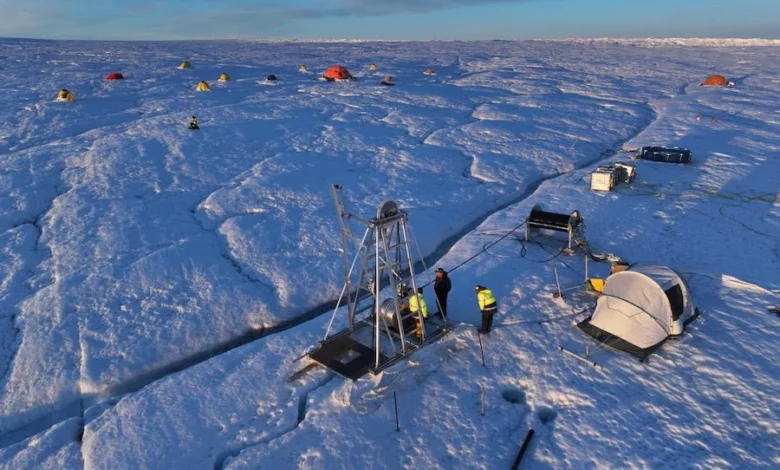
Climate scientists are increasingly concerned about "positive feedback loops," where initial warming triggers natural processes that release even more greenhouse gases. Wetlands, which account for one-third of all global methane emissions, are highly sensitive to temperature and rainfall changes. Warming in the Arctic is also causing the thawing of permafrost—frozen ground that holds vast stores of organic carbon. As this ground thaws, microbes decompose the material, releasing methane. The Arctic currently contains 2.5 times more carbon than is present in the entire atmosphere; a large-scale release would represent a "tipping point" that could make global warming irreversible.
Furthermore, the increasing frequency of wildfires creates another feedback loop. Massive fires in regions like California and Siberia release substantial amounts of methane. California’s 2020 wildfire season alone contributed nearly 14 percent of the state’s total methane emissions for that year.
Public Health Implications and Economic Loss
Beyond its role in climate change, methane is a primary precursor to the formation of ground-level ozone (smog). Unlike the protective ozone layer in the stratosphere, ground-level ozone is a toxic air pollutant. It causes respiratory illnesses, exacerbates asthma, and is linked to approximately 500,000 premature deaths annually worldwide.

The environmental impact extends to food security. Ozone damage to crops results in the loss of millions of tons of wheat, soy, and rice every year. Experts estimate that for every million metric tons of methane reduced, 1,430 heat-related deaths could be prevented, along with significant improvements in global crop yields.
Strategies for Mitigation and Global Policy
The Intergovernmental Panel on Climate Change (IPCC) asserts that methane emissions must be reduced by 34 percent by 2030 to limit global warming to 1.5 degrees Celsius. Achieving this requires a multi-faceted approach:
- Technical Fixes in Agriculture: Introducing feed additives like 3-NOP or seaweed can reduce enteric methane by over 80 percent in some cattle. Improved manure management, such as the use of anaerobic digesters to capture biogas, also offers significant potential.
- Energy Sector Reforms: The International Energy Agency (IEA) notes that 70 percent of methane emissions from oil and gas could be eliminated using existing technology, with 40 percent of those cuts coming at no net cost due to the value of the captured gas.
- Circular Waste Economy: Diverting organic waste from landfills toward composting and improving wastewater treatment infrastructure are critical steps for the waste sector.
- Direct Removal: Emerging technologies, such as enhancing the methane-absorbing properties of tree bark or using iron salt aerosols to break down atmospheric methane, are currently under investigation but remain in the experimental stages.
Current Progress and the Implementation Gap
The Global Methane Pledge, launched at COP26 in 2021, now includes over 150 nations committed to a collective 30 percent reduction in methane emissions by 2030. While the pledge represents a significant diplomatic milestone, real-world data shows that emissions continue to rise. In 2023, methane levels reached new heights, highlighting a substantial "implementation gap" between political promises and industrial action. As of current assessments, only about 13 percent of global methane emissions are covered by enforceable national policies.

Implications for the Future
The trajectory of global temperatures in the coming decades will depend heavily on the world’s ability to manage methane. Because of its high potency and short lifespan, methane represents the most effective lever available to policymakers for slowing the rate of warming in the immediate future. While individual actions—such as adopting plant-based diets and improving home energy efficiency—are valuable, systemic changes in the global energy and food systems remain the primary requirement for stabilization. The transition away from a methane-dependent economy is no longer merely an environmental preference but a scientific necessity to avoid the most severe consequences of a warming planet.