Oasis Don’t Look Back In Anger provides an intimate look at the most significant musical reunion of the 21st century.

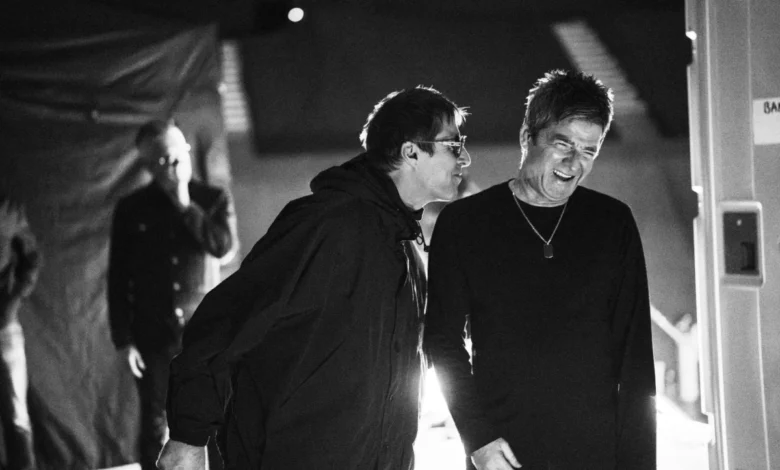
The documentary, which chronicles the long-awaited reconciliation and subsequent 2025 tour of Liam and Noel Gallagher, stands as a definitive visual record of one of the most volatile yet influential relationships in rock history. Directed by Will Lovelace and Dylan Southern—the duo previously acclaimed for their work on the LCD Soundsystem documentary Shut Up and Play the Hits and the music culture film Meet Me In The Bathroom—the project offers unprecedented access to the brothers during the planning and execution of their return to the global stage.
A Chronology of the 2025 Reconciliation
The path to the release of Oasis: Don’t Look Back In Anger began long before the cameras started rolling in 2025. Following the band’s abrupt dissolution in August 2009—sparked by a backstage altercation at the Rock en Seine festival in Paris—the brothers spent 16 years engaged in a public, often vitriolic, war of words across media platforms and social networks.
The timeline of their return commenced in early 2025, when industry insiders noted a cooling of tensions. By February, formal discussions between the Gallagher brothers were facilitated by a small circle of intermediaries. The announcement of the reunion tour followed in March 2025, triggering a level of global demand that saw millions of tickets sold within hours, effectively re-establishing the band as a cultural juggernaut.
The documentary covers this arc, utilizing a combination of high-definition concert footage from the 2025 tour, candid behind-the-scenes material, and a centerpiece joint interview that serves as the film’s emotional anchor. Written by Steven Knight, the creative force behind the television drama Peaky Blinders, the documentary avoids the typical "rockumentary" tropes, instead focusing on the narrative of legacy and the complexities of sibling dynamics in the public eye.
Production and Creative Direction
The production of the film involved a collaborative effort between the directors and a high-profile production team. Steven Knight’s involvement as a screenwriter brought a structured, narrative-driven approach to the edit, ensuring the film functioned as a coherent story rather than a mere sequence of concert clips. Alongside Knight, the project was produced by Sam Bridger, Guy Heeley, and Tom Mackay, who worked to secure the rights to the band’s extensive catalog and archival footage.
Released in United Kingdom cinemas on September 9, 2026, the film served as a theatrical companion to the tour’s conclusion. Its upcoming international rollout on Disney+ later this year is expected to reach a global audience that missed the live experience, positioning the film as a permanent fixture in the band’s discography.
The Soundtrack of a Legacy
The sonic landscape of the documentary is perhaps its most essential component, mirroring the setlist of the 2025 reunion tour. The curation of the soundtrack spans the band’s entire career, focusing on the anthems that defined the Britpop era and sustained their relevance through the decades.
The full list of tracks featured in the documentary includes:
- Half The World Away
- Whatever
- Hello
- Bring It On Down
- Some Might Say
- Slide Away
- Acquiesce
- Little By Little
- Roll With It
- Supersonic
- Talk Tonight
- Rock ’n’ Roll Star
- Wonderwall
- Live Forever
- Cigarettes and Alcohol
- Don’t Look Back In Anger
- Champagne Supernova
- Listen Up
The inclusion of "Listen Up," a standout track from the 1994 The Masterplan compilation, over the closing credits provides a poignant conclusion to the film. It serves as a nod to the deep-cut appreciation held by the band’s core fanbase, reinforcing the idea that the reunion was not merely a commercial endeavor, but a reclamation of the band’s artistic identity.
Broader Impact and Industry Implications
The commercial success of the Oasis reunion and the subsequent documentary highlights a broader trend in the music industry: the "heritage act" phenomenon. By reuniting, Oasis tapped into a multi-generational fanbase. Data from the 2025 tour indicated that the demographic attending the shows ranged from those who witnessed the band’s 1996 Knebworth performances to Gen Z listeners who discovered the band through streaming algorithms.
The documentary provides an analysis of this phenomenon, subtly examining how the brothers navigated their public personas in an era defined by constant digital scrutiny. By allowing the cameras to document the rehearsals and the quiet moments between the brothers, the filmmakers have provided a case study in brand preservation.
Financial analysts have noted that the "Oasis effect"—the massive surge in revenue generated by a singular, high-profile reunion—has shifted the focus of major promoters toward securing legacy acts for stadium tours. This shift has placed immense pressure on other long-dormant bands to consider similar reunions, though few have achieved the cultural saturation that Oasis maintained throughout their hiatus.
Critical and Public Reception
Since its September 2026 release, the film has been viewed as a significant piece of music history. Critics have noted that while the documentary is authorized by the band, it does not shy away from the tensions that defined their years apart. The joint interview, in particular, is frequently cited as a highlight, as it captures the brothers engaging with their shared history without the intermediary of the press.
For the music industry, the success of the film signifies a victory for the "event documentary" model. Rather than releasing a standard tour film, the producers created a cinematic experience that appeals to film buffs as much as music fans. The involvement of Steven Knight, known for his gritty, character-driven scripts, arguably elevated the project above standard promotional material, lending a weight to the narrative that resonated with audiences.
Future Legacy
As Oasis: Don’t Look Back In Anger prepares for its worldwide release on Disney+, the film is poised to serve as the definitive final word on the reunion period. While questions remain about the future of the band—whether they will record new material or continue to tour—the documentary establishes that the brothers have, at the very least, reached a professional equilibrium.
The implications for the music business are clear: the value of a band’s catalog is inherently tied to the perceived health of the relationships between its key members. By documenting their return, the Gallaghers have effectively revitalized the Oasis brand, ensuring its songs remain relevant to new audiences while providing a satisfying resolution for those who have followed the band since their Manchester origins.
In the final analysis, the documentary is more than a concert film; it is a chronicle of endurance. It captures the moment when two of the most stubborn figures in British music decided that their shared history was more valuable than their separate ambitions. Whether viewed as a piece of nostalgia or a study in human reconciliation, the film stands as a testament to the enduring power of the Oasis catalog and the gravitational pull of the Gallagher brothers. As they look back—or choose not to—on the years of discord, the audience is left with the enduring image of a band that, against all odds, managed to find their way back to the stage.