Trump Administration Moves Forward with $2.8 Billion Financed Arms Package Supplying Over 40,000 Heavy Bombs to Israel Amid Ongoing Regional Conflicts

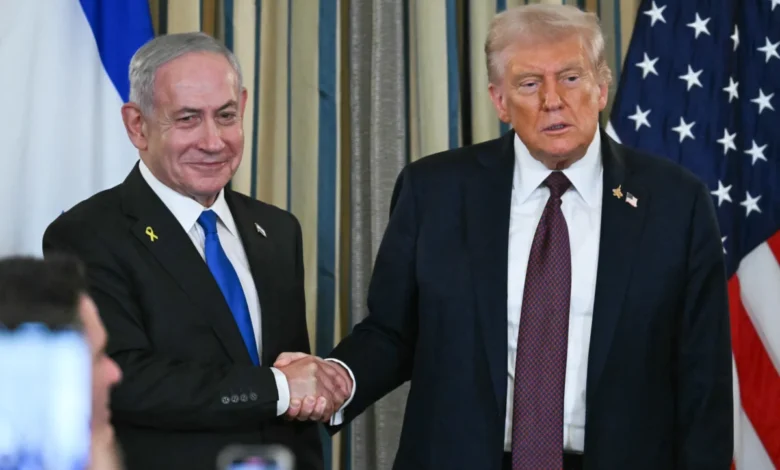
The United States government is preparing a massive $2.8 billion military assistance package to supply Israel with more than 40,000 heavy-payload bombs. While officially classified under the administrative terminology of a foreign military sale, the transaction relies entirely on American taxpayer financing through specialized federal grants. Rather than purchasing munitions with its own capital, the Israeli government will receive the necessary funds directly from U.S. coffers via the Foreign Military Financing (FMF) program, effectively turning the commercial transaction into an outright military grant.
The development comes against the backdrop of an inflamed Middle East, marked by ongoing military engagements involving Iran, Lebanon, and Gaza. As Washington seeks to solidify its strategic posture and bolster regional allies, the impending transfer of tens of thousands of explosive devices highlights the deep integration of American logistical support in Israel’s prolonged military campaigns.
Background and Mechanics of Foreign Military Financing
Traditional foreign military sales generally operate on a reimbursement and commercial contract basis. In a standard transaction, a foreign government utilizes its own national budget to purchase defense articles manufactured by American defense contractors. This mechanism typically returns a portion of the expenditure back into the domestic U.S. economy, sustaining defense sector jobs and manufacturing pipelines.
However, the arrangement orchestrated by the Trump administration utilizes the Foreign Military Financing program. Under this framework, the U.S. Congress appropriates funds that are subsequently handed over to foreign entities specifically to buy American-made weaponry. Consequently, American taxpayers are not only producing the ordnance but are also footing the entire financial bill for its acquisition and delivery.
According to notifications submitted to congressional oversight committees, the package focuses heavily on high-capacity munitions designed for maximum structural penetration and explosive yield. Because previous arms packages during various presidential administrations have frequently bypassed traditional, protracted legislative review processes through emergency declarations or streamlined notifications, lawmakers and congressional aides face narrow windows to scrutinize or challenge the transfer.
An Official with the administration, speaking anonymously due to the sensitivity of pending security notifications, maintained that all protocols are being observed. "All foreign arms sales are moving through the appropriate process. We do not comment on pending sales," the official stated.
The Arsenal: Profile of the MK-84 and Bunker-Buster Munitions
At the center of the $2.8 billion package is an inventory of more than 40,000 munitions weighing 2,000 pounds or more. Among these are MK-84 general-purpose bombs and BLU-117 variants, which constitute some of the largest unguided, conventional free-fall aerial weapons in the U.S. military inventory. Although these unguided "dumb" bombs can be fitted with precision-guidance tail kits to convert them into smart munitions, their baseline destructive capacity remains immense.
Military analysts note that 2,000-pound ordnance generates devastating blast waves, extensive cratering, and lethal fragmentation capable of projecting high-velocity shrapnel across hundreds of yards. A significant subset of the planned shipment includes specialized "bunker buster" configurations equipped with heavy penetrator warheads. These weapons are explicitly engineered to pierce reinforced concrete, subterranean command centers, and deep underground fortifications.
The deployment of MK-84 bombs has previously drawn international scrutiny and condemnation from human rights organizations. Throughout extensive military campaigns in the Gaza Strip and Lebanon, human rights monitors and journalistic investigations have documented the use of these heavy munitions in densely populated urban neighborhoods. The catastrophic structural collapses and high civilian casualty rates resulting from such strikes have made the MK-84 a focal point of debate regarding the proportionality of warfare in crowded civilian zones.
The weapon has also intersected with high-profile targeted killings. During military escalations in late 2024, U.S. lawmakers publicly confirmed that American-manufactured 2,000-pound bombs were utilized in targeted operations, including the strike that resulted in the death of Hezbollah Secretary-General Hassan Nasrallah. The deployment of these specific heavy weapons had previously become a point of diplomatic friction; former President Joe Biden briefly paused the shipment of 2,000-pound bombs during the height of the Gaza conflict over humanitarian concerns—a restriction that was promptly rescinded upon Donald Trump’s return to the Oval Office.
Chronology of U.S. Military Aid and Regional Escalations
The decision to replenish Israel’s weapon stockpiles follows a period of intense military expenditure by both the United States and its regional allies. Over the preceding years, American forces have expended unprecedented volumes of interceptor missiles, air defense assets, and long-range tactical munitions to protect Israeli airspace and counter direct projectile barrages from Iran and its regional proxies.
The chronology of these events underscores a compounding strain on U.S. military stockpiles:
- 2023–2024: Following the outbreak of hostilities in Gaza, Israel launches an extensive aerial and ground campaign, relying heavily on U.S.-supplied ordnance, including high-tonnage general-purpose bombs.
- Mid-2024: Increasing international pressure and domestic humanitarian concerns prompt the Biden administration to temporarily withhold a specific shipment of 2,000-pound bombs to mitigate civilian casualties in urban areas.
- Late 2024: Intensified cross-border engagements culminate in major strikes in Lebanon, with U.S. officials confirming the deployment of American-made heavy-payload munitions in high-profile decapitation strikes.
- Early 2025: Political transitions in Washington lead to an immediate reversal of previous restrictions on heavy bomb shipments. Concurrently, direct military confrontations between the U.S. and Iran deplete strategic U.S. inventories of interceptors and long-range missiles.
- September 2026: Reports emerge that the Trump administration is advancing a formal $2.8 billion FMF package to deliver over 40,000 heavy bombs to Israel, bypassing traditional economic exchange and fully subsidizing the rearmament effort through federal appropriations.
Public Opinion and Domestic Political Landscape
The substantial financial and material commitment to Israel stands in stark contrast to prevailing public sentiment within the United States. Over recent years, multiple independent and media-sponsored opinion polls have consistently indicated a growing domestic skepticism regarding unconditional military assistance.
Data compiled by public policy research organizations and major news outlets highlight this divergence between voter sentiment and foreign policy execution:
- A 2024 poll conducted by the Center for Economic and Policy Research revealed that 52 percent of surveyed Americans believed the U.S. government should halt or condition weapons shipments to Israel.
- A joint late-year survey by The New York Times and Siena College demonstrated that a clear majority of the American electorate opposed authorizing additional economic or military aid packages to the Israeli government.
- A Quinnipiac University poll conducted in mid-2025 found that nearly half of all registered U.S. voters felt American foreign policy had become overly supportive of Israel, reflecting broadening concerns over domestic resource allocation and the long-term entanglement of the U.S. in protracted Middle Eastern conflicts.
Despite these polling metrics, executive branch priorities and bipartisan congressional support among institutional leadership have largely insulated major arms transfer frameworks from sweeping legislative overhauls.
Geopolitical and Strategic Implications
The finalization of the $2.8 billion bomb transfer carries multifaceted implications for regional stability, international law, and domestic fiscal policy.
From a strategic standpoint, the infusion of over 40,000 heavy munitions ensures that Israel maintains an unconstrained operational capacity for the foreseeable future. Defense analysts suggest that the replenishment of standard-inventory and penetrator bombs alleviates any immediate risk of ordnance shortages, allowing the Israeli military to sustain high-tempo combat operations across multiple fronts without immediate logistical constraints.
However, international legal scholars and humanitarian advocates warn that supplying high-tonnage, unguided or converted precision weapons into active urban combat zones heightens the risk of severe violations of international humanitarian law. The inherent blast radius and fragmentation patterns of 2,000-pound bombs make strict adherence to the principles of distinction and proportionality exceptionally difficult when deployed in densely populated civilian environments.
Economically, the decision to finance the transaction through Foreign Military Financing underscores a shift in how long-term strategic alliances are maintained. By absorbing the direct cost of foreign arsenals during an era of domestic budgetary constraints and inflation, the federal government prioritizes allied force readiness over domestic expenditure.
As notification periods conclude and administrative preparations proceed, the $2.8 billion package cements a robust military pipeline, ensuring that Israel remains heavily armed while reigniting fierce debates within the United States regarding the accountability, ethics, and taxpayer funding of modern foreign interventions.