Beyond the Cells: The Complex Engineering and Infrastructure Realities of Utility-Scale Renewable Energy Storage

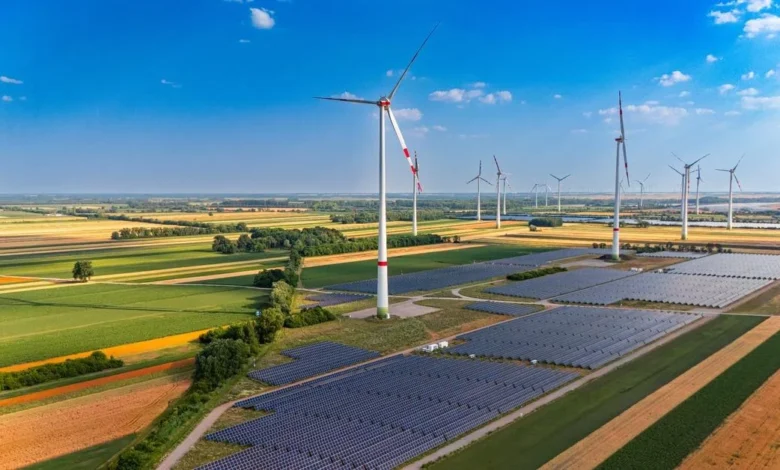
Battery storage is frequently heralded as the ultimate missing link in the global transition toward renewable energy. According to the mainstream narrative, once enough lithium-ion cells and grid-scale facilities are constructed, the intermittency issues plaguing solar and wind generation—such as a setting sun or an unexpected lull in the wind—will effectively vanish. While this concept is fundamentally sound, it remains incomplete. The true engineering hurdle extends far beyond merely capturing and storing electricity; it lies in the grueling challenge of maintaining thousands of interconnected battery cells, advanced power electronics, intensive thermal cooling systems, and delicate electrical junctures so that they operate safely, efficiently, and predictably over decades of continuous service.
Over the past ten years, global battery prices have plummeted dramatically, catalyzing an unprecedented acceleration in deployment. Data from the International Energy Agency (IEA) reveals that approximately 108 gigawatts (GW) of new battery storage capacity was integrated worldwide in 2025 alone, representing a staggering 40 percent year-over-year expansion. Yet, behind these triumphant deployment figures, engineers, project developers, and grid operators grapple with a distinct array of operational complexities. While some of these challenges are governed by immutable laws of physics, others stem from dense regulatory frameworks and intricate bureaucratic hurdles. Intriguingly, a significant proportion of operational headaches emerge from minor electrical nuances that only manifest after a facility has endured years of active commercial operation.
The Multi-Day Intermittency Gap: Confronting Dunkelflaute
To understand the physical limits of current utility-scale storage, one must examine a severe winter weather scenario in Northern Europe. During a cold, stagnant week in January, solar power generation drops to near-zero due to abbreviated daylight hours and heavy overcast skies. Concurrently, a persistent high-pressure atmospheric system settles across the continent, bringing wind speeds to a halt and leaving commercial wind turbines completely motionless. German grid planners famously refer to this phenomenon as Dunkelflaute—literally translating to "dark doldrums"—and treat it not as a rare anomaly, but as a critical baseline design case for future energy infrastructures.
Despite the severity of such weather events, the vast majority of utility-scale battery projects deployed today are engineered for short-duration discharge profiles. Two-hour systems are common, while four-hour configurations are increasingly standard. These setups excel at shifting midday solar surpluses into the evening demand peak or bridging brief lulls as weather fronts cross a wind farm. However, they are entirely unequipped to sustain grid stability through a multi-day or multi-week meteorological stagnation.
Bridging a multi-day shortfall exclusively with lithium-ion technology would necessitate the construction of colossal storage capacities that remain completely idle for the vast majority of the year. Financially, such an asset structure is exceptionally difficult to justify, particularly when an installation generates revenue only during a handful of weeks annually. Consequently, long-duration energy storage (LDES) alternatives dominate contemporary planning discussions. Technologies such as pumped hydroelectric storage, compressed air energy storage (CAES), vanadium redox flow batteries, green hydrogen, and emerging chemistries like iron-air systems are slowly advancing toward commercial viability. Each technology presents a distinct set of trade-offs, and none serves as a universal, drop-in replacement for another. Furthermore, seasonal disparities compound these challenges; at higher geographic latitudes, solar generation peaks exponentially during summer months, leaving a massive temporal energy deficit that few existing technologies can bridge cost-effectively.
Unpacking Round-Trip Efficiency and Auxiliary Parasitic Loads
A common misconception among energy consumers is that a battery system returns 100 percent of the electricity fed into it. In reality, energy conversion is bound by thermodynamic losses. The National Renewable Energy Laboratory (NREL) cites an estimated 85 percent round-trip efficiency as a representative benchmark for modern utility-scale lithium-ion storage. This indicates that approximately 15 percent of the electrical energy injected during a full charge-and-discharge cycle is lost as heat. Real-world efficiencies fluctuate depending on system architecture and ambient operating environments. Pumped hydro installations generally achieve comparable or slightly lower efficiencies, whereas power-to-gas-to-power hydrogen systems forfeit well over half of their initial energy input during conversion cycles.
Beyond conversion losses, auxiliary parasitic loads place a continuous demand on stored energy. Industrial-scale containerized battery units must maintain a tightly regulated internal thermal window to prevent premature degradation. Consequently, liquid cooling or forced-air HVAC systems operate ceaselessly through scorching desert summers and freezing winter nights alike. When factoring in inverter standby draws, high-voltage transformer losses, battery management system (BMS) telemetry, and mandatory site security lighting, a storage facility that undergoes minimal daily cycling can exhaust a noticeable share of its energy reserves simply maintaining operational readiness. In arid climates, climate-control infrastructure often evolves into one of the site’s most substantial ongoing operational expenses.
Operational Divergence: Wind Farms Versus Solar Installations
Warranty agreements provided by manufacturers typically outline capacity fade—the gradual, inevitable reduction in a battery’s total energy retention capacity—in neat, predictable parameters defined by strict cycle counts and chronological years. Actual field operations, however, are far more volatile.
Solar-plus-storage facilities generally operate on a structured, rhythmic diurnal cycle: charging steadily through peak daylight hours, discharging into the evening demand surge, and resting quietly overnight. Wind generation, by contrast, exhibits erratic behavioral patterns. Wind output can fluctuate wildly multiple times within a single afternoon. A battery tasked with smoothing a wind farm’s output profile may spend its operational lifespan charging and discharging in rapid, uneven bursts, lingering indefinitely at partial states of charge, and then absorbing sudden demands for maximum discharge power.
Thermal stress accelerates this degradation process. Lithium-ion cells degrade at an accelerated rate when maintained at high states of charge for extended durations, particularly within warm enclosures. In hotter geographic regions, numerous operators have observed their facility assets losing usable capacity well ahead of the degradation curves projected in initial financial models, even when overall cycle counts remained relatively modest.
This operational reality necessitates a strategy known as site augmentation. Many large-scale developers incorporate financial provisions from day one to integrate fresh battery modules every few years to uphold contracted capacity guarantees. If supply chain timelines falter or if newer hardware iterations fail to integrate seamlessly with legacy control software, project budgets can experience severe, unhedged financial shocks.
Electrical Integrity and the Hidden Dangers of DC-Side Insulation Breakdown
While high-level macro challenges such as grid queues and long-duration storage deficits dominate industry conferences, a distinct category of unglamorous engineering hurdles frequently emerges within facility maintenance logs after a site has operated for several years. Among the most critical is the slow degradation of insulation on the direct current (DC) side of the installation.
Modern utility-scale battery strings frequently operate at voltages exceeding 1,000 volts DC. At such elevated electrical potentials, even minor insulation defects demand rigorous mitigation. The causes are frequently mundane yet persistent: microscopic moisture ingress past a cable gland, a multi-pin connector subjected to thousands of thermal expansion cycles, or early-morning condensation pooling inside an enclosure. Over time, these environmental factors establish low-resistance pathways that permit current to leak directly to the grounding system.
Initially, these insulation faults are infinitesimal and rarely trigger protective relays. If left undetected, however, they can mature into significant maintenance liabilities, precipitating nuisance inverter trips, elevating the risk of electrical arcing, and potentially triggering severe thermal runaway incidents. This vulnerability is especially pronounced in DC-coupled solar-storage architectures, where shared direct-current busses multiply the total number of critical connection points.
To safeguard assets, advanced monitoring systems operate in layered configurations. Insulation-monitoring devices continuously evaluate system resistance relative to the earth. Simultaneously, specialized DC leakage-current sensors provide granular visibility by detecting anomalous residual currents flowing through unintended circuits. Because traditional alternating current (AC) residual current devices can be desensitized by steady, non-alternating DC fault currents, specialized monitoring hardware is essential to catch structural defects during the manageable "connector replacement" phase rather than the catastrophic "rack replacement" phase.
State-of-Charge Drift and Thermal Asymmetries
Lithium iron phosphate (LFP) chemistry has firmly established itself as the dominant chemical composition for stationary energy storage, accounting for over 90 percent of all newly commissioned global installations. While LFP offers exceptional safety and thermal stability, it possesses a notoriously flat voltage discharge curve across the vast majority of its operational state range. This characteristic, highly advantageous for maintaining stable power output, severely complicates voltage-based state-of-charge (SoC) estimations.
Battery management systems rely heavily on current-integration algorithms (ampere-hour counting) to track energy influx and efflux. Over weeks of partial cycling, minute measurement errors accumulate, causing the system’s calculated state of charge to drift away from reality. Operators may remain entirely unaware of this calibration drift until the battery strikes its lower voltage safety threshold prematurely during an evening peak—precisely when a failed dispatch incurs maximum financial penalties. Periodic full-charge recalibrations effectively reset this drift, but each calibration cycle temporarily removes the revenue-generating asset from service for several hours.
Furthermore, thermal modeling during the engineering phase is typically validated against uniform ambient conditions. Inside an operational containerized block, however, cells positioned adjacent to access doors or furthest from HVAC output ducts routinely operate several degrees warmer than their internal counterparts. Over extended operational lifespans, these subtle thermal gradients cause localized cells to age prematurely, drifting out of electrochemical balance with neighboring modules and dragging down the aggregate usable capacity of the entire string.
Comparative Overview of Energy Storage Technologies
| Technology | Typical Duration | Approx. Round-Trip Efficiency | Main Operational Limitation | Primary Commercial Application |
|---|---|---|---|---|
| Lithium-ion (LFP) | 1 to 4 hours | 80% to 90% | Capacity degradation, strict thermal management | Daily solar shifting, rapid frequency response |
| Pumped Hydro | Several hours to days | 70% to 80% | Complex geographic requirements, prolonged development cycles | Bulk grid balancing across hours or days |
| Flow Batteries | Several hours to 12+ hours | 65% to 80% | Lower volumetric energy density, high capital cost | Extended daily shifting in space-tolerant locations |
| Compressed Air (CAES) | Hours to days | Highly design-dependent | Reliant on specific subterranean geology | Bulk underground storage near suitable formations |
| Hydrogen (Power-to-Power) | Days to seasons | 30% to 40% | Substantial conversion losses, specialized infrastructure | Seasonal energy balancing, heavy industrial feedstocks |
Regulatory Bottlenecks, Interconnection Queues, and Revenue Stacking
Beyond physical and chemical constraints, the commercial realization of energy storage faces acute systemic bottlenecks, most notably within electrical grid interconnection queues. In numerous regional transmission markets across North America and Europe, storage assets that are technically mature and fully financed remain sidelined for years, waiting for transmission system operators (TSOs) to complete exhaustive interconnection impact studies.
Concurrently, local municipal zoning and permitting hurdles have intensified. Following highly publicized battery installation fires in various jurisdictions, municipal planning boards have implemented stringent setback requirements, mandatory fire-suppression reviews, and prolonged environmental assessments. Developers who initially assumed that deploying an electrochemical storage asset would encounter less regulatory friction than a utility-scale wind farm have frequently found the inverse to be true.
Market revenue structures present a third major variable. Utility-scale batteries typically derive revenue through value stacking—combining energy arbitrage, capacity remuneration, and fast-frequency regulation services. As market saturation increases within specific regions, ancillary service prices for rapid frequency response have compressed dramatically as scores of new batteries compete for identical pool contracts. Consequently, projects dependent upon a single revenue stream have been forced to fundamentally restructure their financial models.
The Path Forward: Engineering Beyond Cheap Cells
The global energy storage sector continues to experience rapid technological maturation, and ongoing cost reductions in electrochemical manufacturing are undeniably vital. However, cheaper cells alone cannot resolve structural multi-day wind droughts, arrest the slow ingress of ambient moisture into high-voltage electrical connectors, or accelerate glacial bureaucratic grid interconnection reviews. Facilities capable of sustaining reliable commercial operation across fifteen to twenty years will ultimately be defined by rigorous attention to unglamorous engineering details during the initial design phase—long before performance metrics ever populate corporate marketing brochures.
Related posts: