Ed Sheeran Tour Dissolves as Supporting Acts Walk Out in Solidarity with Macklemore Over Gaza Protests

The music industry is facing an unprecedented wave of tour-level fallout following the controversial removal of rapper Macklemore from Ed Sheeran’s ongoing Loop Tour. What began as a venue-level dispute over political expression has rapidly escalated into a mass boycott, with virtually every major supporting act, opening artist, and collaborator stepping down from the high-profile trek in protest. Artists including Finneas, Lukas Graham, Aaron Rowe, and the traditional Irish folk band Beoga have all severed ties with the tour, citing freedom of speech, corporate censorship, and deep-seated convictions regarding the ongoing humanitarian crisis in Gaza.
The cascading crisis highlights a widening ideological chasm within the global entertainment industry, where artists are increasingly willing to sacrifice lucrative touring opportunities to take definitive stances on geopolitical conflicts. As promoters scramble to salvage remaining dates, the controversy has ignited fierce debates over the boundaries of artistic expression, the influence of billionaire venue owners, and the responsibilities of headlining acts caught in the crossfire.
The Spark: Macklemore’s MetLife Stadium Performances
The friction that ultimately crippled the Loop Tour traces back to a pair of high-profile concerts at MetLife Stadium in East Rutherford, New Jersey. Macklemore, serving as a direct support act for Ed Sheeran, used his platform to deliver impassioned remarks concerning the Israel-Hamas war, explicitly voicing solidarity with Palestinians trapped in Gaza and the occupied West Bank.
During his performances, Macklemore did not merely speak; he integrated visual testimony and music into his political messaging. He shared striking images depicting the catastrophic devastation wrought by military campaigns in Gaza, chanted “Free Palestine” to tens of thousands of concertgoers, and performed his viral protest song “Hind’s Hall.” The track, named after Hind Rajab—a six-year-old Palestinian girl killed in Gaza—explicitly honors student-led pro-Palestinian demonstrators at Columbia University and criticizes institutional complicity in violence.
While Macklemore’s on-stage statements resonated deeply with significant portions of the crowd—sparking roaring applause inside the New Jersey stadium—they simultaneously triggered immediate, aggressive backlash from pro-Israel advocacy organizations and venue stakeholders. Critics argued that the rhetoric crossed the line from political commentary into antisemitism and inflammatory polarization, setting the stage for a high-stakes corporate and political showdown.
The Ultimatum and Macklemore’s Removal
The pressure campaign against the rapper materialized with swift administrative force. According to statements released by Macklemore, powerful venue executives intervened directly with tour promoters and Ed Sheeran, presenting an ultimatum that effectively rendered his continued participation impossible.
Macklemore specifically pointed to New England Patriots owner Robert Kraft, who holds a controlling stake in Gillette Stadium, as a central figure in the orchestration of his dismissal. Macklemore asserted that Sheeran informed him personally of Kraft’s intervention. According to the rapper’s account, Kraft not only barred him from performing at Gillette Stadium but also coordinated with executives of other major arenas across the country to demand his removal from the entire tour bill under threat of sweeping venue lockouts.
Robert Kraft subsequently confirmed his decision to ban Macklemore from Gillette Stadium, though he did not directly address allegations regarding coalition-building among stadium owners. In an official statement, Kraft defended the ban by citing Macklemore’s recent stage actions alongside what he described as a “broader history of antisemitic rhetoric and imagery that we believe has been deeply offensive and hurtful to the Jewish community.”
Faced with the prospect of losing access to critical venues necessary for a stadium-scale production, tour promoter Messina Touring Group made the executive decision to drop Macklemore from the lineup. On Monday, the forced removal became official, transforming a localized controversy into an industry-wide crisis of conscience.
Ed Sheeran’s Response and the Promoter’s Burden
As the primary headliner of the Loop Tour, Ed Sheeran found himself trapped between corporate stakeholders, venue mandates, and the deeply held convictions of his peers. Following Macklemore’s removal, Sheeran released a public statement clarifying that the decision to drop the rapper originated from the promoter and venue owners, rather than his own personal creative preferences.
“I have spent this week trying to build bridges, to find a solution and unfortunately, was unable to do so,” Sheeran wrote on Tuesday. He emphasized his personal integrity, stating, “I know who I am, both as a person and as an artist, and those who know my heart know my values too.”
Despite Sheeran’s efforts to distance himself from the administrative decision to oust Macklemore, the damage to his tour ecosystem was already irreversible. The mechanisms used to silence one artist ultimately galvanized others, prompting a domino effect of walkouts that stripped the tour of its foundational supporting roster.
A Mass Exodus: Finneas, Lukas Graham, and Aaron Rowe Withdraw
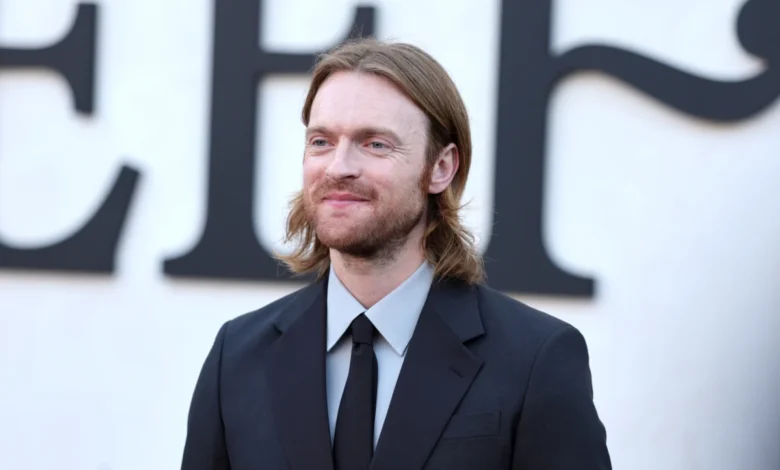
The first major blow to the tour’s roster came from Grammy-winning singer-songwriter and producer Finneas, globally recognized for his pivotal creative partnership with his sister, Billie Eilish. Finneas had been slated to open for Sheeran on the lucrative upcoming South American leg of the Loop Tour, scheduled to begin in November.
Upon learning of Macklemore’s firing, Finneas immediately announced his withdrawal via Instagram. “Artists must not be silenced when they speak up for the oppressed,” he wrote. “I have decided to withdraw from my upcoming tour dates with Ed Sheeran. I stand with Palestine and its people.”
Shortly thereafter, the remaining opening acts for the United States leg—Danish pop sensation Lukas Graham and Irish singer-songwriter Aaron Rowe—also severed their ties with the tour, releasing sharply worded statements detailing their motivations.
Lukas Graham reflected on the human toll of global conflicts, emphasizing that economic status should not dictate whose suffering is acknowledged. “It’s hard to watch families in other parts of the world burying the people they love,” Graham wrote on Instagram. “We should be able to speak about war, about civilians being killed, about children who deserve to grow up. Wherever they live. Whatever flag flies over them.”
Graham added a direct critique of industry power dynamics: “Money doesn’t give you the right to own the conversation. Nobody’s bank balance should decide who gets to speak or which suffering we’re allowed to acknowledge… I love Ed, and I’m grateful for everything we’ve shared. That hasn’t changed. But I can’t put these words out into the world and carry on with this tour as things stand.”
Aaron Rowe approached the situation through the lens of historical empathy, invoking Ireland’s legacy of resistance against colonization. “I cannot stand by and allow billionaires to use their position of power to silence the rightful voices of those who speak up against Israeli genocide and who highlight the savage,” Rowe stated. He thanked Sheeran for his friendship and professional generosity before clarifying his moral imperative: “As Irish people we know all too well about genocide, forced famine and violent occupation… I need to be true to myself and my ancestors who resisted colonization, and fought for a freedom that I enjoy today in Ireland.”
(Note: Humanitarian organizations, international legal bodies, and United Nations commissions have accused Israel of actions in Gaza that constitute genocide—allegations vehemently denied by Israel and its Western allies, including the United States.)
Beoga and the Collective Irish Stand
Adding further emotional and cultural weight to the boycott, traditional Irish folk band Beoga—who regularly joined Sheeran on stage for a dedicated segment of his set—announced they were also abandoning the tour. The band pulled no punches in their public statements, directly targeting what they termed the “silencing of Macklemore by zionist lobbies.”
Beoga recounted their firsthand experience witnessing Macklemore’s performance at MetLife Stadium, asserting that the overwhelming majority of the audience supported the rapper’s message. “We were there for Macklemore’s performance and speech. We fully supported his message, so did most of the audience in MetLife Stadium, which terrifies the lobbies,” the band shared on social media.
As founding members of the Irish Artists for Palestine movement, Beoga underscored that their cultural heritage informs their political commitments. “We are Irish people who understand colonialism… As musicians, playing to those crowds every night is the stuff of dreams but to play in venues that silence anyone advocating for a Free Palestine is simply not an option for us.” The band also pivoted back to the staggering loss of civilian life in Gaza, writing that the entire controversy served to “distract from the real issue, over 1,000 Palestinians have been killed since the most recent so-called ceasefire.”
Broader Implications and Industry Fallout
The dissolution of the supporting lineup for Ed Sheeran’s Loop Tour marks a watershed moment for modern live music entertainment. For decades, major tours operated under the unwritten rule that music and geopolitics existed in separate spheres, with artists largely discouraged from alienating corporate sponsors, venue conglomerates, or diverse ticket-buying publics.
However, the war in Gaza has fundamentally altered the socio-political calculus of global artists. The willingness of top-tier acts like Finneas, Lukas Graham, and others to walk away from high-visibility, multi-million-dollar tours signals a new paradigm. For a younger generation of musicians and their audiences, neutrality in the face of mass humanitarian suffering is increasingly viewed as complicity.
Simultaneously, the episode exposes the immense leverage held by venue owners and corporate stakeholders. By wielding exclusive control over massive stadiums—infrastructure often subsidized by public funds yet controlled by private billionaires—stakeholders possess the unilateral power to blacklist artists whose political speech falls outside acceptable parameters. This dynamic raises profound constitutional and ethical questions regarding corporate censorship, the limits of free expression in private entertainment spaces, and the future viability of politically charged art within mainstream commercial markets.
As Ed Sheeran’s team works behind the scenes to address the hollowed-out schedule and manage public relations fallout, the Loop Tour stands as a cautionary tale. It illustrates that in an era of heightened global polarization, international politics can no longer be checked at the arena door, and the financial cost of silencing an artist can ultimately outweigh the cost of the performance itself.